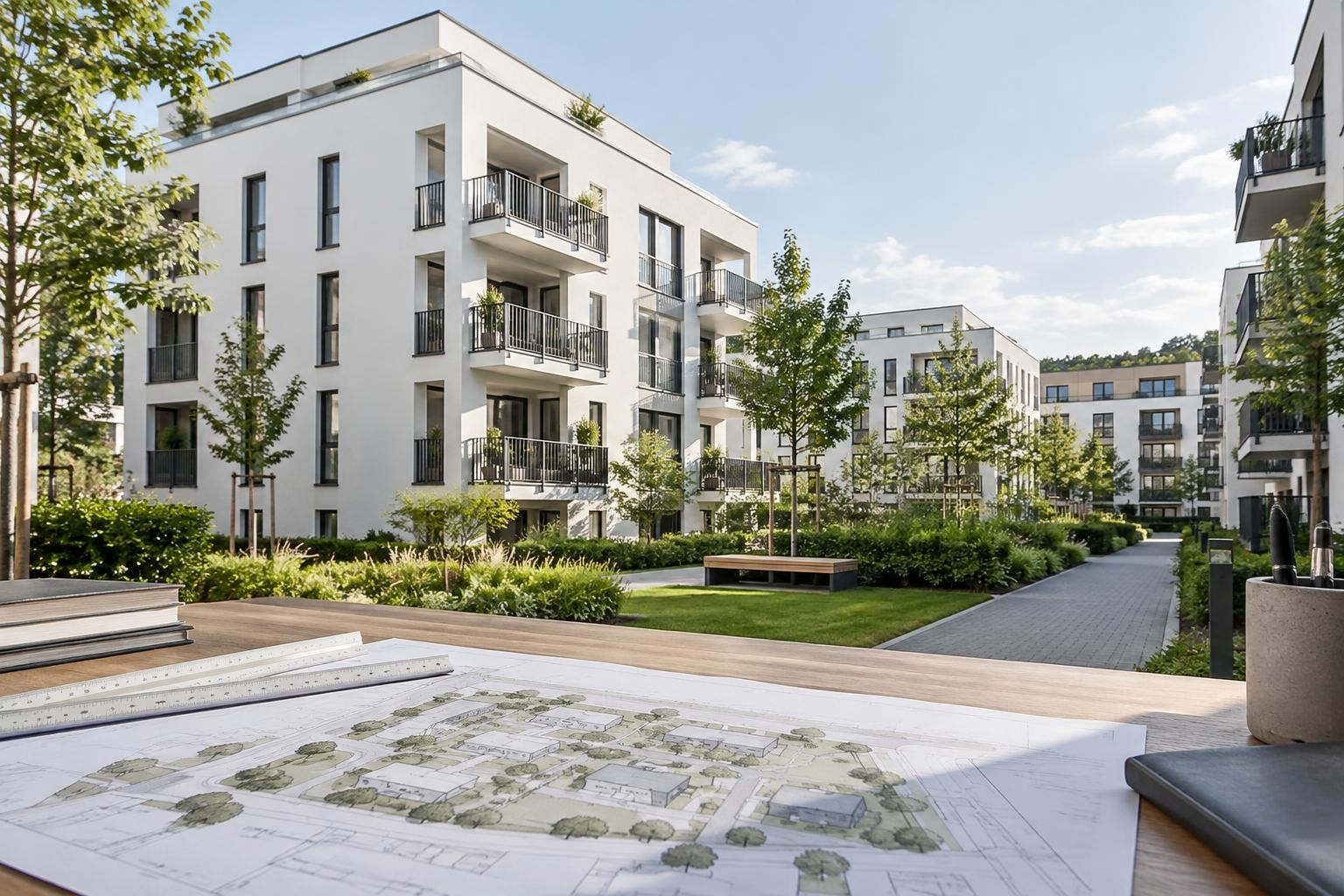
Local development plan: what may be built on a plot
 Moe Afonso
Investment Advisor at InvestImmo
01Key Points at a Glance
- Two tiers: The preparatory land-use plan outlines land use across the entire municipality (§ 5 BauGB). The binding land-use plan establishes legally binding rules for a specific area on that basis (§ 8 BauGB).
- Local by-law: The municipal council adopts the binding land-use plan as a local by-law (§ 10(1) BauGB). It applies to property owners, developers and public authorities.
- Qualified plan: If the plan specifies at least the type and intensity of use, the buildable areas of plots and local transport areas, a development is permissible provided it does not conflict with the plan and access and utility connections are assured (§ 30(1) BauGB).
- Inspection: Binding land-use plans are available for inspection at the municipality’s building control or urban planning department.
02What a Binding Land-Use Plan Specifies
| Planning provision | Example | Legal basis |
|---|---|---|
| Type of permitted development | WA = general residential area, MI = mixed-use area, MU = urban area | § 9(1) no. 1 BauGB, §§ 2–11 BauNVO |
| Intensity of permitted development | Site coverage ratio (GRZ) 0.4, floor area ratio (GFZ) 1.2, three full storeys | §§ 16–21a BauNVO |
| Form of development | Open or continuous frontage | § 22 BauNVO |
| Buildable area | Mandatory building lines, building limits | § 23 BauNVO |
| Other provisions | Parking spaces, green spaces, transport areas | § 9 BauGB |
03Where There Is No Binding Land-Use Plan
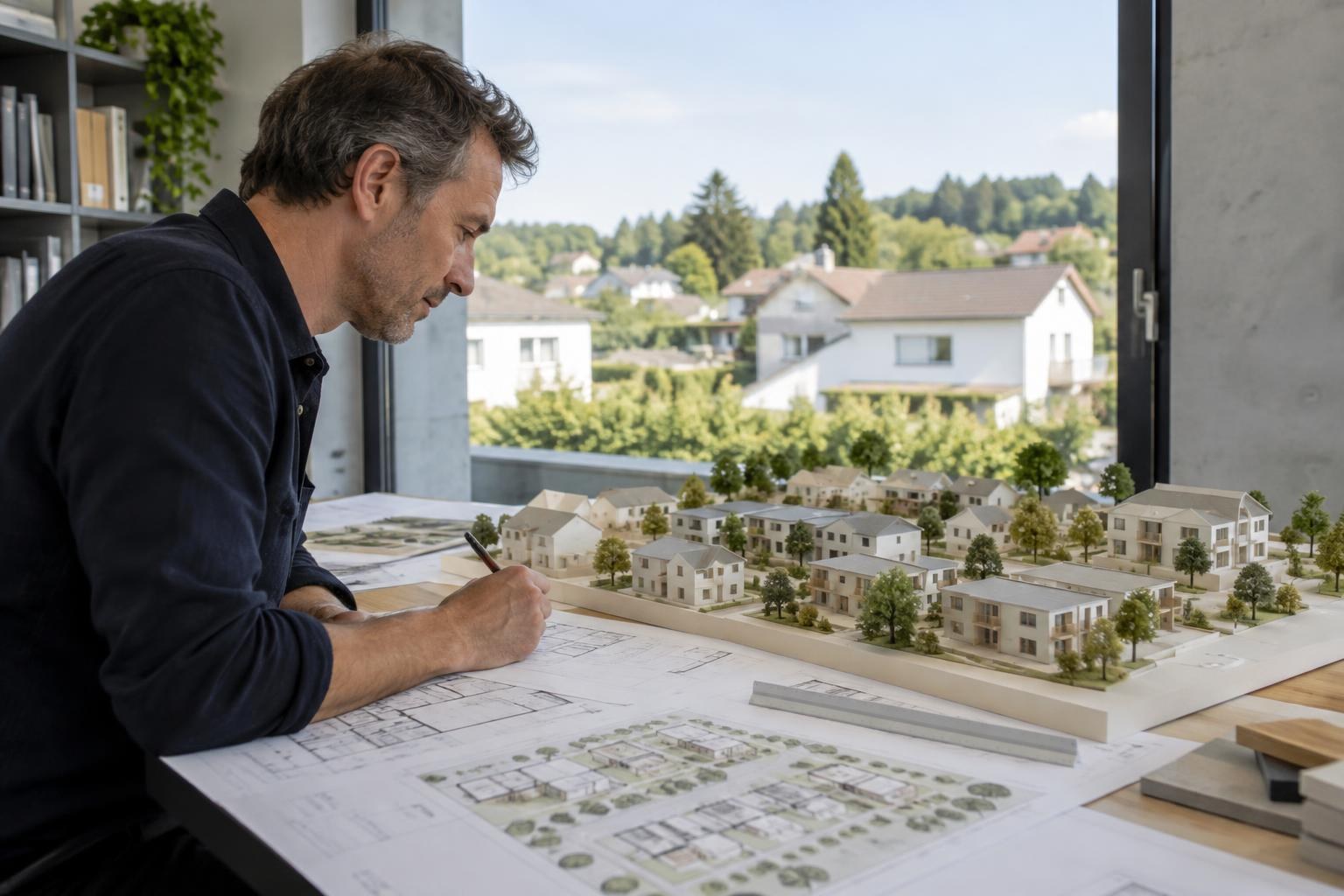
- Built-up areas (§ 34 BauGB): Within a built-up part of a settlement, a development is permissible if its type and intensity fit the character of the immediate surroundings and access and utility connections are assured.
- Areas outside built-up settlements (§ 35 BauGB): Only certain privileged developments are permissible here, such as agricultural and forestry operations.
04Example: An Undeveloped Plot Next to the Flat
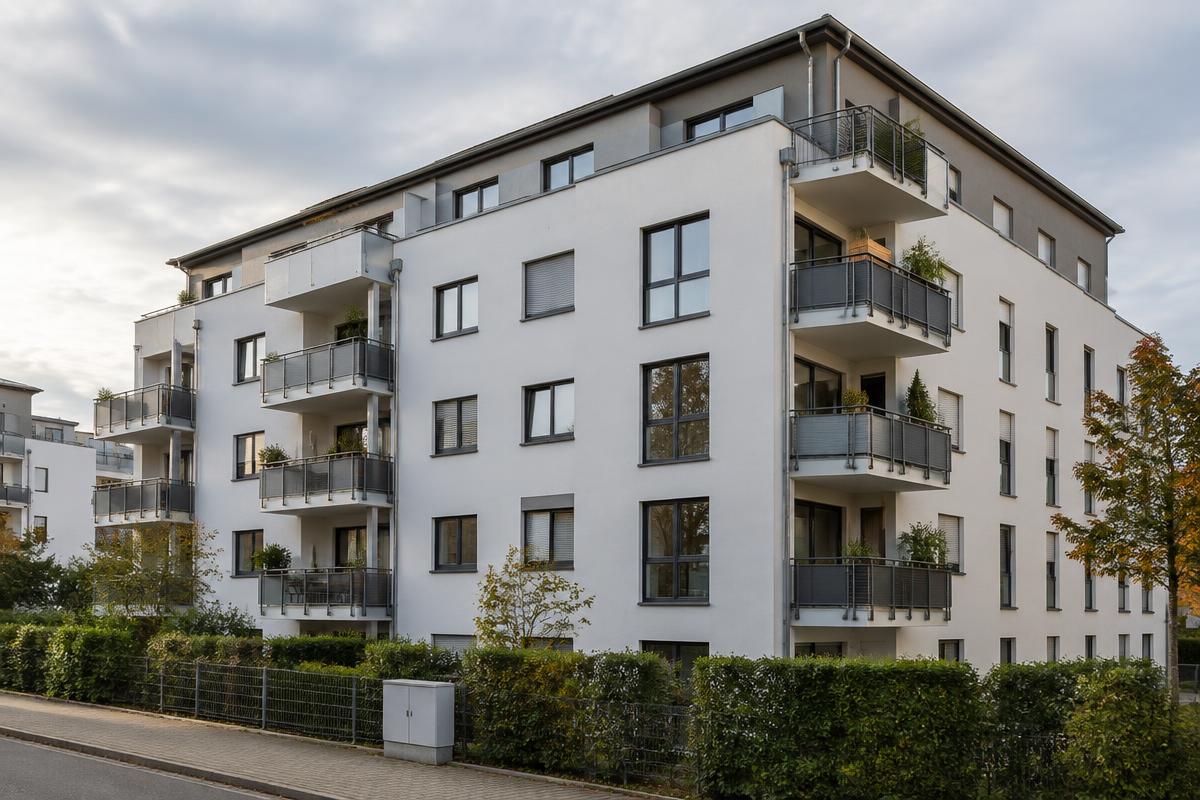
Assumptions (fictional): Mr Albers buys a tenanted second-floor flat overlooking an undeveloped neighbouring plot. The binding land-use plan designates that plot as a general residential area with four full storeys.
- Consequence: The neighbour may build a four-storey residential building. The unobstructed view has no legal protection.
- Implications for letting: Tenants on the lower floors receive less light. This may affect re-letting, even if the rent remains unchanged in legal terms.
- Checks before buying: Consulting the plan reveals these possibilities in advance, as does checking the public-law building obligations recorded in the register of building obligations. The guide How to Read a Binding Land-Use Plan explains step by step how to interpret planning symbols and the development parameters table.
05What This Means for Property Investors
- Check the permitted use: In a commercial area (GE), residential use is permitted only exceptionally (§ 8 BauNVO). If the actual use does not match the plan, ask to see the building permit.
- Scope for extensions: The site coverage ratio (GRZ) and floor area ratio (GFZ) indicate whether there is remaining development capacity on the plot for an extension or additional storeys.
- New development areas: For new-build projects, the binding land-use plan shows what else will be built around the property and whether infrastructure development costs may arise.
FAQFrequently asked questions
Where can I view a local development plan?
At the local authority, usually at the building control office or urban planning department. The guide Reading a local development plan explains how to find and read the plan.
Can a local development plan change?
Yes. The local authority can amend, supplement or repeal it through a formal procedure involving public participation (§ 1 para. 8 BauGB, § 3 BauGB).
Does the local development plan also apply to existing buildings?
Existing, lawfully approved buildings enjoy protection of their existing status (Bestandsschutz). For alterations, extensions or changes of use, the provisions of the current plan apply.
06Sources
- § 8 BauGB, § 9 BauGB, § 30 BauGB, § 34 BauGB, accessed on 14 October 2026
- Land Use Ordinance, accessed on 14 October 2026
Writes about Letting, Service charges (Nebenkosten), Tenancy law and Multi-family buildings.
As a civil engineer, property investor and advisor with around 14 years of finance practice, Moe looks at buildings from a technical angle first. He writes about build quality, letting, running costs (Nebenkosten) and investments that hold up beyond the brochure.
Last updated: 15 October 2026. General information; not a substitute for legal advice.