Magdeburg for Property Investors: A Comparison of all 40 Districts in 2026
In Magdeburg, location changes the rent index value by a maximum of around €0.65 per square metre. For purchase prices, there is a difference of over €340 between basic and mid-range locations. We compare the districts using official figures and run the numbers for the same flat in three different locations.
 Eduard Winter
Investment Advisor at InvestImmo
You've been looking at Magdeburg as a location. Now it's a question of where in the city to buy. Stadtfeld or Sudenburg, Buckau on the Elbe or an affordable flat in the south-east? Unlike in Leipzig or Dresden, there are no official purchase prices per district in Magdeburg. The Gutachterausschuss (Committee of Valuation Experts) only distinguishes between good, mid-range and basic locations.
Nevertheless, it is easy to compare different parts of the city. The qualified Mietspiegel (rent index) for 2026 includes a surcharge or discount for the location of every address. We have analysed all 2,250 or so entries in the street directory by district. In addition, we have included population, household and average age data for each district from the city's statistics.
The result is surprising for many investors. The location only changes the rent according to the Mietspiegel in Magdeburg by a few dozen cents per square metre. We compare the districts without a ranking and, at the end, run the numbers for the same flat in three different locations, both before and after tax.
01Magdeburg's districts at a glance
Magdeburg has 40 districts. Two are uninhabited, and several are commercial areas or villages with only a few hundred residents. The table shows the 25 districts with more than 3,000 inhabitants. A good 95% of Magdeburg's population lives in these areas.
| District | Population 2025 | since 2015 | vs. previous year | Households | of which 1 person | Avg. age | Location surcharge (Rent Index) |
|---|---|---|---|---|---|---|---|
| Stadtfeld Ost | 25,264 | −2.7 % | −0.1 % | 15,656 | 60.7 % | 41.9 | +€0.18 |
| Sudenburg | 18,718 | +6.2 % | +1.3 % | 11,243 | 59.9 % | 42.4 | −€0.07 |
| Altstadt | 17,002 | +5.9 % | +0.8 % | 11,342 | 66.8 % | 46.2 | +€0.25 |
| Leipziger Straße | 16,473 | +8.8 % | −0.1 % | 10,010 | 61.0 % | 41.4 | −€0.03 |
| Neue Neustadt | 16,264 | +7.8 % | +0.1 % | 9,645 | 61.0 % | 42.2 | −€0.05 |
| Stadtfeld West | 14,464 | −3.6 % | +0.1 % | 8,506 | 53.7 % | 49.2 | −€0.09 |
| Alte Neustadt | 12,374 | +8.1 % | +1.9 % | 8,108 | 60.8 % | 39.0 | +€0.15 |
| Neu Olvenstedt | 12,092 | +11.4 % | +0.3 % | 6,845 | 56.8 % | 44.9 | −€0.05 |
| Reform | 11,766 | −2.3 % | −0.3 % | 6,735 | 51.0 % | 51.7 | −€0.02 |
| Neustädter See | 11,477 | +1.5 % | −0.4 % | 6,717 | 58.9 % | 48.5 | −€0.10 |
| Ottersleben | 10,204 | −3.0 % | −0.6 % | 4,905 | 33.2 % | 48.4 | −€0.11 |
| Neustädter Feld | 9,513 | −1.5 % | −1.4 % | 5,567 | 55.4 % | 48.8 | −€0.10 |
| Cracau | 7,915 | −5.0 % | +1.0 % | 4,801 | 57.9 % | 47.2 | −€0.05 |
| Buckau | 6,936 | +13.7 % | −0.3 % | 4,274 | 60.9 % | 40.9 | +€0.09 |
| Kannenstieg | 6,257 | +0.6 % | +0.1 % | 3,426 | 53.5 % | 47.1 | −€0.22 |
| Salbke | 4,613 | +11.3 % | −2.3 % | 2,513 | 48.3 % | 46.3 | −€0.13 |
| Nordwest | 4,488 | −5.4 % | −0.3 % | 2,262 | 35.2 % | 51.8 | −€0.10 |
| Hopfengarten | 4,395 | −7.9 % | −0.9 % | 2,307 | 41.8 % | 49.7 | −€0.12 |
| Diesdorf | 4,143 | +17.6 % | +1.6 % | 1,848 | 29.1 % | 45.5 | −€0.19 |
| Alt Olvenstedt | 3,768 | −4.7 % | −0.9 % | 1,773 | 29.9 % | 49.2 | −€0.13 |
| Fermersleben | 3,680 | +5.8 % | +1.5 % | 2,348 | 65.1 % | 43.3 | −€0.39 |
| Brückfeld | 3,487 | +18.4 % | +0.2 % | 2,137 | 58.0 % | 44.8 | +€0.05 |
| Westerhüsen | 3,394 | +5.6 % | +1.9 % | 1,704 | 41.6 % | 45.7 | −€0.03 |
| Rothensee | 3,156 | +8.6 % | −0.2 % | 1,684 | 46.5 % | 43.1 | −€0.35 |
| Werder | 3,014 | −1.3 % | +2.0 % | 1,854 | 57.9 % | 49.3 | +€0.26 |
| Magdeburg | 245,834 | +3.2 % | +0.1 % | 143,647 | 55.8 % | 45.2 |
Residents with their primary residence according to the city's registration office as of 31 December 2025, change compared to 31 December 2015 and 31 December 2024. Households from the city's household generation model. Location surcharge: Median of the location surcharges and discounts for all addresses in the district from the street directory of the 2026 Mietspiegel, net cold rent per m² per month, before indexation (our own analysis). The State Statistical Office reports a population of 244,494 for the end of 2025 because it uses a different counting method.
Two things are noticeable. The location surcharges are almost all between −€0.15 and +€0.25. And the large Gründerzeit districts are barely growing anymore, while smaller districts such as Buckau, Brückfeld and Diesdorf have grown significantly since 2015.
02Purchase prices by location
The Gutachterausschuss für Grundstückswerte (Committee of Valuation Experts for Property Values) in Saxony-Anhalt analyses all notarised purchase agreements. For Magdeburg, it publishes medians by sale type, flat size and location category, but not by district. The most important figure for investors is the resale of second-hand flats, with 462 sales of 45 m² or more in 2024.
The fact that mid-range locations are more expensive than good ones seems contradictory at first. The reason lies in the housing stock. In the good locations of the city centre and in Stadtfeld, many older, partly unmodernised flats are sold, whereas in mid-range locations it is presumably more frequently modernised or newer flats. The median therefore shows what was sold, not what a specific flat is worth. In 2023, all three location types were slightly more expensive than in 2024.
Which districts fall into which location category
The location categories are based on the Bodenrichtwertzonen (standard land value zones) of the Gutachterausschuss. For multi-storey residential buildings in Magdeburg, there are 28 zones in good, 43 in mid-range and 41 in basic locations. We have assigned the zones to the districts based on their names. The picture is clear, even though multiple location types often exist within a single district:
- Predominantly good location: Altstadt with Breiter Weg, Hasselbachplatz and Otto-von-Guericke-Straße, Stadtfeld Ost around Olvenstedter Straße and Goethestraße, the Elbe-side locations in Buckau around Elbstraße and Fährstraße, Werder and Brückfeld.
- Predominantly mid-range location: Sudenburg, Alte Neustadt, Neue Neustadt, Cracau, parts of Leipziger Straße and Buckau, Stadtfeld West.
- Predominantly basic location: the large housing estates of Neustädter See, Kannenstieg, Neustädter Feld, Neu Olvenstedt and Neu Reform, as well as Fermersleben, Salbke, Westerhüsen, Rothensee and Lemsdorf.
The Bodenrichtwerte (standard land values) show how big the difference in land value is. In the Altstadt, they reach up to €1,100/m² for multi-storey residential buildings on Breiter Weg, in Stadtfeld they are around €450 to €520/m², in Sudenburg around €300/m², and in the large housing estates around €120 to €170/m². This difference is less pronounced in the purchase price of a flat because the land share of an apartment in a multi-storey building is small.
03Rents and the Rent Index per district
Magdeburg has a qualified Mietspiegel (rent index), valid from 31 January 2026 to 30 January 2028. It calculates the local comparative rent in steps: base rent according to flat size, surcharges and discounts for fixtures, fittings and year of construction, a location surcharge per address, and finally a factor of 1.04549 for price development since the data was collected.
For a 55 m² flat, the median base rent is €5.48/m². Far more important than the location is the year of construction. For flats built between 2003 and 2014, €0.87 is added, and for flats built from 2015 onwards, as much as €1.78. Flats from the years 1960 to 1992 receive a discount of €0.41.
The difference between the highest and lowest district median is therefore around €0.65/m². For a 55 m² flat, that amounts to about €430 in annual rent. A new-build instead of an older building changes the comparative rent by almost three times as much.
Rents for new tenancies are higher. Property portals list a median of around €7.45/m² for Magdeburg (as of 1 October 2026, market source). The average rent for existing tenancies was €5.75/m², according to the 2022 Census.
For investors, this means that in Magdeburg, the year of construction, condition, and fixtures and fittings explain the rent more than the district does. Anyone assessing a flat should calculate the comparative rent for that specific address and compare it with the rent stated in the contract.
Enter the purchase price and actual rent, and the calculator will show you the gross and net rental yield.
04Population, households and vacancy
According to the registration office, 245,834 people were living in Magdeburg at the end of 2025, 3.2% more than at the end of 2015. In 2025, the population grew by only 313 residents. The districts that have grown the most since 2015 are Brückfeld (+18.4%), Diesdorf (+17.6%), Buckau (+13.7%), Neu Olvenstedt (+11.4%) and Salbke (+11.3%). Hopfengarten, Nordwest, Cracau, Alt Olvenstedt, Stadtfeld West and Stadtfeld Ost have seen slight population losses.
With 25,264 inhabitants, Stadtfeld Ost is the largest district and has lost a good 1,000 residents since its peak in 2017. This does not speak against demand; the flats there are sought-after. Rather, it shows that in a fully occupied period-building district, hardly any new flats are being built and households are becoming smaller.
Many single-person households in the city centre
City-wide, 55.8% of households are occupied by just one person. In the Altstadt, the figure is 66.8%, in Fermersleben 65.1%, and in Stadtfeld Ost, Leipziger Straße, Neue Neustadt, Buckau and Alte Neustadt, it is around 61% in each case. In the estates on the outskirts such as Diesdorf, Alt Olvenstedt and Ottersleben, the figure is only 29 to 33%. Those looking to let small flats will find the demand primarily in the inner-city districts.
The average age shows who lives there. In Alte Neustadt, home to the university campus, it is 39.0 years, in Buckau 40.9, and on Leipziger Straße, with the university's medical faculty, it is 41.4. It is highest in Reform (51.7) and Nordwest (51.8). A higher age often means long-term tenancies, but in the long run, also more tenant turnover due to moves into care homes or deaths.
Regarding the social structure, we will only cite official figures. The unemployment rate for the city as a whole was 9.2% in September 2026, according to the Federal Employment Agency. We have not found figures for individual districts in the city's publications. For your letting, what counts anyway is the vetting of the individual tenant, not the average for a neighbourhood.
05Five district types for property investors
Instead of a ranking, we assign the districts to five types. Each one is suitable for different investors.
Type 1: City centre and the Elbe
Altstadt, Werder, Brückfeld and the Elbe-side locations of Buckau have the highest location surcharges in the city (+€0.05 to +€0.26) and are in predominantly good locations according to the Gutachterausschuss. The Altstadt is a mix of post-war buildings, 1960s and 1970s Plattenbau (prefabricated concrete slab buildings), and new-builds, while Buckau has former factory buildings and Gründerzeit architecture. Two-thirds of households in the Altstadt are single-person households.
- You want to let to professionals, commuters and students.
- Short distances and broad demand are more important to you than the lowest price.
- You check the year and type of construction carefully, as "city centre" here often means post-war construction.
- You expect the good location to significantly increase the rent.
- You don't want to check the flood risk on the Elbe.
Type 2: Gründerzeit in Stadtfeld, Sudenburg and the Neustadts
Stadtfeld Ost, Sudenburg, Alte Neustadt and Neue Neustadt are the large districts with period buildings. Over 72,000 people live here, more than half in single-person households. At +€0.18, Stadtfeld Ost is clearly above average in the Mietspiegel, while Sudenburg and Neue Neustadt are slightly below. With the university campus, Alte Neustadt has the youngest population in the city.
- You are looking for sought-after period flats with stable demand.
- You check the year of modernisation, roof, pipework and maintenance reserve of the building.
- You plan to hold for the long term and build wealth through principal repayment.
- You buy a building that was modernised more than 25 years ago without knowing the state of the maintenance reserve.
- You are counting on strong population growth.
Type 3: University medical centre and the south
Leipziger Straße with the university's medical faculty, Reform and Hopfengarten make up the south of the city. Leipziger Straße has grown by 8.8% since 2015, and its average age is low at 41.4 years. In contrast, Reform, with its large Neu Reform housing estate, has one of the highest average ages at 51.7. The location surcharges are close to zero.
- You want to let to healthcare workers or students.
- You can differentiate carefully between period buildings, post-war estates and Plattenbau.
- You mistake the district for the individual street.
- You buy on a large housing estate without checking the figures for the homeowners' association.
Type 4: Large housing estates
Neustädter See, Kannenstieg, Neustädter Feld and Neu Olvenstedt were developed from the 1970s onwards as Plattenbau estates. According to the Gutachterausschuss, they are in predominantly basic locations, with standard land values around €120 to €170/m². Neu Olvenstedt has grown by 11.4% since 2015, while Neustädter Feld lost 1.4% of its population in 2025. The Mietspiegel applies a median discount of €0.41 for buildings from 1960 to 1992.
- You have experience with Plattenbau freehold flats and large homeowners' associations.
- You are able to check the budget, maintenance reserve and vacancy rate in the building.
- You are a first-time buyer.
- You already see the low price as a high yield.
Type 5: South-east on the Elbe and Rothensee
Fermersleben, Salbke, Westerhüsen and Rothensee are situated between the Elbe, industrial areas and railway lines. This is where the Mietspiegel has the lowest location values in the city, with −€0.39 in Fermersleben and −€0.35 in Rothensee. At the same time, Salbke and Rothensee have grown by around 9 to 11% since 2015, and Fermersleben, at 65.1%, has almost as many single-person households as the Altstadt.
- You are buying with a low entry price and will view the micro-location yourself.
- You are planning for more effort in tenant selection and re-letting.
- You have no reserves for longer vacancies.
- You would buy without a viewing and without the documents.
The estates on the outskirts such as Ottersleben, Diesdorf, Nordwest, Alt Olvenstedt and Stadtfeld West consist largely of one and two-family houses. There are fewer freehold flats there, and the households are larger. For investors with a single flat, they are more of a marginal phenomenon.
06Example calculation: the same period-building flat in three locations
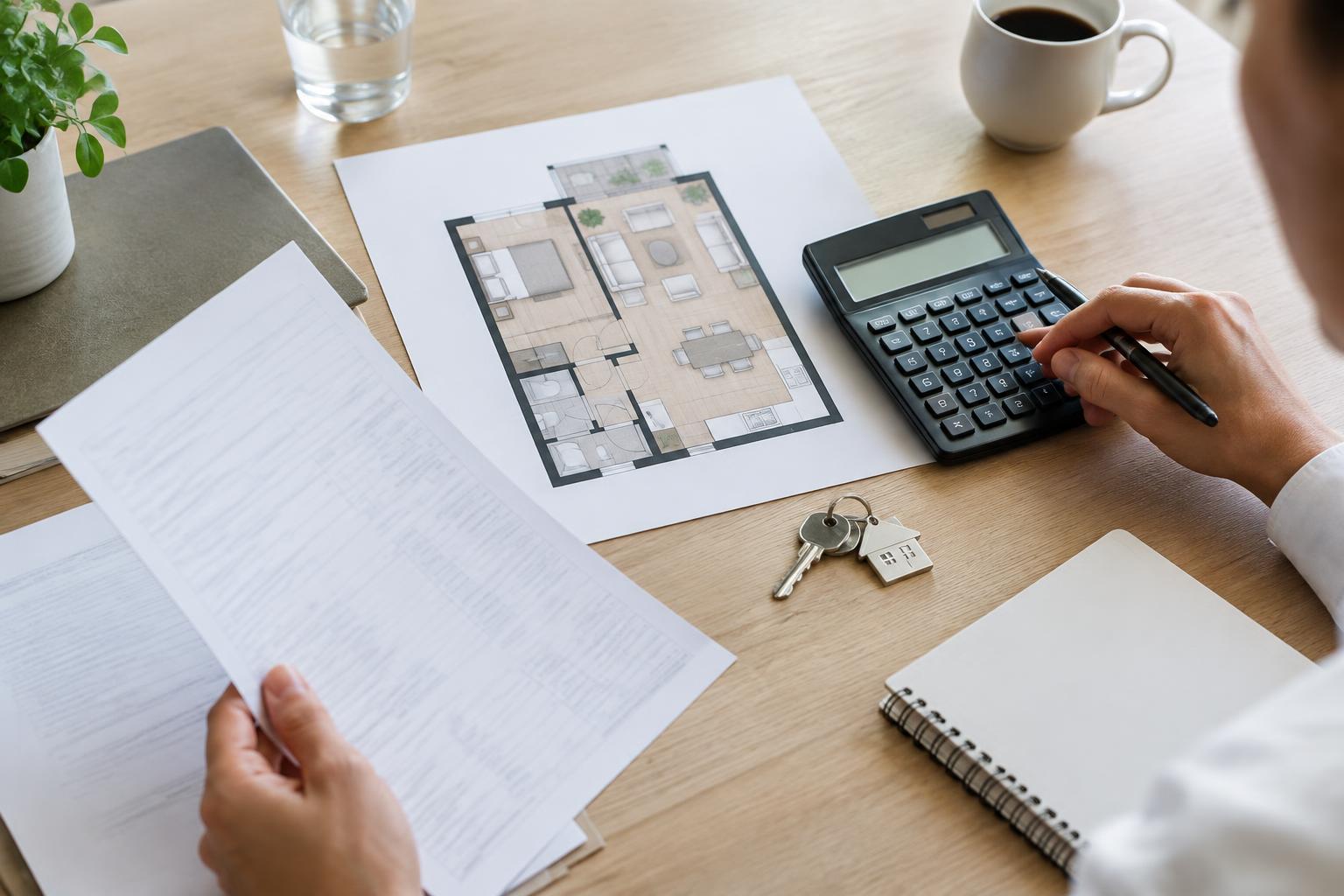
Let's take Lena. She is an employee, single, has a taxable income of €60,000 and is buying a tenanted two-room flat of 55 m² in a Gründerzeit-era building from before 1925, with a balcony and a cellar. She is comparing three locations: a good one in Stadtfeld Ost, a mid-range one in Sudenburg and a basic one in Fermersleben. The name is fictional; the figures are an example calculation and not a forecast.
For the purchase price, we'll use the median from the Gutachterausschuss for second-hand flats of 45 m² or more in the respective location category. For the rent, we'll use the comparative rent according to the 2026 Mietspiegel: base rent of €5.48, surcharges for the balcony and cellar, the district's location surcharge and the indexation factor. We have omitted surcharges for the kitchen, bathroom and energy efficiency. This is a rather conservative approach.
| Good location (Stadtfeld Ost) | Mid-range location (Sudenburg) | Basic location (Fermersleben) | |
|---|---|---|---|
| Purchase price per m² (Median 2024) | €1,694 | €1,791 | €1,446 |
| Purchase price 55 m² | €93,170 | €98,505 | €79,530 |
| Grunderwerbsteuer (property transfer tax) 5.0% | €4,658 | €4,925 | €3,976 |
| Notary and land registry (approx. 1.8%) | €1,677 | €1,773 | €1,432 |
| Total costs | €99,506 | €105,203 | €84,938 |
| Cold rent per m² (Rent Index) | €6.15 | €5.90 | €5.55 |
| Cold rent per year | +€4,059 | +€3,894 | +€3,663 |
| Service charge, non-apportionable | −€924 | −€924 | −€924 |
| Interest (3.8%) | −€3,540 | −€3,743 | −€3,022 |
| Principal repayment (2%) | −€1,863 | −€1,970 | −€1,591 |
| Cash flow before tax | −€2,269 | −€2,743 | −€1,874 |
| Depreciation 2.5% on 75% of total costs | €1,866 | €1,973 | €1,593 |
| Taxable result from letting | −€1,809 | −€2,284 | −€1,414 |
| Tax savings (2026 tax bracket) | +€693 | +€872 | +€542 |
| Cash flow after tax | −€1,576 | −€1,871 | −€1,332 |
| per month | around −€130 | around −€155 | around −€110 |
| Gross rental yield | 4.4 % | 4.0 % | 4.6 % |
In all three locations, Lena makes a monthly contribution, between around €110 and €155. A large part of this is principal repayment, between €133 and €164 per month. Without the principal repayment, a small surplus of between €8 and €24 per month would remain in all three cases.
The mid-range location is striking. According to the median, it is the most expensive, but according to the Mietspiegel it generates less rent than Stadtfeld Ost. In the basic location, the entry cost is around €13,600 cheaper than in the good location, while the rent is only around €400 per year lower. This explains the higher gross rental yield. In return, Lena bears a higher risk in Fermersleben that the flat will remain vacant for longer after a tenant moves out.
If Lena calculates with €7.00/m², a rate often achieved for new tenancies in Magdeburg, instead of the rent index figure, the result improves by a good €560 to €950 per year before tax. This is why the current tenancy agreement is more important than the choice of district. You can read about how rental income is taxed in our guide Tax on rental income.
07Risks when choosing a district in Magdeburg
- Location category instead of district: Purchase prices are only available by three location categories. Within a single district, good and basic locations can be side by side, for example in Stadtfeld Ost or Buckau.
- Small sample sizes: For new-builds, small flats and individual locations, the medians are sometimes based on only 10 to 30 sales.
- Vacancy: 6.7% of flats were vacant at the time of the 2022 Census, around 4,520 of them for at least a year.
- Population: Magdeburg's population grew by only 313 residents in 2025. The state forecast projects around 23,000 fewer inhabitants by 2040 than in 2022.
- Job market: The unemployment rate was 9.2% in September 2026. The Intel plant has been cancelled.
- Modernisation cycle: Many Gründerzeit buildings were modernised in the 1990s. The roof, facade, pipework and heating systems will soon need work again.
- Flooding: Parts of Werder, Buckau, Cracau and the south-east are close to the Elbe. Check the flood risk map and insurance.
- Interest rates: With gross yields of around 4 to 4.5%, higher follow-on financing costs will directly impact the monthly contribution.
08Other locations
The figures for Magdeburg as a whole, the rules for landlords and a new-build calculation can be found on our page Buy-to-let properties in Magdeburg. In Saxony-Anhalt, it is worth comparing with Halle (Saale) and getting an overview of Saxony-Anhalt. Our Leipzig district analysis compares the districts of the nearby major city. All cities are included in our City Comparison 2026.
FAQFrequently asked questions
Which Magdeburg district is best for property investors?
There is no single 'best' district. Altstadt, Werder and Stadtfeld Ost have the highest location surcharges in the rent index, but the difference to other districts is only a few dozen cents per square metre. The deciding factors are the building's year of construction, its condition, the tenancy agreement and the sinking fund for the individual flat.
Where are freehold flats in Magdeburg cheapest?
In basic locations, existing flats of 45 m² and over cost an average of €1,446/m² in 2024. According to the standard land value zones (Bodenrichtwertzonen), this primarily includes the large housing estates such as Neustädter See, Kannenstieg and Neu Olvenstedt, as well as Fermersleben, Salbke, Westerhüsen and Rothensee.
How many districts does Magdeburg have?
Magdeburg has 40 districts. Großer Silberberg and Kreuzhorst are uninhabited, and several others such as Industriehafen or Gewerbegebiet Nord have very few residents. The largest district is Stadtfeld Ost, with 25,264 inhabitants.
What is the rental yield in Magdeburg by district?
Using the median prices from the expert committee and the comparable rent from the rent index, the gross rental yield for a pre-war flat (Altbauwohnung) is around 4.0% in mid-range locations to 4.6% in basic locations. With new letting rents around €7/m², the yield is higher, but significantly lower after costs, interest and taxes.
Is a flat in Stadtfeld a worthwhile investment?
Stadtfeld Ost is the largest and one of the most sought-after districts, with a location surcharge of +€0.18 and a predominantly good location classification. In our calculation, Lena gains around €130 per month there, of which around €155 is principal repayment (Tilgung). Whether it is worthwhile depends on the individual flat, its purchase price, the rent as per the contract, and the condition of the building.
Is there a rent cap (Mietpreisbremse) in Magdeburg?
No. Saxony-Anhalt has no rent cap (Mietpreisbremse) and no reduced cap on rent increases (abgesenkte Kappungsgrenze). Rent increases up to the local comparable rent (ortsübliche Vergleichsmiete) are permitted up to 20% within three years. The benchmark is the qualified rent index 2026.
Which districts in Magdeburg are growing?
Since 2015, Brückfeld (+18.4%), Diesdorf (+17.6%), Buckau (+13.7%), Neu Olvenstedt (+11.4%) and Salbke (+11.3%) have grown the most. In 2025, Werder, Alte Neustadt, Westerhüsen and Diesdorf grew the most, while Neustädter Feld and Salbke saw a decline.
09Further reading
- Buy-to-let properties in Magdeburg: Facts and locations
- A freehold flat as a buy-to-let investment: Pros and cons
- Tax on rental income
- Rental Yield Calculator
- Transaction Cost Calculator
- Property transfer tax in Saxony-Anhalt
10Sources
All sources accessed on 16 October 2026.
- State Capital Magdeburg, Office for Statistics, Elections and Digitalisation, Population & Demography 2026, Issue 119, as of 31 December 2025, Tables 22 (Population 2009–2025), 26 (Households) and 28 (Average age); District data sheets on magdeburg.de, Statistics + Geodata
- State Capital Magdeburg, Mietspiegel 2026, Brochure, valid 31 January 2026 to 30 January 2028, Table 1, Table 4.1 and street directory (Appendix 1)
- Gutachterausschuss für Grundstückswerte in Saxony-Anhalt, Property Market Information 2025, "Price Level of Residential Property in the Major Cities" dashboard (sales in 2023 and 2024) and standard land value zones with location categories, Saxony-Anhalt Geodata Portal
- 2022 Census (reference date 15 May 2022), Vacancy in Magdeburg, analysis via wahlatlas.net and Magdeburger News, 26 August 2024 (Pestel Institute)
- State Statistical Office of Saxony-Anhalt, Population as of 31 December 2025
- Federal Employment Agency, The job market in the state capital of Magdeburg in September 2026
- Asking rents: immoportal.com, Mietspiegel Magdeburg, as of 1 October 2026 (market source)
- § 32a EStG (2026 tax brackets), § 7 EStG (Depreciation), § 558 BGB (rent cap)
- Location surcharges per district, assignment of location categories, gross rental yields and example calculation: our own calculation, as of 16 October 2026
Disclaimer: This page provides general information and does not constitute investment, tax or legal advice. All figures are cited with their source and date; the example calculation is based on disclosed assumptions and is not a forecast. As of 16 October 2026.
Writes about Taxes, AfA (depreciation), Existing properties and Portfolio building.
Since 2020, Eduard has bought seven properties of his own and supported more than 150 clients. He writes about tax levers, property documents and portfolio building – with honest numbers instead of rosy projections.
This guide does not replace tax or legal advice. All figures are example calculations with disclosed assumptions.