Property safety: when German landlords may be liable
An icy pavement, a loose roof tile or a dark basement staircase can create liability risks. Understand delegated tasks, monitoring duties and an illustrative prevention budget.
 Rula Mama
Investment Advisor at InvestImmo
It is a Tuesday morning in January, just after seven. The pavement outside your building has frozen overnight. A neighbour on her way to the bus slips and breaks her wrist. Three weeks later, a solicitor's letter arrives. This is a fictional example.
Whether you must pay depends, among other things, on whether you took the necessary and reasonable safety measures and whether a breach of duty caused the loss. German lawyers call this the duty to keep premises reasonably safe [Verkehrssicherungspflicht]. It applies to rented houses and, for common property through the owners' association, to individually owned flats too.
01What the duty to keep premises safe means
Section 823(1) BGB does not contain a general definition of this duty. The courts have developed it particularly from that provision. Anyone who creates or maintains a source of danger must take reasonable precautions to prevent harm to others. Absolute safety is not required: the standard is what a reasonable, careful person responsible for the premises would consider necessary and practicable in the circumstances.
Buildings are subject to a specific liability rule. Where a building collapses or part of it becomes detached and causes harm because of defective construction or inadequate maintenance, section 836 BGB may apply. The person possessing the land can avoid liability by proving that they exercised the care required to avert the danger. Here, this means a person possessing the property as their own [Eigenbesitzer], usually the owner rather than the tenant. A falling roof tile does not, by itself, prove inadequate maintenance.
Where liability is established, compensation may cover treatment costs, lost earnings and damaged belongings. Personal injury claims may also include damages for pain and suffering (section 253(2) BGB). Proven contributory negligence by the injured person may reduce the claim (section 254 BGB). Whether unsuitable footwear on an obviously icy path contributes to the accident, and to what extent, depends on the circumstances.
| Party | Typical responsibilities | Basis |
|---|---|---|
| Owner and landlord | Building, land, access routes and pavement where local rules require | Sections 823 and 836 BGB, municipal rules |
| Tenant | Tasks validly assumed by contract, such as a winter maintenance rota | Tenancy agreement |
| Owners' association [Gemeinschaft der Wohnungseigentümer, WEG] | Common property such as the roof, stairwell and courtyard | Sections 18 and 27 of the German Condominium Act [Wohnungseigentumsgesetz, WEG] |
| Caretaker or contractor | Safety tasks they have undertaken | Contract; potentially section 823 BGB in relation to injured parties |
The table shows the usual allocation of tasks. Liability towards an injured person does not automatically follow that allocation. Even after valid delegation, duties relating to selection, instructions and monitoring may remain with the landlord.
02Typical hazards around a building
Recognisable and avoidable hazards can lead to liability claims. Landlords should keep the following areas in view.
- Pavement, entrance and car park: snow, ice, leaves, loose paving slabs and holes.
- Stairwell and basement: faulty lighting, missing or loose handrails, trip hazards and stored objects.
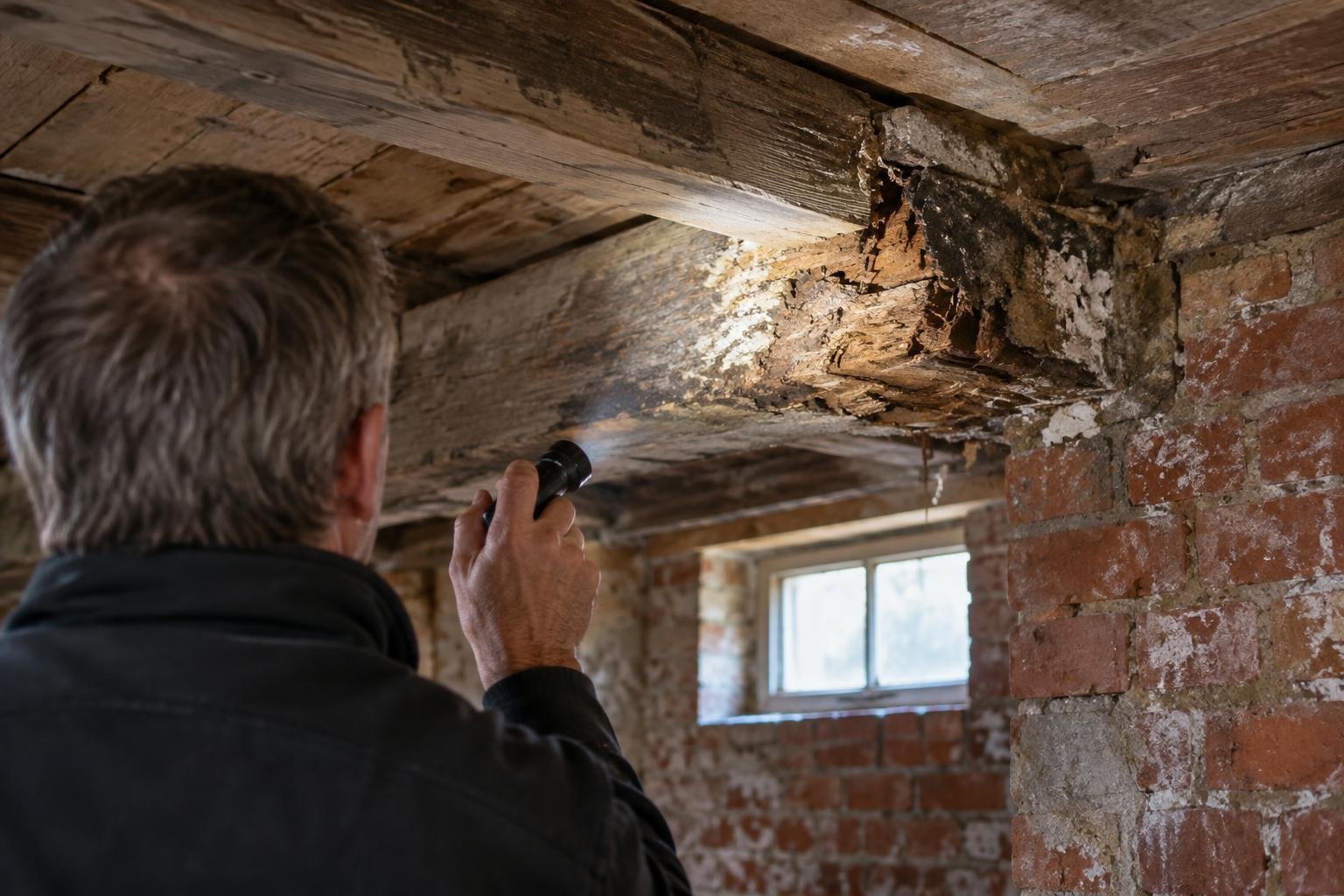
- Roof and façade: loose tiles, gutters, render and balcony cladding, as well as falling snow and icicles in winter.
- Trees: decaying branches, storm damage and roots lifting paving.
- Playground and outdoor areas: equipment, sand and fences.
- Installations within the flat: electrical systems, gas pipes, railings and windows, particularly at handover and when defects are suspected.
The type and frequency of tree inspections depend on location, condition and identifiable risks. One or two visual inspections a year, for example with and without leaves, are not a universally sufficient or mandatory standard. Additional or specialist inspections may be needed after storms or where problems are apparent. Section 39(5) of the Federal Nature Conservation Act [Bundesnaturschutzgesetz, BNatSchG] restricts cutting and felling certain trees and other woody plants in specified locations between 1 March and 30 September; it is not a blanket prohibition covering all trees. Exceptions, species protection and local tree protection rules must also be considered. Where there is an immediate danger, document the safety measures and clarify official requirements as far as the urgency permits.

03Snow clearance and gritting: who, when and how often
Responsibility for clearing and gritting public pavements follows the relevant state law and local rules. Municipalities may transfer these tasks to the owners of adjoining properties. The necessary and reasonable safety measures must also be organised for the building's own entrance, bin storage area and car park.
Specific requirements may be set out in your municipality's street cleaning or winter maintenance rules. Times such as 7 am to 8 pm on working days, starting at 8 or 9 am on Sundays and public holidays, and cleared widths of around one to one and a half metres are illustrative examples only, not uniform nationwide requirements. Check the times, areas and widths that actually apply. Repeated action may be needed during continuing snowfall or icy conditions where it is effective and reasonable.
Local rules also determine whether salt is permitted. They may require grit or sand and allow salt only exceptionally, for example during freezing rain or on steps. Using prohibited salt may result in a fine. Civil liability additionally depends on the requirements of the particular claim, including the connection between the breach of duty and the loss.
04Delegate, but monitor
You do not have to stand outside with a shovel yourself. Tasks can be validly delegated. However, duties relating to selection, instructions and monitoring may remain with you. Their extent depends, among other things, on the person appointed, their reliability and any apparent failings.
- 01Agree responsibilities clearly
State explicitly in the tenancy agreement who clears snow and when, for example through a weekly rota. House rules that have not been validly incorporated do not, by themselves, create this contractual obligation.
- 02Give clear instructions
Provide the times, areas and permitted materials specified in the local rules in writing, ideally with a plan displayed in the stairwell.
- 03Arrange cover
Make clear, legally valid arrangements for responsibility and procedures during holidays, illness and other absences.
- 04Monitor performance
Arrange appropriate spot checks in icy conditions, particularly at the outset or where reliability is in doubt. Request attendance records from contractors.
- 05Intervene
If the service fails, organise immediate safety measures, document the failures and decide how the service will be provided in future. This does not automatically permit a contract change or additional charges to tenants.
- 06Check insurance
Assess suitable property owners' liability cover and request evidence of the contractor's business liability insurance.
If you delegate winter maintenance to tenants, assess their actual availability and ability rather than relying solely on age or occupation. During prolonged absences or where physical limitations apply, reliable cover, a caretaker or a contractor may be more suitable.
The cost of a contractor or caretaker providing winter maintenance may be recoverable as operating costs under a valid tenancy agreement. Relevant categories include street cleaning (section 2, item 8 of the Operating Costs Ordinance [Betriebskostenverordnung, BetrKV]) or caretaker services (section 2, item 14 BetrKV); the same service cannot be charged twice. Read more in Recoverable operating costs under the Operating Costs Ordinance.
05Individually owned flats: what the association handles
For individually owned flats, the owners' association is generally responsible for managing the roof, façade, stairwell, courtyard and other common areas (section 18(1) WEG). The managing agent acts within its statutory and delegated powers (section 27 WEG). These may include appointing a caretaker service, organising tree inspections and arranging property owners' liability insurance for the association. Responsibility for a public pavement also depends on local rules.
Individual owners still have a part to play. You contribute through the [owners' service charge [Hausgeld]](/en/glossary/hausgeld) and should use owners' meetings to ensure that necessary inspections and measures are organised and funded. If the minutes show that storm damage to the roof has been awaiting a decision for months, ask questions.
06Worked example: prevention costs and accident losses
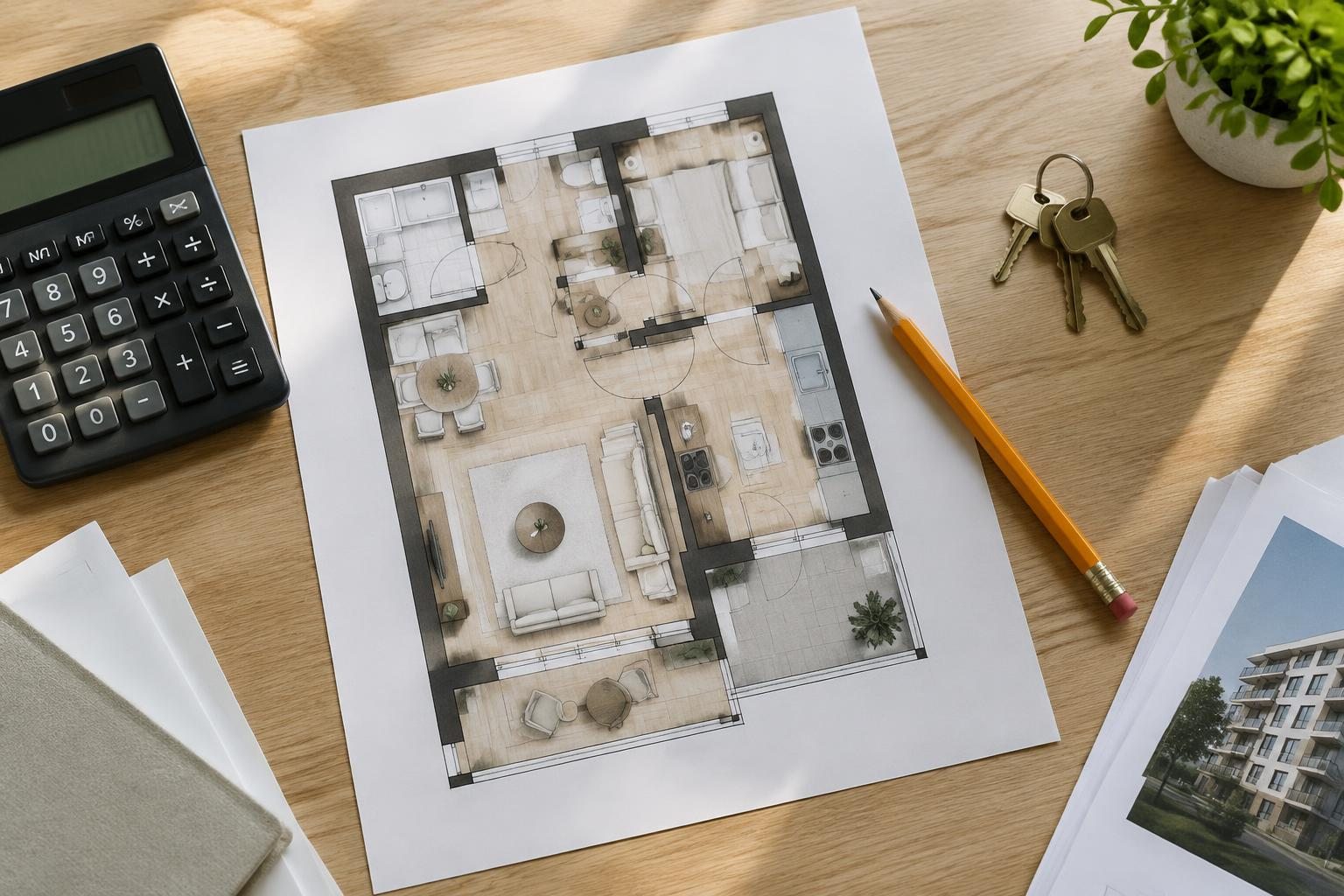
Sabine owns a building containing six flats. She appoints a contractor for winter maintenance and also has property owners' liability insurance. The calculation assumes taxable income of €60,000 before deducting the unreimbursed costs set out below; Sabine is single and pays no church tax. The name and figures are fictional. Costs are assumptions for the calculation, not market prices or forecasts.
We compare two cases. In the first, Sabine has validly agreed that winter maintenance and insurance costs can be recovered; all the costs shown are recoverable and reimbursed in full. In the second, there is no such agreement, for example in existing tenancy agreements taken over with the property. Her own time, other safety measures, insurance excesses, void periods and payment defaults are excluded.
| With cost recovery | Without cost recovery | |
|---|---|---|
| Winter maintenance contractor (assumption) | −€1,200 | −€1,200 |
| Property owners' liability insurance (assumption) | −€240 | −€240 |
| Reimbursed by tenants through operating charges | +€1,440 | €0 |
| Net cost before tax | €0 | −€1,440 |
| Tax effect of these items | €0 if reimbursement falls in the same tax period | +€552 |
| Net cost after tax | €0 under the model assumptions | −€888 |
Without cost recovery, the assumed preventive measures cost Sabine €1,440 a year before tax. With full deduction as rental expenses [Werbungskosten], assumed taxable income falls from €60,000 to €58,560. Under the 2026 income tax tariff, the corresponding income tax amounts are €14,233 and €13,681. The difference of €552 reduces the annual net cost to €888: €1,440 minus €552.
This example covers running expenses, not the entire owners' service charge for an individually owned flat. Contributions to the association's maintenance reserve [Erhaltungsrücklage] are not immediately deductible rental expenses. Only actual expenditure by the association may qualify for tax relief or deduction, subject to the applicable rules. Discuss the tax treatment of your expenses with your tax adviser.
Now consider the alternative: Sabine handles winter maintenance herself, misses a necessary and reasonable measure on an icy morning and has no insurance. For this comparison, we assume she is liable for the resulting fall. The example's total loss from treatment costs, lost earnings and pain and suffering is €25,000. Any recovery by the health insurer for treatment costs it has paid is included, not counted again. The amount could be lower or higher depending on the injury and extent of liability.
The comparison shows that a single uninsured liability claim can substantially exceed the assumed annual cost of prevention. Without cost recovery, the example leaves an annual after-tax cost of €888 for winter maintenance and liability insurance. With valid and complete recovery, the model leaves no net cost from these two running expense items; this does not eliminate all ownership costs or accident risks.
07Which arrangement suits which situation?
- A small building with a few easily contactable households.
- The tenants taking responsibility are available and can perform the tasks reliably.
- You or a managing agent can arrange appropriate on-site checks.
- Frequent changes or absences make a reliable rota difficult.
- The residents appointed cannot perform the tasks safely or reliably.
- You live far away and have not arranged reliable local monitoring.
08Risks that remain despite precautions
Gaps in the agreement. If delegation to tenants is invalid, the original safety duty may remain with you. Ask a lawyer to assess your tenancy agreements and contractor agreements before the first winter. Read more in Tenancy agreement clauses.
Neglected monitoring. Even with valid delegation, you may be liable if you omit necessary checks or fail to respond to apparent shortcomings and this causes harm. Repeated failures of the winter maintenance service require intervention.
Insufficient insurance. Check the indemnity limit, excess, exclusions and insured persons and risks. The association's liability policy does not automatically replace the individual cover of an owner letting a flat. Whether your personal liability policy includes a rented flat depends on its terms. See Insurance for landlords for an overview.
Long-lasting exposure. The standard limitation period is three years (section 195 BGB). It generally starts at the end of the year in which the claim arose and the creditor knows, or would know but for gross negligence, the relevant circumstances and the identity of the debtor (section 199(1) BGB). Suspension, recommencement and special rules can affect the outcome. For claims arising from injury to life, body, health or liberty, section 199(2) BGB provides a 30-year long-stop period independent of knowledge. Keeping records for three years is therefore not universally sufficient; establish an appropriate documentation and retention practice with a lawyer.
Non-recoverable costs. Repairs to roofs, stairs or lighting are not recoverable operating costs. Budget for a maintenance reserve, as explained in Property maintenance costs. Allocating money to a reserve is not the same as incurring immediately deductible maintenance expenditure.
FAQFrequently asked questions
What is the duty to keep premises reasonably safe?
It is the duty to take reasonable precautions against hazards arising from land, buildings or another source of danger. In Germany, it is derived particularly from section 823 of the Civil Code and applies to those responsible. Where a culpable breach causes harm, compensation may be payable, including damages for pain and suffering in personal injury cases.
Can a landlord delegate snow clearance and gritting to tenants?
Yes, through a clear and valid tenancy agreement. Duties relating to selection, instructions and monitoring may remain with the landlord. If the landlord breaches these duties and this causes harm, liability may arise despite the delegation. Ask a lawyer to assess the contractual arrangements where necessary.
What time must snow and ice be cleared in the morning?
Local rules and the specific hazard determine the requirements. Times such as 7 am on working days or 8 or 9 am on Sundays and public holidays are not universal rules. Check your municipality's requirements. Repeated clearance and gritting may be necessary where effective and reasonable.
Who is liable if someone falls in a shared stairwell?
The owners' association is generally responsible for managing the shared stairwell. Liability for a fall nevertheless depends on the breach of duty, its cause and the allocation of tasks. Whether the association's liability insurer pays depends on the policy; a fall alone does not establish a claim.
Can landlords recover winter maintenance costs from tenants?
Under a valid tenancy agreement, the costs may be recoverable as operating costs, for example as street cleaning or caretaker services. The same service cannot be charged twice. Under section 1(1) of the Operating Costs Ordinance, landlords' own labour and in-kind contributions can generally be valued at the cost of an equivalent third-party service, excluding that third party's VAT.
Which insurance should landlords consider for property safety risks?
Consider property owners' liability insurance or equivalent existing cover. Within the agreed terms, it pays valid liability claims and defends unjustified claims. For individually owned flats, compare the association's cover with your individual protection. Premiums may be recoverable under section 2, item 13 of the Operating Costs Ordinance where a valid agreement permits this.
How long does an injured person have to bring a claim?
The standard limitation period is three years. It generally starts at the end of the year in which the claim has arisen and the claimant knows, or would know but for gross negligence, the relevant circumstances and the debtor's identity. Suspension, recommencement and special rules must be considered. Section 199(2) of the Civil Code provides a 30-year long-stop period independent of knowledge for certain personal injury claims, so retaining evidence for only three years is not always sufficient. Ask a lawyer to assess the deadlines in a particular case.
09Further reading
- Landlords' rights and responsibilities
- Insurance for landlords
- Recoverable operating costs under the Operating Costs Ordinance
- Owners' associations: rights and responsibilities
- Tenancy agreement clauses
- Property maintenance costs
10Sources
- Section 823 BGB and section 836 BGB (compensation and liability of the person possessing the land)
- Section 253 BGB, section 254 BGB (pain and suffering, contributory negligence)
- Section 195 BGB and section 199 BGB (limitation periods)
- Section 1 BetrKV and section 2 BetrKV (definition of operating costs and owners' own contributions; item 8 street cleaning, item 13 insurance, item 14 caretaker services)
- Section 18 WEG and section 27 WEG (management of common property)
- Section 39 BNatSchG (seasonal cutting restrictions, their scope and exceptions)
- Section 32a EStG (2026 income tax tariff)
- Illustrative calculation, simplified: assumed costs and loss amount; income tax calculated using the 2026 tariff.
Costs and loss amounts are illustrative assumptions. Consult your tax adviser about the tax treatment of your property and a lawyer about contractual arrangements and liability.
Writes about Existing properties, Investment calculations and Property assessment.
Rula has worked in financial services since 2021. He focuses on existing investment properties, transparent calculations and an honest assessment of building condition and running costs.
This guide does not replace tax or legal advice. All figures are example calculations with disclosed assumptions.