Maintenance costs: How much landlords should budget for
One euro per square metre per month is the best-known rule of thumb. We show why this is often not enough for older flats, how to plan maintenance for common property and your own flat separately, and what is tax-deductible and when.
 Eduard Winter
Investment Advisor at InvestImmo
You're running the numbers on a flat and get to the line item for maintenance. There's nothing in the brochure, and the estate agent says "one euro per square metre". For a flat from the nineties, that sounds low, but you don't have a better figure.
Maintenance is the cost block that is most often inaccurate in most calculations. It doesn't occur every month, but in spurts: almost nothing for ten years, then a new bathroom and a special levy for the roof. Anyone who sets it too low is making the flat look better than it is.
01What maintenance includes
Maintenance means keeping a building component functional: servicing the heating, cleaning the guttering, sealing windows. Repair means fixing or replacing something that is broken or worn out. In everyday language, both are grouped together as maintenance. The Wohnungseigentumsgesetz (German Condominium Act) speaks of "preservation" (Erhaltung).
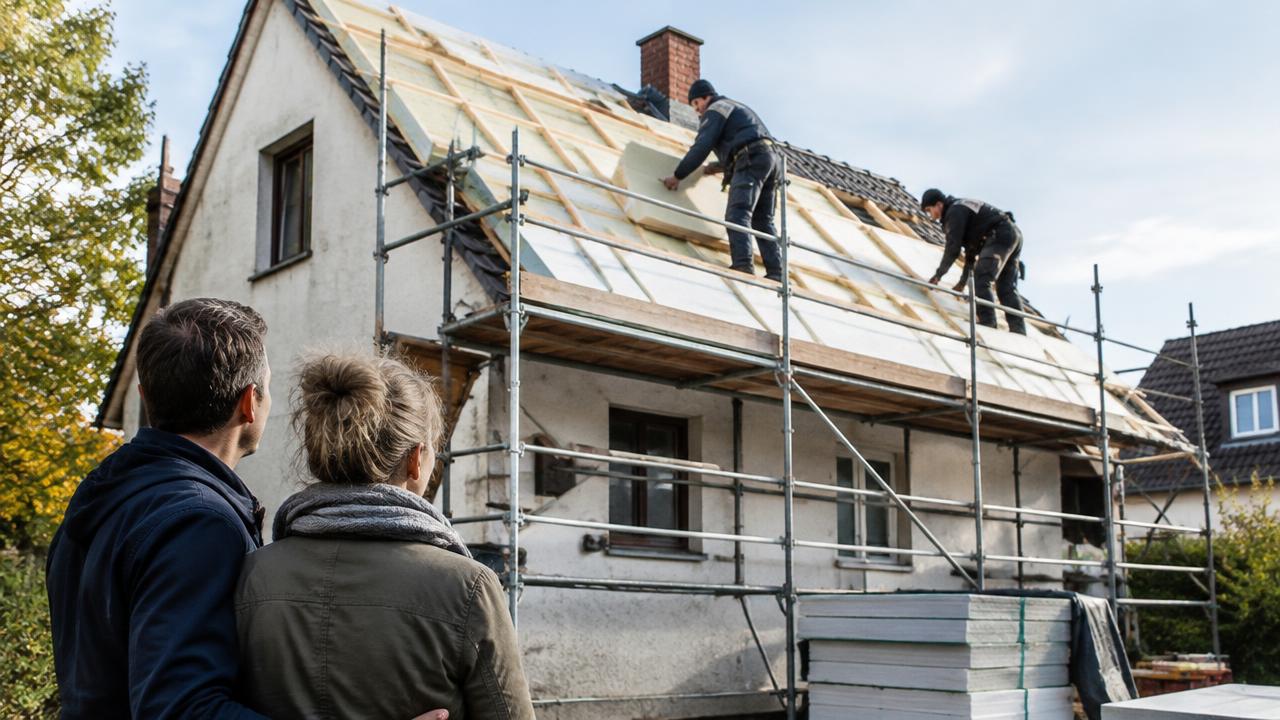
Modernisation should be distinguished from this. Anyone who installs triple-glazed windows instead of old ones or retrofits a lift is improving the building. This costs more than pure preservation and follows different rules, for example, regarding rent increases. More on this in the guide to the modernisation levy.
02Community and own flat
With a freehold flat, you pay for maintenance in two ways.
| Area | Examples | Who pays, how |
|---|---|---|
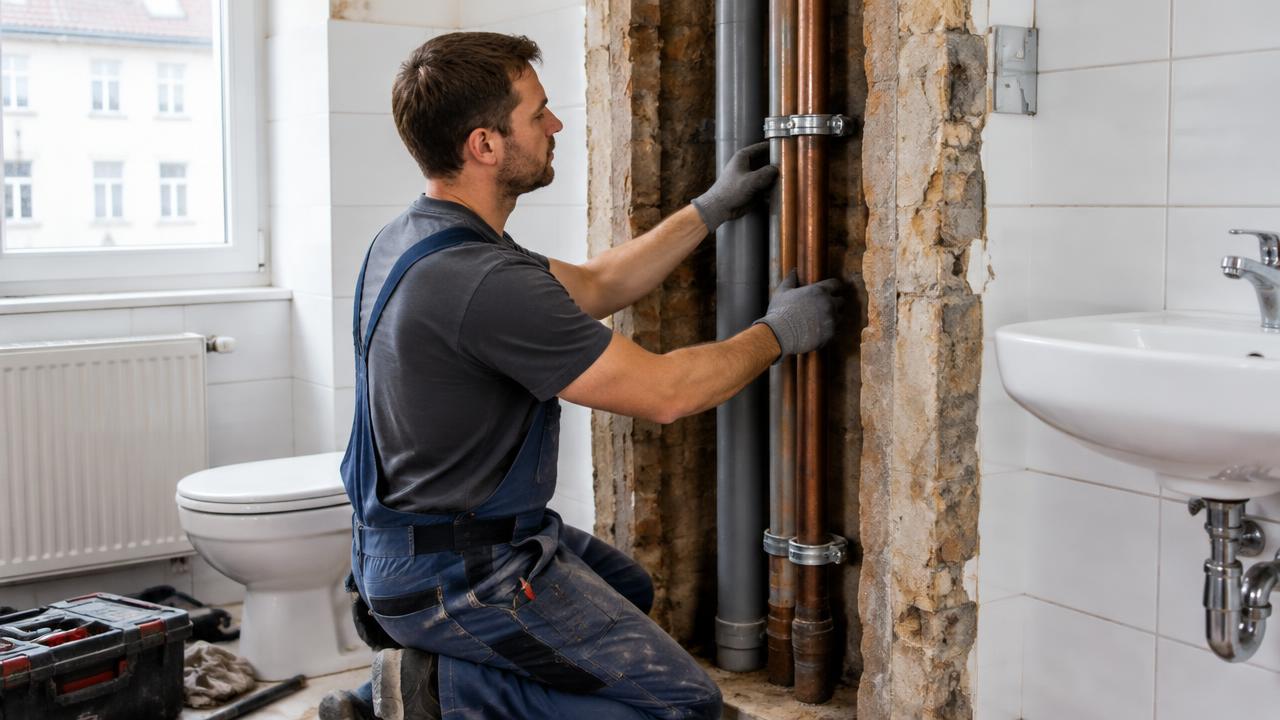
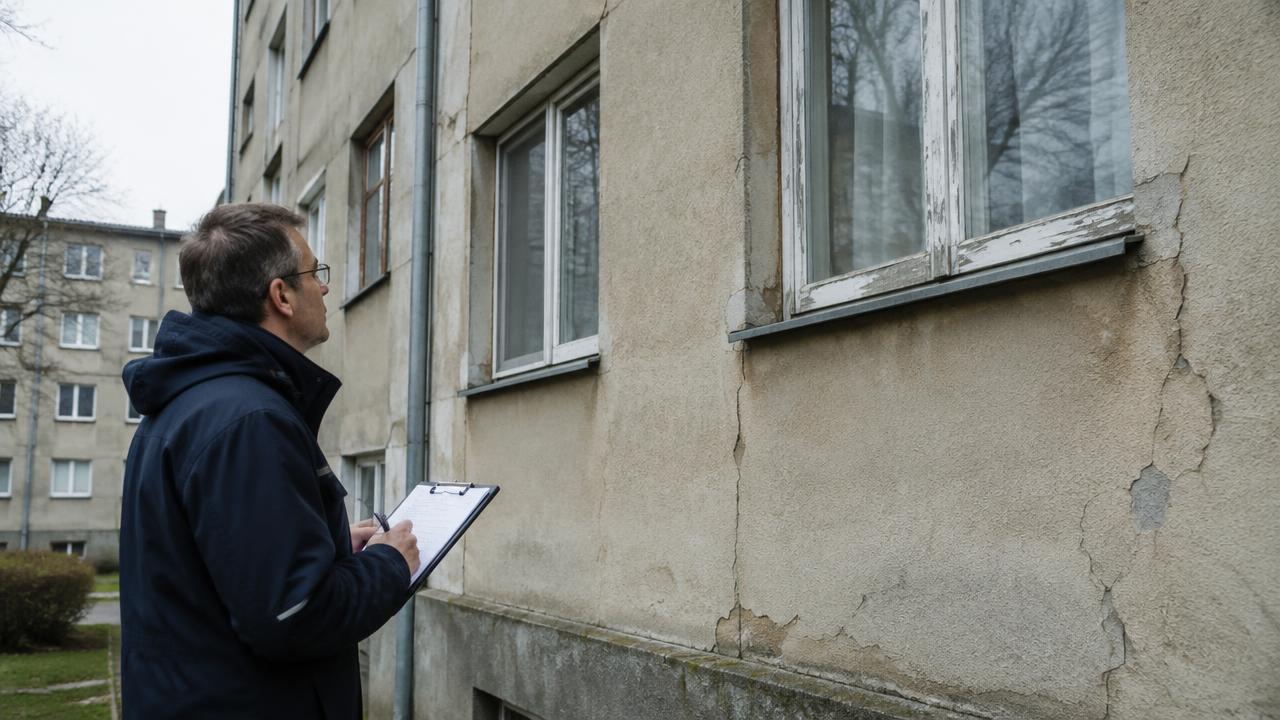
| Communal property | Roof, facade, windows (usually), staircase, pipe risers, central heating | all owners, via the maintenance reserve in the Hausgeld (service charge) and a special levy if required |
| Private property | Bathroom, kitchen, floor coverings, internal doors, internal walls | You alone, from your own reserve |
What belongs to what is regulated by the Teilungserklärung (declaration of division). Windows, for example, are almost always part of the communal property, even if they are in your flat.
The community of owners must build up an adequate maintenance reserve (§ 19 para. 2 no. 4 WEG). The law does not state what is adequate. The amount is decided by the owners' meeting with the Wirtschaftsplan (annual budget). Many communities keep the service charge low to make the flats appear cheap at the point of sale. This comes back to bite you later in the form of special levies.
„What percentage do you assume for maintenance? It seems quite low to me.“
A client asked this question during a consultation, and it was a valid one. A calculation with too little maintenance makes the flat look better than it is. That's why we show three methods side-by-side below and use the more cautious one in our calculations.
03Three methods compared
Rule of thumb. €1 per m² of living space per month, so €12 per m² per year. Simple, but with no reference to the age of the building.
II. Berechnungsverordnung. In § 28, it sets flat rates for profitability calculations. It is intended for price-controlled housing, but banks and surveyors also use it as a guide. The flat rates increase with the age of the flat and are adjusted every three years to reflect price developments.
| Age of the flat (ready for occupancy at year-end) | Flat rate 2026 per m² and year |
|---|---|
| under 22 years | €11.50 |
| 22 years and over | €14.58 |
| 32 years and over | €18.62 |
The values are effective from 1 January 2026 after an increase of 8.37%, according to Haus + Grund München in a press release dated 5 December 2025. There are supplements and deductions for lifts, communal heating systems or minor repairs carried out by the tenant.
Peters' formula. It is based on the construction costs. According to this formula, around 1.5 times the construction costs will be incurred for maintenance over a period of 80 years. In a freehold flat, about 65% to 70% of this is attributable to the communal property.
Annual maintenance = Construction costs per m² × 1.5 ÷ 80 × living space
| per m² and year | per year | |
|---|---|---|
| Rule of thumb €1 per m² and month | €12.00 | €780 |
| II. BV 2026, 32 years and over | €18.62 | €1,210 |
| Peters' formula, €2,500 construction costs per m² (assumption) | €46.88 | €3,047 |
| of which communal property 70% | €32.81 | €2,133 |
| of which own flat 30% | €14.06 | €914 |
| For comparison: Reserve in the Hausgeld (service charge) (example) | €10.80 | €702 |
The range is wide. The rule of thumb yields a quarter of what Peters' formula produces. The truth usually lies somewhere in between, and it depends on the condition of the building. A building where the roof and pipework were replaced five years ago will need less. One where little has been done since it was built will likely need more.
The last line is important. In the example, the owner pays €0.90 per m² and month into the community's reserve, which is €702 per year. According to Peters' formula, the communal property would need around €2,133. The gap of around €1,430 per year doesn't just disappear. It will come later as a higher service charge or a special levy.
04Planning for your own flat
For your private property, a simple list helps: What will need to be replaced in the flat at some point, what does it cost, and how long does it last? Divide the costs by the years, and you have an annual reserve.
| Component in the flat | Costs (assumption) | lasts approx. | per year |
|---|---|---|---|
| Bathroom with tiles and sanitary fittings | €12,000 | 25 years | €480 |
| Fitted kitchen, if let with the property | €6,000 | 15 years | €400 |
| Floor coverings | €3,000 | 15 years | €200 |
| Painting work on tenant changeover | €1,500 | 8 years | €188 |
| Minor repairs | – | – | €150 |
| Total | €1,418 |
That's around €118 per month for the example flat, in addition to the reserve in the service charge. The costs are assumptions for an average level of specification. When you buy, check how old the bathroom and kitchen are. A bathroom that is already 20 years old will feature in your calculations soon, not in 25 years.
05When maintenance counts for tax purposes
For landlords, maintenance costs are tax-deductible expenses (Werbungskosten). However, the timing differs.
Community reserve. The portion of the service charge that flows into the maintenance reserve cannot be deducted in the year of payment. It only becomes deductible when the community spends the money on maintenance (BFH, ruling of 14 January 2025, IX R 19/24). You will find the amount in the annual statement from the management company.
Your own flat. What you repair or replace in your flat is deducted in the year of payment. You can spread larger maintenance expenses over two to five years (§ 82b EStDV). For example, if you refurbish the bathroom for €12,000, this saves €4,381 in income tax on a taxable income of €60,000 as a single person: the tax drops from €14,233 to €9,852 (§ 32a EStG 2026).
06Incorporating maintenance into your purchase calculation
- 01Break down the service charge
Check the annual budget (Wirtschaftsplan) to see how much of your service charge goes into the reserve.
- 02Check the reserve per m²
Divide the community's reserve by the total living space. Compare this with the requirement according to the II. BV or Peters' formula.
- 03Read up on upcoming measures
The minutes from the last three years show what is planned. See Checking the minutes of the owners' meeting.
- 04Estimate for your own flat
Note the age of the bathroom, kitchen and floors, and create a monthly reserve using the table above.
- 05Use the more cautious value in your calculation
Use the higher amount in your purchase calculation. With the cash flow calculator, you can see immediately what this means for your monthly figures.
07Risks and limitations
Reserve is too small. A community with a low reserve and an old building will sooner or later demand more money. This is the biggest risk with older freehold flats. Our guide on how to spot a renovation backlog shows you how to identify this.
Lumpy costs instead of smooth ones. Even a well-planned reserve only smooths out the costs on paper. A special levy for a pipework refurbishment can cost several thousand euros in a single year.
Construction prices. The cost of tradespeople's services has risen significantly in recent years. A reserve that would have been sufficient ten years ago is often no longer enough today. Don't leave the values in your calculation unchanged for decades.
Vacancy during renovation. Anyone who refurbishes a bathroom between two tenancies loses one to two months' rent. Factor this into your costs.
- The reserve is close to or above the requirement according to the II. BV
- Major measures such as the roof and pipework have been completed or are fully financed
- The bathroom and kitchen are no more than ten years old
- The reserve is just a few euros per m² of living space
- In the minutes, measures are postponed year after year
- Your purchase calculation assumes less for maintenance than the rule of thumb
FAQFrequently asked questions
How high are maintenance costs per square metre?
The rule of thumb is €1 per m² per month. The II. Berechnungsverordnung (Second Calculation Ordinance) for 2026 sets an amount of €11.50 to €18.62 per m² per year, depending on age. For older buildings with a significant maintenance backlog, Peter's formula is more cautious and often results in a much higher figure.
What is Peter's formula?
A rule of thumb for annual maintenance: construction costs per m² multiplied by 1.5, divided by 80 years, multiplied by the living area. For condominiums, about 65% to 70% of this is attributable to the common property.
Are maintenance costs included in the service charge?
Only the portion for the common property, as a contribution to the Erhaltungsrücklage (maintenance reserve) and for ongoing repairs. You pay for costs within your own flat in addition to this.
Can I pass maintenance costs on to the tenant?
No. Maintenance and repairs are not considered umlagefähige Betriebskosten (apportionable operating costs). An exception is made only for minor repairs, provided the tenancy agreement contains a valid clause.
Are payments into the maintenance reserve tax-deductible?
Not in the year they are paid. Following a 2025 ruling by the Bundesfinanzhof (Federal Fiscal Court), they only become Werbungskosten (income-related expenses) when the owners' association actually spends the money on maintenance work.
What is an appropriate amount for the maintenance reserve?
The law does not specify a figure. The flat rates given in the II. BV and Peter's formula serve as a guide. More important than an average figure is whether the reserve can cover the maintenance work planned for the coming years.
What happens to my reserve contributions when I sell?
The reserve belongs to the owners' association, not to the individual owner. It remains with the association when the property is sold. However, a healthy reserve can be a strong negotiating point in sales discussions.
08Further reading
- Running costs of a freehold flat
- Service charge (Hausgeld) for a freehold flat
- How to spot a renovation backlog
- Pipework refurbishment
- Profitability calculation for a property
- Glossary: Maintenance reserve (Instandhaltungsrücklage)
- Glossary: Maintenance expenses (Erhaltungsaufwand)
- Calculator: Cash flow of a property
09Sources
All sources retrieved on 16 October 2026.
- § 28 Zweite Berechnungsverordnung (II. BV), gesetze-im-internet.de
- Haus + Grund München, press release from 5 December 2025 on the flat rates from 1 January 2026, haus-und-grund-muenchen.de
- § 19 WEG
- § 6 EStG, § 32a EStG, § 82b EStDV
- BFH, ruling of 14 January 2025, IX R 19/24, bundesfinanzhof.de
- BBSR, Service lives of components for life cycle analyses according to BNB, as of 24 February 2017, nachhaltigesbauen.de
- Example calculation: own calculation, as of 16 October 2026
Disclaimer: This guide provides general information and does not constitute tax or legal advice in individual cases. All figures are sample calculations with disclosed assumptions, as of 16 October 2026.
Writes about Taxes, AfA (depreciation), Existing properties and Portfolio building.
Since 2020, Eduard has bought seven properties of his own and supported more than 150 clients. He writes about tax levers, property documents and portfolio building – with honest numbers instead of rosy projections.
This guide does not replace tax or legal advice. All figures are example calculations with disclosed assumptions.