Riser Pipe Renovation: Costs, Process and Who Pays
In many buildings from the 1950s to the 1970s, the pipes are at the end of their lifespan. We show what a riser pipe renovation costs per flat, how the community of owners decides, and what's left for you as a landlord after tax.
 Eduard Winter
Investment Advisor at InvestImmo
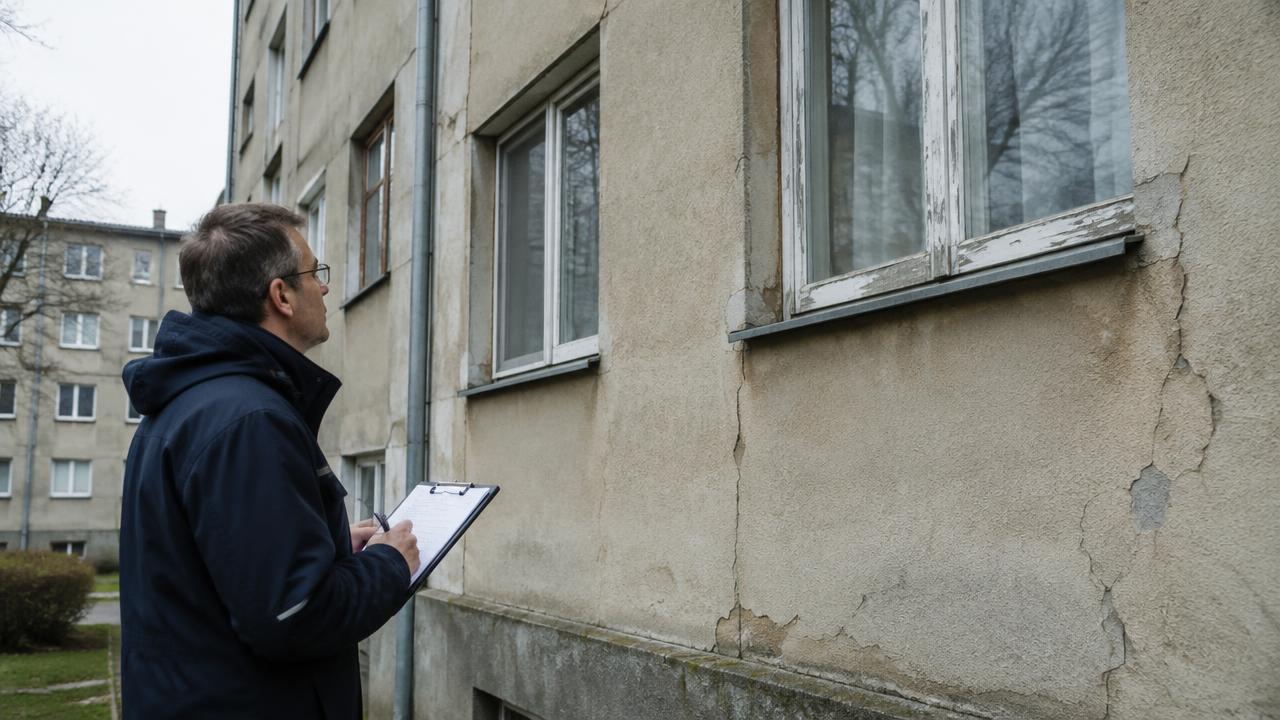
The invitation to the owners' meeting contains a new item: "Riser pipe refurbishment, resolution on planning and financing". It is accompanied by an expert report on corroded pipes and a cost estimate with a six-figure sum. You let your flat and are wondering what portion of this you will have to bear.
A riser pipe refurbishment is one of the most expensive measures a community of owners can decide on. It can rarely be postponed for long, as old pipes become more susceptible to water damage with each passing year. Those who know the figures can plan for the expense and claim the largest part of it on their tax return.
01What a riser pipe refurbishment is
A riser is a vertical pipe shaft that supplies all the floors above one another. It contains pipes for drinking water, hot water, waste water, and often heating. Many buildings from the 1950s to the 1970s still have their original pipes. Galvanised steel rusts from the inside, waste water pipes become leaky, and soldered joints fail.
Typical signs are brown water after a long period of disuse, decreasing water pressure, recurring burst pipes, and damp in the shafts. For drinking water, there are also hygiene issues, such as elevated legionella levels in the hot water circulation.
There are two methods. Replacement involves opening the shafts and laying new pipes, which is standard practice for drinking water. For waste water pipes, an internal refurbishment using a liner or coating may be sufficient if a camera inspection permits it. This avoids having to break open walls in the bathrooms.
02What a riser pipe refurbishment costs
The costs depend less on the pipe itself and more on what needs to be restored afterwards: tiles, screed, walls, and sometimes the entire bathroom.
| Scope | Cost per flat, net |
|---|---|
| Drinking water riser pipes only | €2,500–€5,500 |
| Riser and connection pipes | €5,000–€9,500 |
| With complete bathroom refurbishment | €12,000–€25,000 |
| Waste water pipe internal refurbishment | €600–€1,000 per metre of pipe |
In addition, there is 19% VAT, planning and construction supervision, temporary arrangements during the construction period, and a contingency for unforeseen issues. If old components containing asbestos are found, the total will increase again. The ranges are taken from a market overview by Bestandsnetz Consult as of October 2026. For your building, the quote obtained by the management is what counts.
03Who decides and who pays
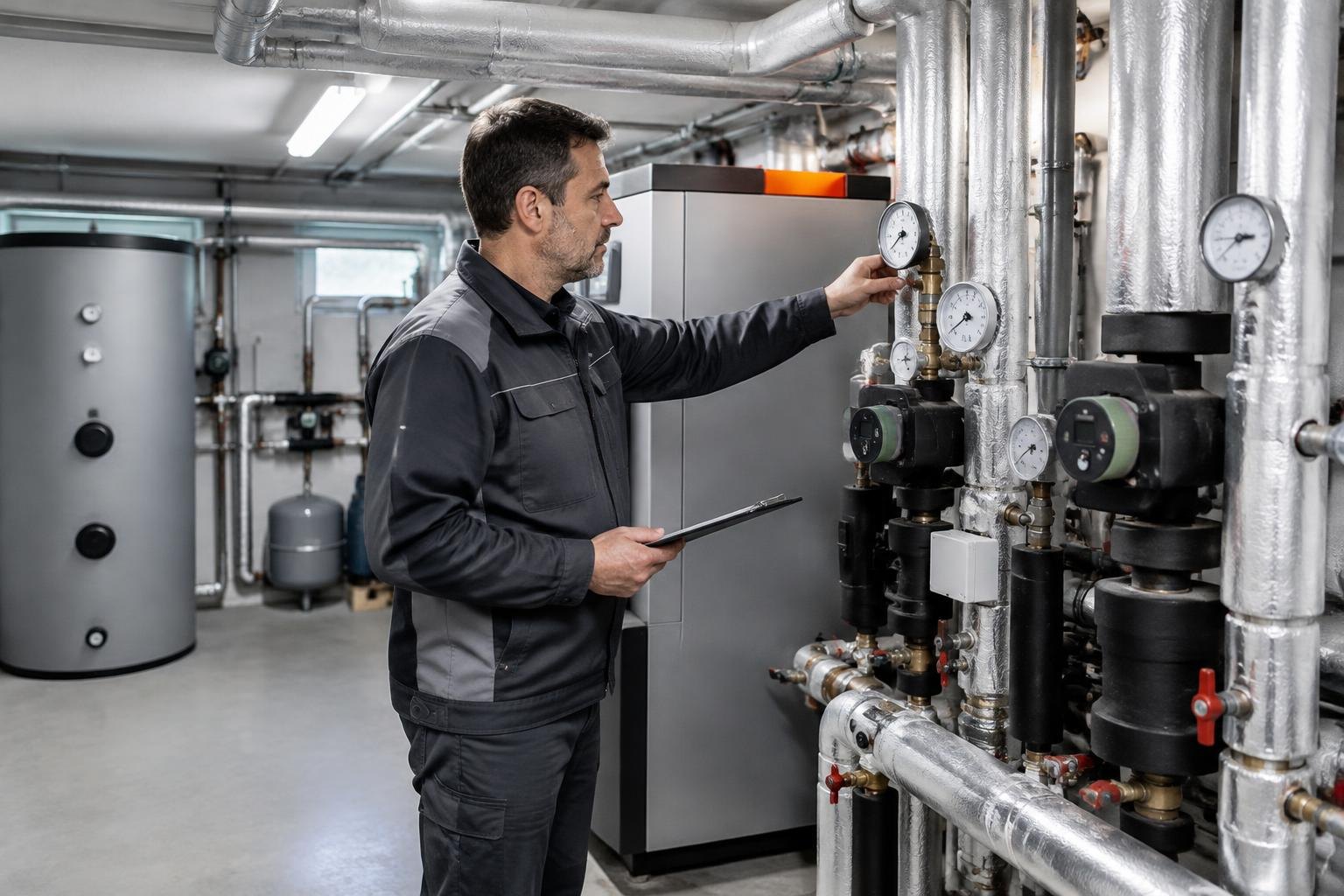
The riser pipes are part of the common property. The community of owners is responsible for their maintenance (§ 19(2) No. 2 WEG – Wohnungseigentumsgesetz, the German Condominium Act). It passes a resolution for the refurbishment at the owners' meeting with a simple majority (§ 25(1) WEG). A single owner cannot prevent it if the refurbishment is necessary.
The community allocates the costs according to co-ownership shares (§ 16(2) sentence 1 WEG). It can decide on a different allocation for a single measure (§ 16(2) sentence 2 WEG), for example, according to the number of bathrooms. Payment is first made from the maintenance reserve. Any shortfall is covered by a special levy.
The boundary with the flat is more complex. The Teilungserklärung (declaration of division) specifies which pipe sections belong to the private property. Often, the riser belongs to the community and the pipe from the junction into the flat belongs to the owner. If the bathroom is also replaced during the refurbishment, you usually pay for this part yourself.
„Does a small owner also have to pay these large shares for the roof and structure?“
Clients ask us this in consultations. The answer is yes, in proportion to their share. Someone holding 50/1,000 shares pays 5% of the costs, regardless of whether they live on the ground floor or in the attic. A small flat therefore contributes a small, but not an insignificant, amount when the measure runs into six figures.
04Example calculation: What an owner ends up paying
Petra is single and lets a flat in a building with twelve flats, built in 1971. Her share is 90/1,000, and the basic rent is €700 per month. Her taxable income without the refurbishment is €60,000. The community decides to replace the riser and connection pipes. The bathrooms will remain; only the walls at the shafts will be opened and closed again. The name is fictional, and the figures are a calculation example, not a forecast.
| Community | Petra (90/1,000) | |
|---|---|---|
| Pipes 12 × €8,000 net | €96,000 | €8,640 |
| Planning and construction supervision 12% (assumption) | €11,520 | €1,037 |
| VAT 19% | €20,429 | €1,839 |
| Total costs, rounded | €128,000 | €11,520 |
| thereof from the reserve fund | €50,000 | €4,500 |
| thereof special levy | €78,000 | €7,020 |
Petra therefore has to raise an additional €7,020. She has already paid the €4,500 from the reserve fund over the years with her service charge. During the construction period, her tenant reduces the rent by 25% for one month, which amounts to €175.
What does she get back through tax? Service charges that flow into the reserve fund are not yet income-related expenses. They only become deductible when the community spends the money on maintenance (BFH, ruling of 14 January 2025, IX R 19/24). In this year, Petra can therefore deduct her full share of €11,520, the reserve fund portion and the special levy.
| without refurbishment | with refurbishment | |
|---|---|---|
| Previous taxable income | €60,000 | €60,000 |
| Income-related expenses for share of riser pipe refurbishment | – | −€11,520 |
| lower rent due to reduction | – | −€175 |
| Taxable income | €60,000 | €48,305 |
| Income tax 2026 | €14,233 | €9,958 |
Petra pays €4,275 less in income tax this year. Of the €7,020 special levy and €175 loss of rent, around €2,920 remains in cash after tax, which she pays out of her own pocket. Economically, the refurbishment costs her a total of around €7,420, because she has already paid the €4,500 from the reserve fund earlier.

05Deduct immediately or spread the cost
Landlords may spread larger maintenance expenditure on a residential building evenly over two to five years (§ 82b EStDV – Einkommensteuer-Durchführungsverordnung, the Income Tax Implementation Ordinance). This is worthwhile if your income in one year would otherwise fall below a threshold where every additional euro saves less tax. In the example, if Petra spreads the cost over three years, she saves a total of €4,368 instead of €4,275, assuming her income remains the same. The difference is small. It increases with larger amounts. The guide Spreading maintenance costs under § 82b EStDV explains when spreading the cost is worthwhile.
There is a restriction for buyers. If you bought the flat less than three years ago, your share of the refurbishment counts towards the 15% limit for acquisition-related expenses (§ 6(1) No. 1a EStG). If this limit is exceeded, you can only write off the costs via building depreciation. It is best to check with your tax advisor whether your payments fall under the limit before the resolution is passed.
06What applies to your tenant during the construction period
Your tenant must tolerate maintenance measures (§ 555a(1) BGB). You must announce them in good time; this obligation is waived only for minor works or emergencies (§ 555a(2) BGB). The management will issue a construction schedule. Forward it to your tenant immediately and arrange access appointments.
As long as the bathroom or kitchen is unusable, the rent is reduced by law (§ 536 BGB). The extent of the reduction depends on the disruption. If the water is only off for a few hours, it is small; if the bathroom is closed for two weeks, it is significantly more. You can find guideline values from court rulings in the guide Rent reduction table. According to a refurbishment company, the work per flat often takes five to ten working days, and four to eight weeks in a building with ten flats.
- 01Check the draft resolution
The scope, costs, allocation, and financing are in the invitation. Ask questions if the demarcation from private property is missing.
- 02Plan your liquidity
Calculate your share of the special levy and set aside the amount until the due date.
- 03Inform the tenant
Forward the construction schedule, coordinate appointments, and name a contact person.
- 04Factor in a rent reduction
Expect a lower rent during the construction period.
- 05Collect documents
You will need the resolution, the community's accounts, and proof of payment for your tax return.
07Risks and limitations
Supplementary charges. Opened shafts often reveal more damage than expected. A contingency of 10 to 15% in the resolution is sensible. If it is missing, a second special levy will follow.
Hazardous substances. In buildings constructed up to the 1990s, asbestos or other hazardous substances may be present in filler, adhesive or pipe insulation. Professional disposal makes the work more expensive and prolongs it.
Liquidity. A special levy is usually due within a few weeks. Those who cannot pay it will fall into arrears with the community. Banks do finance such amounts, but this incurs interest costs.
Change of tenant. Tenants who move out during the construction period leave behind a flat that can only be let again after the work is completed. Expect a void period.
- The reserve fund covers a large part of the costs
- You have set aside your share of the special levy
- Your tenant is informed early
- The community has postponed the refurbishment for years and the reserve fund is small
- You have just bought the flat and are also planning your own renovation
- Your budget cannot sustain a month without full rent
FAQFrequently asked questions
What does a riser pipe renovation cost per flat?
According to a 2026 market overview, around €2,500 to €5,500 net for the riser pipes, €5,000 to €9,500 including connecting pipes, and €12,000 to €25,000 including a new bathroom. On top of this are VAT, planning costs and a contingency.
Who pays for the riser pipe renovation in a community of owners?
All owners pay according to their co-ownership shares, unless the community of owners decides on a different allocation. The money is first taken from the maintenance reserve (Erhaltungsrücklage), with the remainder covered by a special levy (Sonderumlage). Pipe sections designated as private property (Sondereigentum) are paid for by the respective owner.
Can I prevent a riser pipe renovation?
Generally not. If the renovation is necessary for the building's upkeep, the community of owners can pass the resolution with a simple majority. You can contest a resolution if it was not passed in accordance with proper procedure, but not simply because you find the costs too high.
Can my tenant reduce the rent during the riser pipe renovation?
Yes, for as long as the use of the flat is restricted, the rent is reduced by law. The amount of the reduction depends on the extent to which the bathroom, kitchen and water supply are affected, and for how long.
Can I pass on the costs of the riser pipe renovation to the tenant?
Usually not. Replacing old pipes with new ones of equivalent value is considered maintenance (Erhaltung), not modernisation. A modernisation levy (Modernisierungsumlage) can only be charged for genuine improvements.
Can I deduct the costs of the riser pipe renovation from my tax?
Yes, as a landlord, you can deduct them as income-related expenses (Werbungskosten) in the year the community of owners spends the money. This also applies to the portion paid from the reserve fund. You can choose to spread larger maintenance expenses over two to five years.
How long does a riser pipe renovation take?
According to industry sources, it often takes five to ten working days per flat. For the whole building, it can take several weeks to months, depending on its size. The precise process is set out in the construction schedule.
08Further reading
- Recognising a refurbishment backlog
- Maintenance costs of a property
- Community of owners
- Rent reduction table
- Modernisation levy
- Glossary: Special levy
- Glossary: Maintenance costs
- Calculator: Cash flow of a property
09Sources
All sources accessed on 16 October 2026.
- § 16 WEG, § 19 WEG, § 25 WEG
- § 536 BGB, § 555a BGB, § 559 BGB
- § 82b EStDV, § 6 EStG, § 32a EStG
- BFH, ruling of 14.01.2025, IX R 19/24 (contributions to the maintenance reserve are only income-related expenses when disbursed), bundesfinanzhof.de
- Bestandsnetz Consult, “Strangsanierung Kosten”, as of 13.10.2026, bestandsnetz.de
- greenox, “Strangsanierung” (information on duration), greenox-group.de
- Wikipedia, “Strangsanierung” (Riser pipe refurbishment), de.wikipedia.org
- Example calculation: own calculation, as of 16.10.2026
Disclaimer: This guide is general information and does not replace legal or tax advice in individual cases. All figures are example calculations with disclosed assumptions, as of 16 October 2026.
Writes about Taxes, AfA (depreciation), Existing properties and Portfolio building.
Since 2020, Eduard has bought seven properties of his own and supported more than 150 clients. He writes about tax levers, property documents and portfolio building – with honest numbers instead of rosy projections.
This guide does not replace tax or legal advice. All figures are example calculations with disclosed assumptions.