When a tenant dies: succession, heirs and notice
When a tenant dies, the tenancy continues. Depending on who shared their home, it passes to relatives, surviving joint tenants or heirs. We explain the three cases, landlords’ deadlines and what happens financially if the heirs disclaim the inheritance.
 Michael Pauker
Investment Advisor at InvestImmo
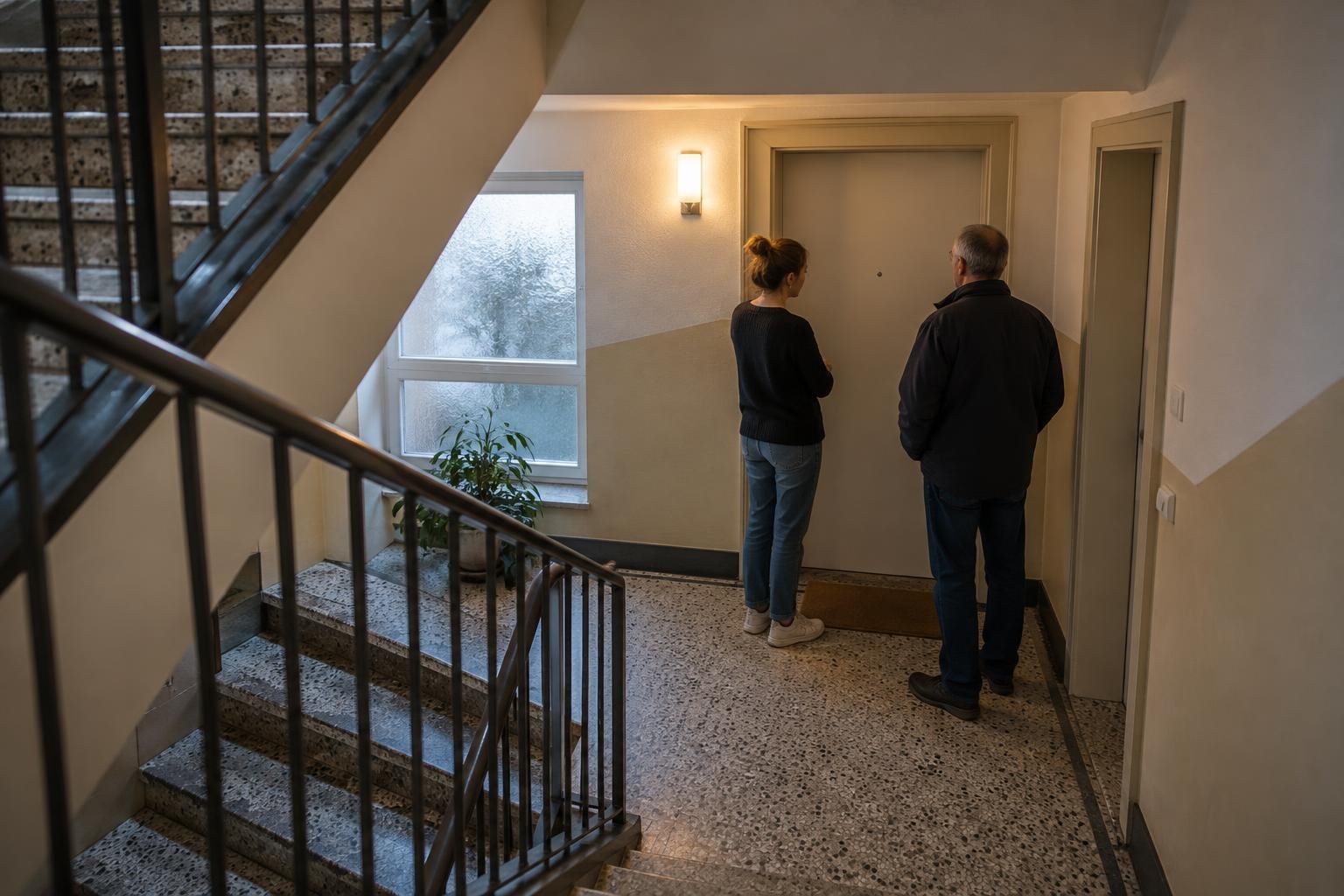
A call from a neighbour or a letter from a funeral director: your long-standing tenant has died. Alongside the human considerations, practical questions quickly arise. Does the tenancy continue? Who pays next month’s rent? May you enter the flat?
The answers lie in a few provisions of the German Civil Code [Bürgerliches Gesetzbuch, BGB]. They depend primarily on who shared the tenant’s home and who was a party to the tenancy agreement. Landlords have a one-month window for exercising the special termination right, with a starting point that depends on the circumstances.
01What happens to the tenancy agreement
A tenancy is not a strictly personal right. It does not disappear when the tenant dies, but continues with other people. The legislation primarily seeks to protect those who shared the deceased tenant’s home. They should not lose their home simply because the tenant has died.
For you as a landlord, this has two implications. Rent remains payable by the people who are now parties to the agreement. You must not enter, clear or relet the flat without proper authority. Entry generally requires consent from an authorised person; genuine emergencies require separate consideration. Unauthorised action can result in claims for damages.
02The three cases: succession, continuation and heirs
The applicable case determines your rights. First establish who lived in the flat and who is named in the agreement.
| Case | Who | Provision | Your termination right |
|---|---|---|---|
| Succession | A spouse or registered civil partner in the shared household; children, other family members and other people subject to the statutory priority and household requirements | Section 563 | Special termination only for a compelling reason relating to the person, within one month of learning that succession is final |
| Continuation | Surviving joint tenants belonging to the group covered by section 563 | Section 563a | No special landlord termination right solely because of the death; surviving tenants may give notice within one month of learning of the death, observing the statutory notice period |
| Heirs | Where nobody succeeds under section 563 and there is no continuation under section 563a, for example where the tenant lived alone | Section 564 | Special termination without establishing a legitimate interest, within one month of obtaining the required knowledge, observing the statutory notice period |
The order is not simply “partner, then children, then everyone else”. Children in the shared household succeed where no spouse does; they may also succeed alongside a registered civil partner. Other family members in the shared household, and people who maintained a shared household intended to be permanent, succeed where neither a spouse nor a registered civil partner does. An unmarried partner may fall within this final group. Simply sharing a flat does not automatically qualify.
People who succeed to the tenancy may reject succession within one month of learning of the death. Succession is then treated as not having occurred under section 563(3). Before serving notice under section 564, establish that there has been neither succession nor continuation under section 563a. For other joint tenants outside the group covered by section 563, the contractual position needs separate assessment; their existing tenancy does not automatically end. Consult a lawyer if the household or contractual arrangements are unclear.

03Termination by the landlord: deadlines and grounds
The key figure is one month. Within one month of learning of the death and that neither succession under section 563 nor continuation under section 563a has occurred, you may exercise the special right to terminate the tenancy with the heirs, observing the statutory notice period under section 564, sentence 2. You do not need a legitimate interest, such as requiring the property for your own use, under section 573d(1).
The statutory notice period is commonly described as three months, regardless of how long the tenancy has lasted. Notice must be received by the third working day of a month for the tenancy to end on the last day of the second following month under section 573d(2). The separate one-month window for exercising the special termination right must also be observed. Notice must be in writing under section 568 and reach all heirs or a representative authorised to receive it for them.
| Event | Date | |
|---|---|---|
| Tenant’s death | 12 November 2026 | |
| Landlord learns the relevant facts | Daughter calls; reliable knowledge of the death and the absence of both succession and continuation is assumed | 16 November 2026 |
| One-month window ends | One month after obtaining that knowledge | 16 December 2026 |
| Notice received | Second working day of December; receipt by all required recipients assumed | 2 December 2026 |
| Tenancy ends | Last day of the second following month | 28 February 2027 |
| Notice received only on 4 December 2026 | Fourth working day | Tenancy ends 31 March 2027 |
Receipt two days later extends the tenancy by a month in this example. If the one-month window expires entirely, this special termination right lapses. Ordinary termination generally requires a legitimate interest; other termination rights, for example following serious breaches, remain unaffected.
The threshold is higher for relatives or other people who succeed to the tenancy. You need a compelling reason relating to that person, such as serious disruption of peaceful occupation. Objectively established financial inability may constitute such a reason. Mere doubts about someone’s ability to pay are not automatically sufficient. A one-month window also applies here, starting when you learn that succession is final. Ask a lawyer to assess whether the grounds are sufficient for termination.
04Rent, the deposit and liability
The new parties to the agreement owe rent until the tenancy ends. Heirs are generally liable for the deceased tenant’s rent debts and obligations arising from the continuing tenancy under section 1967. Whether and how they can limit liability to the estate, and whether additional personal liability arises, depends on how the tenancy and estate are handled. People who succeed to the tenancy and tenants continuing under section 563a are liable alongside the heirs for obligations arising before the death under section 563b(1).
If the deceased tenant did not provide a deposit, you may require security within the statutory limits from people succeeding to the tenancy or continuing it under section 563a, as provided by section 563b(3). An existing deposit generally remains in place. After the tenancy ends, account to the people legally entitled to it; these are not automatically the heirs alone. The guide to tenancy deposits explains how to account for a deposit. A lawyer can assist with disputes over liability or entitlement to the deposit.
05When no heirs can be identified or contacted
The period for disclaiming an inheritance is generally six weeks under section 1944. It does not automatically start on the date of death, but generally when the person learns that they have inherited and on what basis. Special rules apply to inheritance under a will and certain international circumstances. In the international cases specified by law, the period is six months. Disclaiming may be considered where, for example, the estate is insolvent.
If the initially entitled heirs disclaim, others may become entitled in their place. The state’s statutory right of inheritance under section 1936 applies only when there is no other heir: normally the relevant German federal state inherits, or the federal government in the circumstances specified by law. This does not guarantee payment of outstanding rent from public funds; the state can limit its liability to the estate.
For you, this means rent claims may be partly or entirely unrecoverable if the estate is insufficient. The flat may still be full of furniture without you being entitled simply to clear it. Arrangements with an authorised estate representative or, after the tenancy ends, eviction under an enforceable title may be necessary. This can take time. Discuss the steps needed to end the tenancy and recover possession with a lawyer.

06Worked example: when the heirs disclaim the inheritance
Mr Albers lets a 55 m² flat for €650 a month excluding service charges, with service-charge payments on account of €180. The deposit is €1,950. His tenant dies in November 2026 and lived alone. The names are fictional and the figures are a simplified illustration, not a forecast.
To provide a comparable twelve-month period, the calculation covers November 2026 to October 2027. Scenario A: the daughter, as heir, pays the rent through to the end of February 2027, including an assumed outstanding November payment, and clears the flat. It is relet from March at the same rent. Scenario B: the private individuals called to inherit disclaim. No rent is received for the four months from November to February. The flat is also relet from March at the previous rent. Mr Albers validly applies the €1,950 deposit against outstanding rent claims and pays an assumed €2,000 for lawfully arranged clearance. Both scenarios assume that the flat is lawfully returned and available in time for reletting.
Mr Albers has borrowed €150,000 at 3.8%. For simplicity, the calculation assumes €5,700 in interest and €2,250 in capital repayments over twelve months, both based on the initial loan amount; it does not model a specific repayment schedule. The 3.8% rate is an illustrative assumption, not a statement about current mortgage offers.
The €800 in costs not recoverable from tenants is assumed to represent expenditure actually paid and eligible for tax deduction in this example. It excludes contributions to the maintenance reserve of a unit owners’ association [Wohnungseigentümergemeinschaft, WEG]: contributions are not immediately deductible against rental income; only actual eligible expenditure can qualify. Nor is the full owners’ service charge [Hausgeld] automatically deductible. Actual operating costs of €720, not covered from another source, are assumed for the four unpaid months. Monthly payments on account of €180 would not, on their own, establish that actual cost. For the months in which payments are received, service-charge receipts and corresponding expenditure are assumed to offset each other fully.
The deposit was received earlier and is not a new cash receipt within the period. The table treats its valid application against claims as the release of previously restricted funds. It therefore provides a simplified liquidity calculation including use of the deposit, rather than a pure cash-flow statement of newly received rent. Interest on the deposit is excluded from the example.
The tax calculation assumes a total depreciation allowance [Absetzung für Abnutzung, AfA] of €3,000 over twelve months. Capital repayments reduce liquidity but are not deductible rental expenses; depreciation reduces the taxable result without a current cash outflow. The deposit applied to rent arrears is recognised as rental income. The clearance costs are assumed to be fully deductible rental expenses.
For illustration, the tax effect is calculated at a flat 30% of the calculated loss. This assumes that losses can be fully offset against other positive income in the relevant tax year and that the same 30% tax effect applies in both years. Church tax and the solidarity surcharge are excluded. The calculation therefore combines the assumed effect across both tax years; it does not apply the income tax tariff under section 32a of the German Income Tax Act [Einkommensteuergesetz, EStG].
| A: Heirs pay | B: Heirs disclaim | |
|---|---|---|
| Rent excluding service charges | €7,800 | €5,200 |
| Deposit applied to claims: release of restricted funds | €0 | €1,950 |
| Interest (simplified: 3.8% of €150,000) | −€5,700 | −€5,700 |
| Capital repayments (simplified: 1.5% of €150,000) | −€2,250 | −€2,250 |
| Costs not recoverable from tenants, excluding reserve contributions | −€800 | −€800 |
| Actual uncovered operating costs, assumed | €0 | −€720 |
| Clearance (assumed) | €0 | −€2,000 |
| Pre-tax liquidity balance, including use of the deposit | −€950 | −€4,320 |
| Calculated taxable result with assumed depreciation of €3,000 over twelve months | −€1,700 | −€5,070 |
| Simplified tax relief: 30% of the loss | +€510 | +€1,521 |
| Calculated balance after the assumed tax effect | −€440 | −€2,799 |
The deposit covers only part of the disadvantage in scenario B. Its pre-tax liquidity balance is €3,370 lower than scenario A. With the assumed flat 30% tax effect, additional tax relief amounts to €1,011, leaving a calculated disadvantage of €2,359 after that tax effect. Tax relief is not, however, a substitute for an immediately available cash reserve.
Your individual tax calculation requires receipts and expenditure to be allocated to the relevant tax years, alongside the property-specific depreciation allowance, deductibility of expenses and your personal tax circumstances. Discuss these points with your tax adviser. Promptly establishing the contractual position and seeking an estate curator where necessary may help limit delays, but cannot guarantee a particular timetable.
A reserve of three to four months’ rent excluding service charges would amount to €1,950–€2,600 here. That would cover neither the additional pre-tax disadvantage of €3,370 nor the full negative liquidity balance of €4,320 in scenario B. Size your cash reserve according to financing commitments, running costs, possible payment failures and clearance costs, rather than relying solely on a fixed number of months’ rent.
07Which approach suits which circumstances
- The tenant lived alone and the heirs do not want the flat.
- An assessment identifies scope for a lawful reletting at a different rent, and finding a replacement tenant appears realistic.
- You plan refurbishment or a sale with vacant possession; establish whether this is legally and practically feasible.
- A relative succeeds to the tenancy and pays reliably; section 564 does not apply in this case.
- An heir wants to move in and the existing terms fit the investment appraisal.
- Reletting could involve a lengthy void period.
08Risks and common mistakes
Missing the one-month window. Under section 564, it begins when you learn of the death and the absence of both succession and continuation under section 563a. Under section 563, the window for exercising the special termination right begins when you learn that succession is final. Acting too late can mean losing the relevant special termination right; ordinary termination generally requires a legitimate interest.
Serving the wrong recipient. Notice must reach every heir or a representative authorised to receive it. Addressing notice simply to “the heirs” without establishing effective service is risky. Where the heirs are unknown, an estate curator may be an appropriate recipient if their remit covers this.
Unauthorised clearance. Even if the flat appears abandoned, you must not simply dispose of belongings without valid consent from those entitled to give it. Enforced eviction requires an enforceable title and the prescribed enforcement procedure. The deceased tenant’s belongings generally form part of the estate.
Unpaid rent and interest. A tenant’s death may mean months without rent payments while interest and owners’ service charges continue. This is one reason not to buy an investment property without a cash reserve. The guide to insurance for landlords explains what insurance may and may not cover.
FAQFrequently asked questions
Does the tenancy end when the tenant dies?
No. Depending on the household and contractual circumstances, eligible people succeed under section 563 of the German Civil Code, surviving joint tenants continue under section 563a, or the tenancy continues with the heirs under section 564. Death alone does not end the agreement; a valid basis for ending it, such as notice or a mutual termination agreement, is required.
What does section 563 cover?
Section 563 governs succession by certain household members. Spouses and registered civil partners in the shared household have priority. Children in the shared household succeed where no spouse does and may succeed alongside a registered civil partner. Other family members in the shared household and people who maintained a shared household intended to be permanent succeed where neither a spouse nor a registered civil partner does. Succession may be rejected within one month of learning of the death. The landlord’s special termination right requires a compelling reason relating to the person who succeeds.
What does section 564 cover?
Section 564 provides for the tenancy to continue with the heirs where nobody succeeds under section 563 and there is no continuation under section 563a. Heirs and landlords may exercise a special termination right within one month of learning of the death and the absence of succession or continuation, observing the statutory notice period.
Who pays the rent after the tenant dies?
The new parties to the tenancy owe rent until the agreement ends. For heirs, estate liability, possible limitations of liability and any additional personal liability must be distinguished. People who succeed to the tenancy and tenants continuing under section 563a are also liable alongside the heirs for obligations arising before the death under section 563b. A lawyer can assist with disputes over liability.
What notice period applies after a tenant’s death?
The special termination rights generally use the statutory notice period: if notice is received by the third working day of a month, the tenancy ends on the last day of the second following month, regardless of its previous duration. There is also a one-month window for exercising the special right. Under section 564, it starts when the relevant party learns of the death and the absence of both succession and continuation under section 563a. For the landlord’s right under section 563, it starts when the landlord learns that succession is final.
Do I need a reason to terminate the tenancy with the heirs?
For special termination with heirs under section 564 within the applicable deadline, you do not need to establish a legitimate interest, such as requiring the property for your own use, under section 573d(1). Special termination with someone who succeeds under section 563 requires a compelling reason relating to that person. Other termination rights have their own conditions.
What happens if all the heirs disclaim the inheritance?
Other heirs may first become entitled after an inheritance is disclaimed. If there is no other heir, section 1936 normally makes the relevant German federal state the heir, or the federal government in certain cases. The state can limit its liability to the estate. Where the heirs are unknown, an estate curator may be appointed; section 1961 concerns an application where claims are intended to be pursued through the courts. If the estate is insufficient, rent and clearance costs may remain unpaid. Discuss enforcement of your claims with a lawyer.
09Further reading
- Tenancy notice periods
- Holding and accounting for a tenancy deposit
- Possession proceedings
- Property handover record
- Glossary: mutual tenancy termination agreement
10Sources
- Section 563 of the German Civil Code, section 563a, section 563b, section 564: succession, continuation and liability following a residential tenant’s death
- Section 573d: special termination with the statutory notice period; no legitimate interest required for termination with heirs under section 564. Section 580: the general tenancy provision on a tenant’s death; residential tenancies are subject to the special rules in sections 563 onwards.
- Section 1936, section 1944, section 1961, section 1967: state inheritance, the disclaimer period, estate curatorship and heirs’ liability
- Section 32a of the German Income Tax Act: the income tax tariff for an individual tax calculation; the worked example instead uses an expressly assumed flat tax effect.
This guide provides general information on German law and does not replace legal, tax or investment advice for an individual case. The figures are illustrative assumptions, not a forecast. Consult a lawyer or tax adviser for an assessment of your legal and tax circumstances.
Writes about Financing and calculations, Taxes and Care properties.
Michael combines his experience as a banker and former portfolio manager at a family office with his practice as a property investor himself. He writes about robust calculations, financing, risks and strategic portfolio building.
This guide does not replace tax or legal advice. All figures are example calculations with disclosed assumptions.