German landlords in 2027: deadlines and obligations
What to consider on metering, heating inspections and e-invoicing – and how to plan cash flow without relying on uncertain reforms.
 Eduard Winter
Investment Advisor at InvestImmo
01Changes for German landlords in 2027: key deadlines
Not every change affects every rental property. The relevant factors include the heating system, existing metering equipment and the VAT treatment of each transaction. Also distinguish legal obligations from assumptions about future costs.
| Topic | Deadline or rule | What it means for landlords |
|---|---|---|
| Remotely readable consumption meters | Upgrades generally due by 31 December 2026 | Check existing equipment and possible exemptions |
| Monthly consumption information | Already required where remotely readable equipment is installed | Agree the information process with the managing agent or metering provider |
| E-invoicing | From 1 January 2027, a transitional provision expires for invoice issuers with total turnover exceeding €800,000 in the previous year | Receive and archive affected domestic B2B invoices in a structured format |
| Inspection of older heating systems | Due by 30 September 2027 for certain systems | Arrange the inspection and allow for follow-up work |
| 2025 service charge statement | For calendar-year accounting periods, generally must reach the tenant by 31 December 2026 | Do not leave preparation and delivery until the last day |
| CO2 costs | Depend on consumption, price and statutory cost allocation | Calculate the landlord’s share separately |
02Remotely readable meters: what to do by the end of 2026
Which devices are affected?
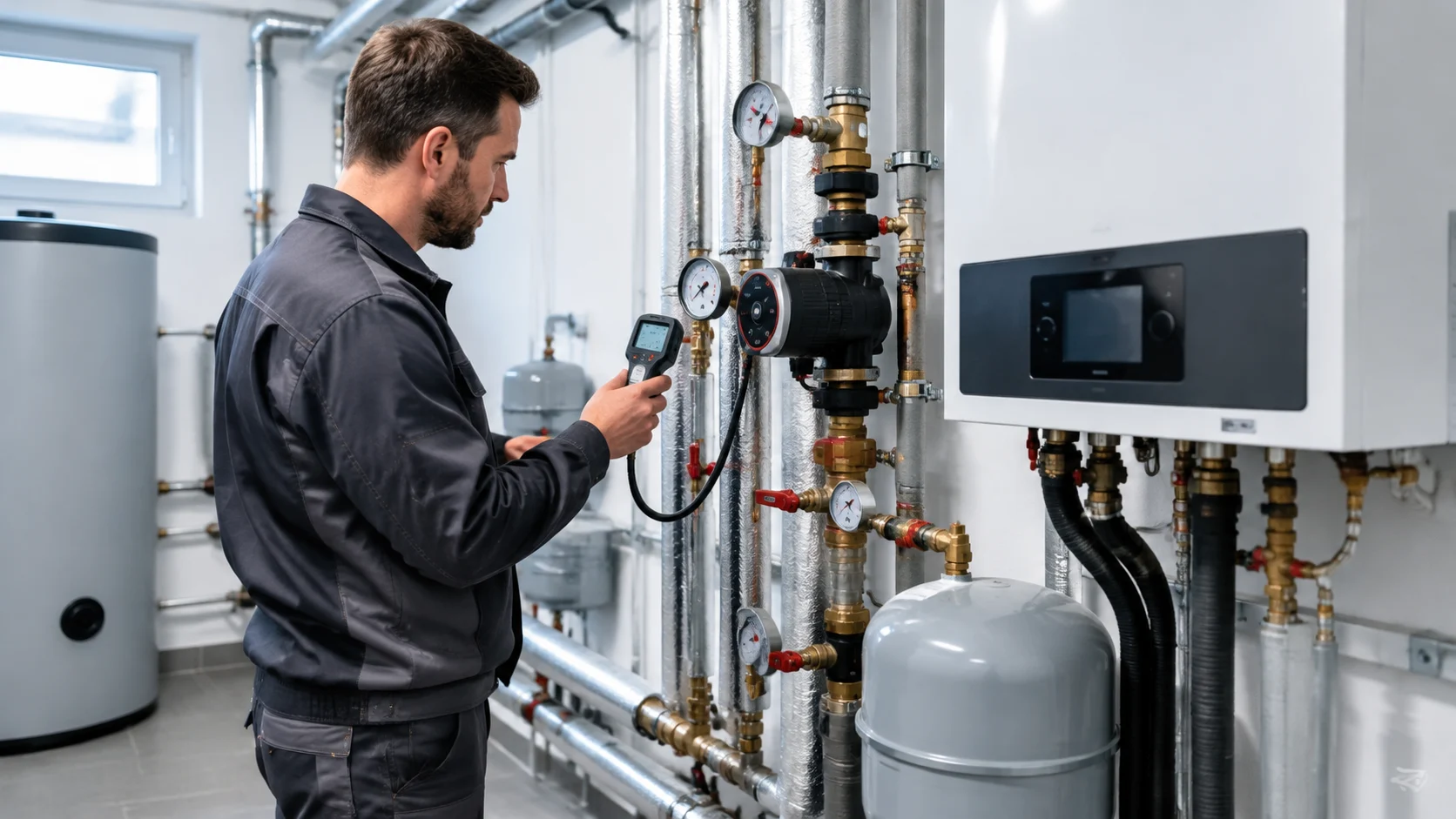
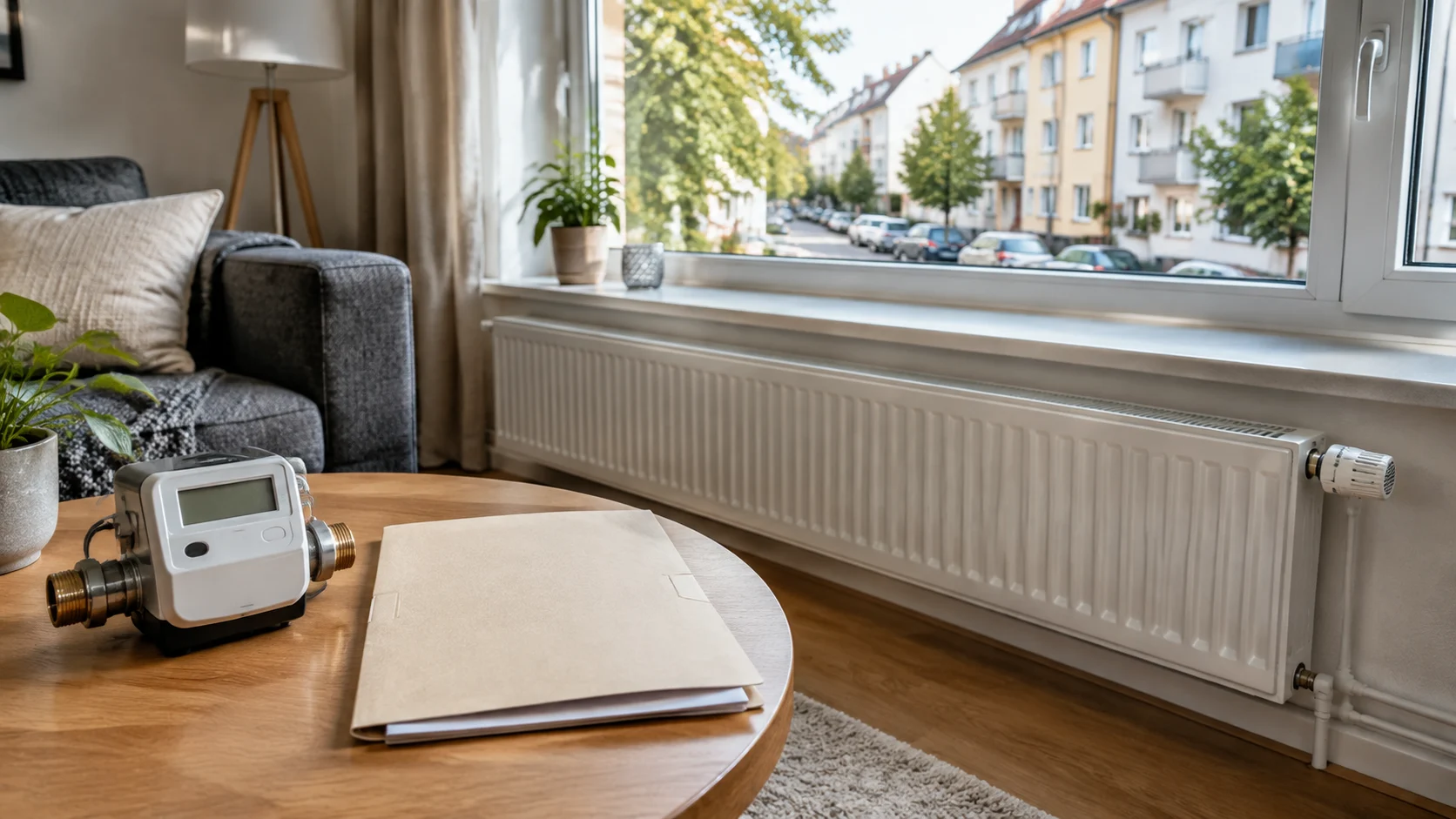
Under section 5 of the German Heating Costs Ordinance, existing consumption metering equipment that cannot be read remotely must generally be upgraded or replaced by 31 December 2026. This includes heating cost allocators and heat and hot-water meters within the ordinance’s scope.
There are exemptions, for example where upgrading is technically impossible in an individual case or would involve disproportionate expense. A high quotation alone does not establish an exemption. Have the specific circumstances assessed professionally.
If you own a flat, ask the managing agent:
- Which devices still cannot be read remotely?
- Has the upgrade been commissioned and scheduled?
- How will the costs be funded?
- Who will provide the monthly consumption information?
When tenants can apply a 3% reduction
If remotely readable equipment is not installed despite a statutory requirement, section 12 of the Heating Costs Ordinance provides for a 3% reduction in the tenant’s affected share of costs. A further 3% reduction may apply where required consumption information is not provided or is incomplete.
However, two separate 3% reductions do not automatically follow from a missed upgrade. The monthly information requirement under section 6a of the Heating Costs Ordinance is linked to installed remotely readable equipment. Whether there are multiple breaches, and which costs are affected, must therefore be assessed separately.
Monthly information does not replace the annual statement. See the guide to heating cost statements for more detail.
03Heating inspections: a deadline for certain older systems
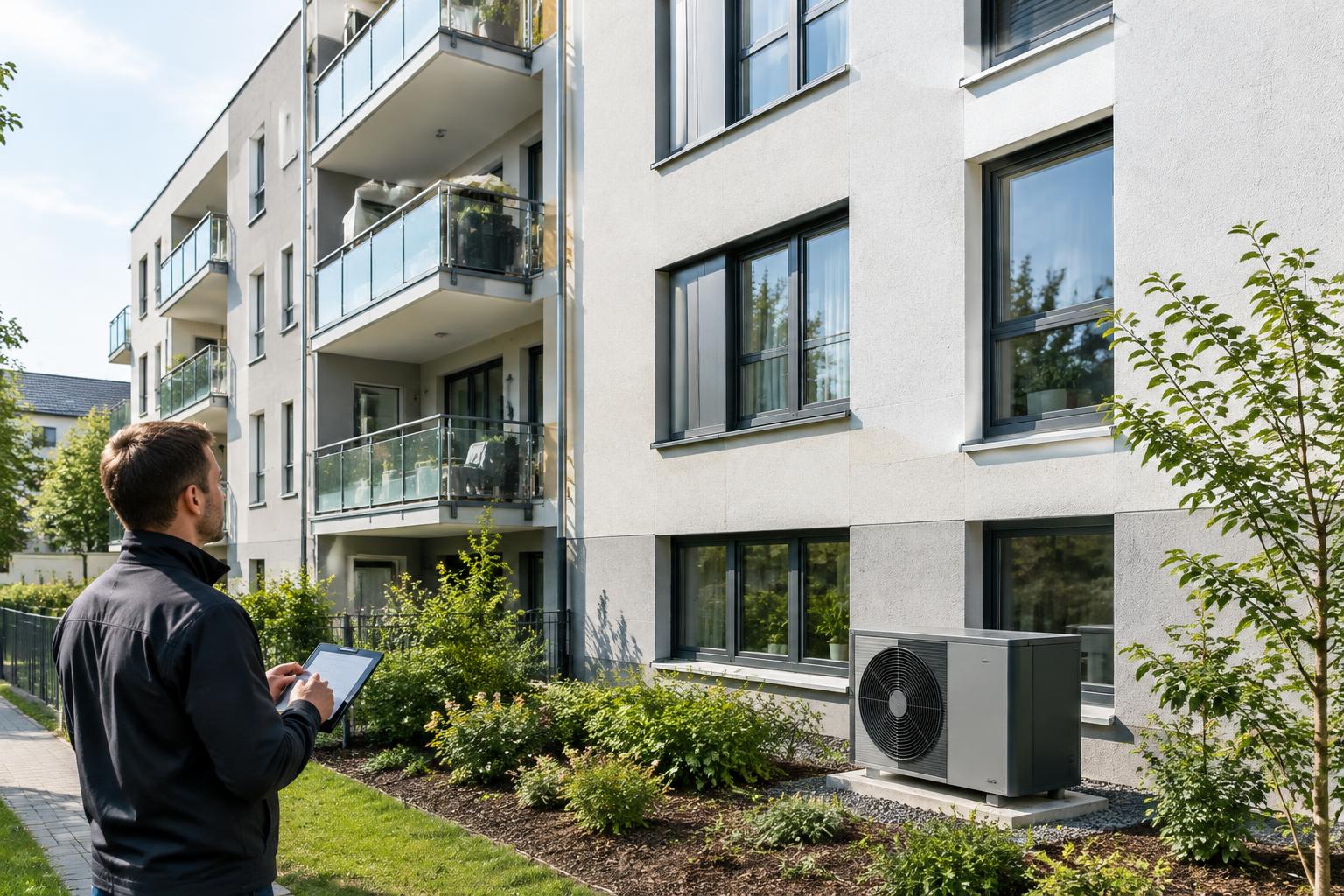
Section 60b of Germany’s Buildings Energy Act regulates the inspection and optimisation of certain heating systems that use water as the heat-transfer medium. It generally covers buildings with at least six dwellings or other independent units; heat pumps do not fall under this provision.
For covered systems installed before 1 October 2009, inspection and optimisation are due by 30 September 2027. For newer systems, the deadline is generally one year after the system reaches 15 years of age. Statutory exemptions must be considered.
The inspection covers matters including system settings, efficiency and possible optimisation measures. It does not amount to a general requirement to replace the heating system.
For a communal heating system, owners should ask the managing agent whether a qualifying inspection has already taken place, who will be commissioned and what work is required. Allocating costs within the owners’ association and recovering any costs from tenants are separate questions.
04E-invoicing: what actually changes in 2027
Receiving e-invoices has mattered since 2025
Landlords can be businesses for VAT purposes even if their residential letting is VAT-exempt. Since 2025, there has generally been no transitional period for receiving domestic B2B e-invoices. An email inbox can be sufficient for receiving them, but you also need a suitable process for reading and retaining the invoices.
A simple PDF file is not an e-invoice within the statutory definition. A structured electronic format is required, such as XRechnung or a suitable version of ZUGFeRD. Retain the original structured component in particular, rather than just a printout.
The turnover threshold applies to the invoice issuer
From 1 January 2027, the general transitional permission to issue paper invoices and other electronic invoices ends for issuers with total turnover exceeding €800,000 in the previous year. These businesses must generally issue e-invoices for covered taxable transactions between businesses established in Germany.
Special rules and exemptions remain, including those for small-value invoices of up to €250, invoices issued by businesses using the German small-business VAT exemption, and certain electronic data interchange procedures during the transitional period. The claim that “every tradesperson’s invoice will be an e-invoice from 2027” is therefore too broad.
There is no obligation to issue an e-invoice for VAT-exempt residential letting. It may, however, be relevant to commercial letting subject to VAT. The general transitional periods end in 2028, but statutory exemptions remain.
05CO2 costs: calculate the price and landlord’s share separately
Three factors determine the impact on your cash flow:
- energy consumption and the resulting CO2 emissions;
- the CO2 costs actually charged;
- the share the landlord must bear under the law.
The price corridor of €55 to €65 per tonne relates to national CO2 pricing in 2026. It is not a reliable promise of unchanged costs in 2027. Even an unchanged CO2 price would not guarantee unchanged gas or oil prices, or unchanged heating bills.
For residential buildings, CO2 costs are generally allocated using a tiered model based on annual CO2 emissions per square metre. Statutory special cases can alter the allocation. The landlord’s share cannot simply be passed on to tenants in full.
Use a property-specific baseline and an additional stress scenario. Assumptions about future European emissions trading do not provide a reliable euro figure for your flat.
06Tax and tenancy law: do not anticipate benefits from reforms
Index-linked rent depends on the contract and deadlines
Where an index-linked rent has been validly agreed, adjustments are governed by section 557b of the German Civil Code. The rent must generally remain unchanged for at least one year. An adjustment must be notified in text form, stating the change in the index and either the new rent or the amount of the increase. The adjusted rent becomes payable from the beginning of the second month following receipt of the notice.
An assumed inflation rate therefore does not automatically translate into additional rent available throughout the next calendar year. The relevant index readings, the contract and timely receipt of a valid notice are what matter. See rent increases: the rules for the fundamentals.
Income tax and selling after ten years
Tax effects depend on factors including deductible expenses, depreciation and your personal income position. Mortgage principal repayments are not deductible rental expenses. Interest can, however, generally be deductible where it is sufficiently connected with the letting activity.
For privately held property, the ten-year period under section 23 of the German Income Tax Act is generally relevant to private disposals. This is not a blanket guarantee of a tax-free sale: commercial property trading, business assets and special circumstances require separate assessment. Future legislative changes cannot be ruled out.
Potential tax or tenancy reforms should not enter a purchase decision as benefits already available or as definite changes to income.
Property tax remains property-specific
Property tax liabilities can change, particularly through municipal assessment multipliers and changes to the tax base. There is therefore no basis for assuming an unchanged amount for every property in 2027. Check the assessments applying to your property and whether service charge advance payments need adjusting. See the guide to German property tax.

07Worked example: cash flow from a rented flat
All figures below are assumptions only, not market data, offers or forecasts. The example covers a full rental year with no vacancy. The flat measures 70 m² and generates €800 a month in rent excluding service charges.
The loan is €225,000. We assume 3.8% interest and an initial principal repayment rate of 1.5%, simplifying the calculation to a single payment at year-end. Monthly payments would change the split between interest and principal repayment.
Non-recoverable costs, including an assumed maintenance budget, total €1,200 a year. The CO2 share is not included in that figure. We assume total CO2 costs of €145 for the flat and a landlord’s share of 40% that is applicable in this example.
| Calculation | Annual amount |
|---|---|
| Rent excluding service charges: €800 × 12 | €9,600 |
| Interest: €225,000 × 3.8% | −€8,550 |
| Principal repayment: €225,000 × 1.5% | −€3,375 |
| Non-recoverable costs including maintenance budget | −€1,200 |
| CO2 share: €145 × 40% | −€58 |
| Modelled cash flow before tax | −€3,583 |
The flat therefore requires an annual cash contribution in this model. Principal repayments reduce the loan balance, but they are not disposable income. The maintenance budget is a planning allowance; actual expenditure may differ. Additional major works and tax effects are not included.
Three separate sensitivities
| Additional assumption, each considered separately | Calculated effect |
|---|---|
| Valid index-linked rent increase of 3.5%, collected for a full twelve months | €9,600 × 3.5% = €336 additional annual rent |
| One applicable 3% reduction on an affected heating cost share of €1,100 | €1,100 × 3% = €33 less in recovered costs |
| Interest rate increase of 0.5 percentage points on an unchanged loan balance of €225,000 | €225,000 × 0.5% = €1,125 additional annual interest |
With only the assumed full-year rent increase, cash flow improves to −€3,247. The other scenarios are not included in that figure. For an actual refinancing, use the outstanding loan balance at that time rather than the original loan amount.
The example does not establish a universal ranking of risks. It does show why financing, vacancy and major maintenance should be modelled alongside new obligations.
08Checklist before the year-end
- Check metering equipment: Clarify existing devices, upgrades, exemptions and monthly consumption information with the managing agent or metering provider.
- Deliver the annual statement on time: For an accounting period from 1 January to 31 December 2025, the service charge statement must generally reach the tenant by 31 December 2026. Late claims for additional payment are normally excluded unless the landlord is not responsible for the delay.
- Prepare for the heating inspection: Record building size, system type, installation date and existing inspections; involve the owners’ meeting where necessary.
- Be able to process e-invoices: Organise receipt, readability, responsibilities and retention.
- Update cash flow planning: Allow separately for the landlord’s CO2 share, financing, maintenance and possible special contributions to the owners’ association.
- Do not anticipate rent increases: Check the contractual basis, index readings, deadlines and actual payment start date.
As at October 2026. This guide provides general information and does not replace individual legal or tax advice.
09Free initial consultation
In a free initial consultation, we discuss the costs, financing assumptions and documents relevant to assessing an investment property. The consultation does not replace individual legal or tax advice.
Arrange a free initial consultation
FAQFrequently asked questions
What changes for German landlords in 2027?
The main issues are the upgrade to remotely readable consumption meters, generally due by the end of 2026, the inspection deadline for certain older heating systems on 30 September 2027, and the expiry of an e-invoicing transitional provision. The obligations that apply depend on the building, the system and the particular transaction.
What happens if heating meters cannot be read remotely?
Where remote readability is missing despite a statutory requirement, tenants may be entitled to reduce their affected share of costs by 3%. Statutory exemptions from the upgrade requirement must be considered. An additional reduction for missing consumption information does not arise automatically, because the monthly information requirement is linked to installed remotely readable equipment.
Will the CO2 price remain at €55 to €65 per tonne in 2027?
The corridor of €55 to €65 per tonne relates to national CO2 pricing in 2026 and is not a promise for 2027. Your calculations should use the CO2 costs actually charged, energy consumption and the statutory landlord’s share. An unchanged CO2 price would not guarantee unchanged heating bills either.
Must residential landlords issue e-invoices in 2027?
There is no obligation to issue an e-invoice for VAT-exempt residential letting. However, as businesses for VAT purposes, landlords have generally needed to be able to receive e-invoices since 2025. The 2027 change mainly concerns invoice issuers with total turnover exceeding €800,000 in the previous year and covered taxable domestic B2B transactions; exemptions remain.
Which heating systems must be inspected by September 2027?
The deadline generally covers certain water-based heating systems in buildings with at least six dwellings or other independent units, where the system was installed before 1 October 2009. The deadline is 30 September 2027. Heat pumps do not fall under this provision, and other statutory exemptions must be checked.
Is selling a property after ten years always tax-free?
No. For privately held property, the ten-year period under section 23 of the German Income Tax Act is generally relevant to private disposals. Business assets, commercial property trading and special circumstances are subject to different rules or additional checks. There is no guarantee against future legislative changes.
Writes about Taxes, AfA (depreciation), Existing properties and Portfolio building.
Since 2020, Eduard has bought seven properties of his own and supported more than 150 clients. He writes about tax levers, property documents and portfolio building – with honest numbers instead of rosy projections.
This guide does not replace tax or legal advice. All figures are example calculations with disclosed assumptions.