Energy-efficiency renovation: funding for landlords
How grants, subsidised loans, tax deductions and modernisation rent increases interact — with a transparent worked example.
 Romolo Marini
Investment Advisor at InvestImmo
01Energy-efficiency renovation: four levers for landlords
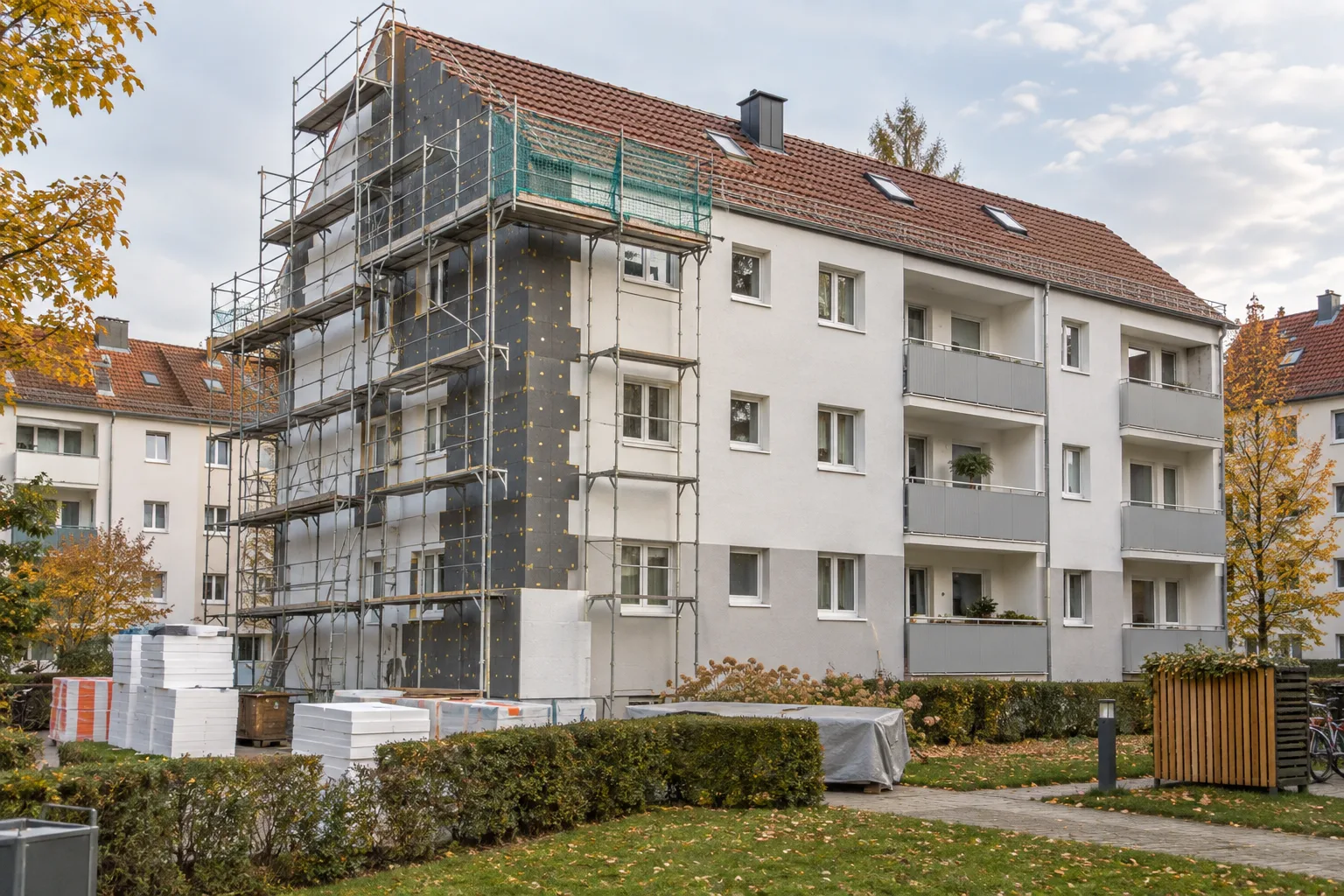
The owners’ association is planning external wall insulation, with a substantial share of the cost allocated to your flat. Neither the grant percentage nor potential tax relief alone tells you whether the investment is financially viable.
Four instruments can work together:
| Instrument | Effect | Important limitation |
|---|---|---|
| Grant | Reduces the costs you finance yourself | Eligibility requirements, expenditure caps and application timing |
| Subsidised loan | Finances the work, potentially with a repayment subsidy | Credit assessment, programme eligibility and repayment |
| Tax deduction | May reduce the tax burden on rental income | Immediate deduction or depreciation; individual tax position |
| Modernisation rent increase | May increase recurring rental income | Maintenance element, funding, statutory caps and hardship objections |
These instruments cannot simply be added together independently. Grants affect both the tax treatment and the modernisation costs recoverable through rent. Funding is also often paid only after completion and submission of evidence, so bridging finance remains a separate consideration.
02Which funding routes are available to landlords?
The following funding routes are particularly relevant to planning in October 2026. Whether a specific project qualifies depends on the applicable programme conditions and transitional provisions. There is no general legal entitlement to funding.
| Funding route | Typical use | What landlords should consider |
|---|---|---|
| BAFA: BEG individual measures | Insulation, windows and other building-envelope improvements | Technical minimum standards, eligible expenditure and involvement of an energy-efficiency expert |
| KfW: heating grants | Eligible heating replacement or connection to a heat network | The appropriate programme for private individuals, businesses or the owners’ association |
| KfW 261: residential buildings loan | Renovation to an eligible Efficiency House standard | Whole-building planning; the loan amount and repayment subsidy depend on the standard achieved |
| BAFA: residential energy advice | Energy advice and an individual renovation roadmap | Separate eligibility requirements; plan advice and construction separately |
Renovation roadmap: useful, but not automatically more profitable
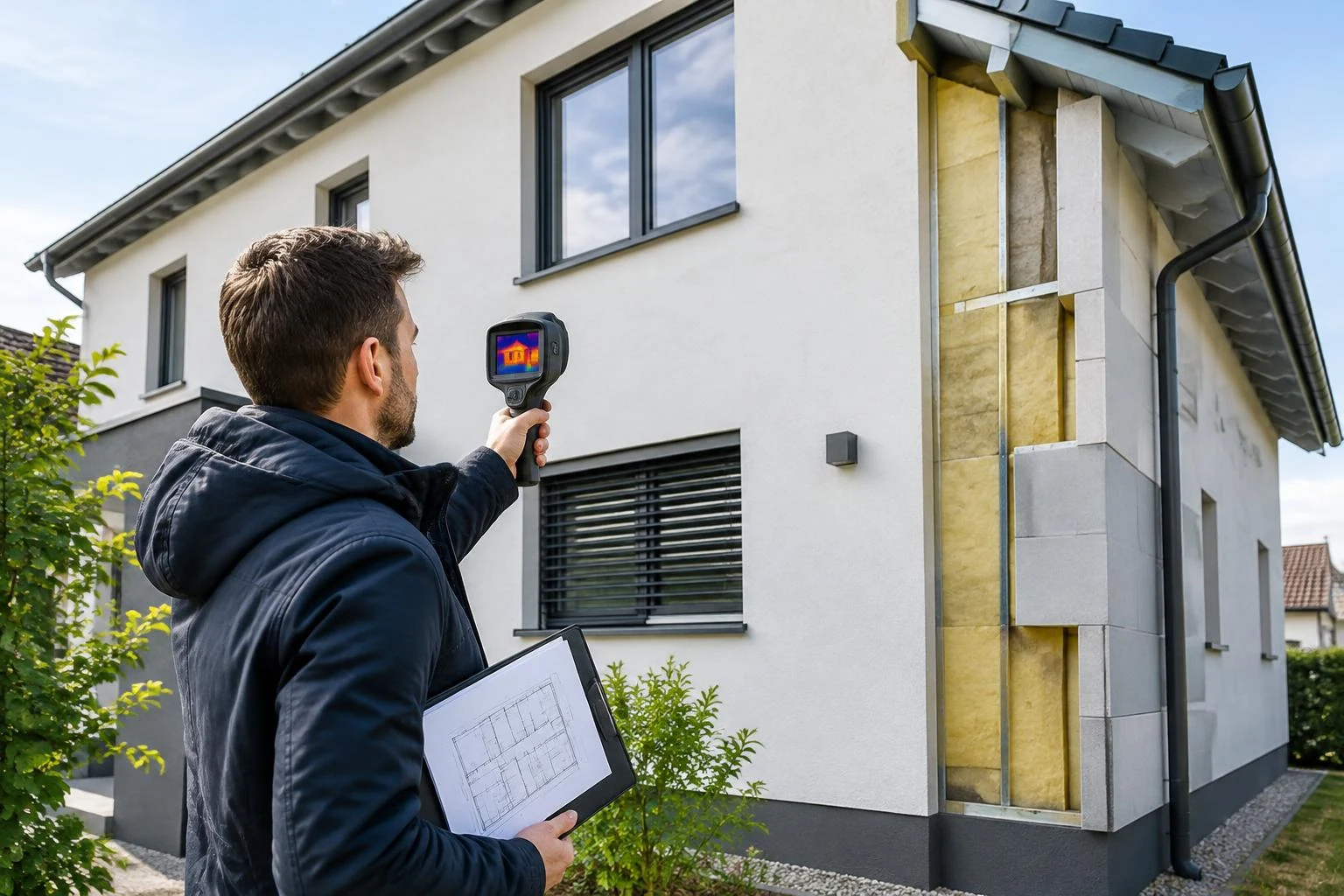
An individual renovation roadmap, known as an iSFP, coordinates measures technically and over time. For certain individual measures, it can provide access to an additional bonus and a higher eligible expenditure limit. This does not automatically apply to every measure, particularly not to every heating replacement.
A higher funding cap only creates a financial benefit if actual eligible expenditure exceeds the lower limit. Compare the additional grant with the remaining advisory costs. Even without extra funding, coordinated planning can still be worthwhile.
Read more: Individual renovation roadmap.
Heating grants: landlords are not excluded from every bonus
The income bonus and climate-speed bonus generally require owner-occupation. They are therefore unavailable for a rented flat. However, this does not mean landlords can only ever receive basic funding: a technology-related efficiency bonus for certain heat pumps may also be relevant to rented homes if the conditions are met.
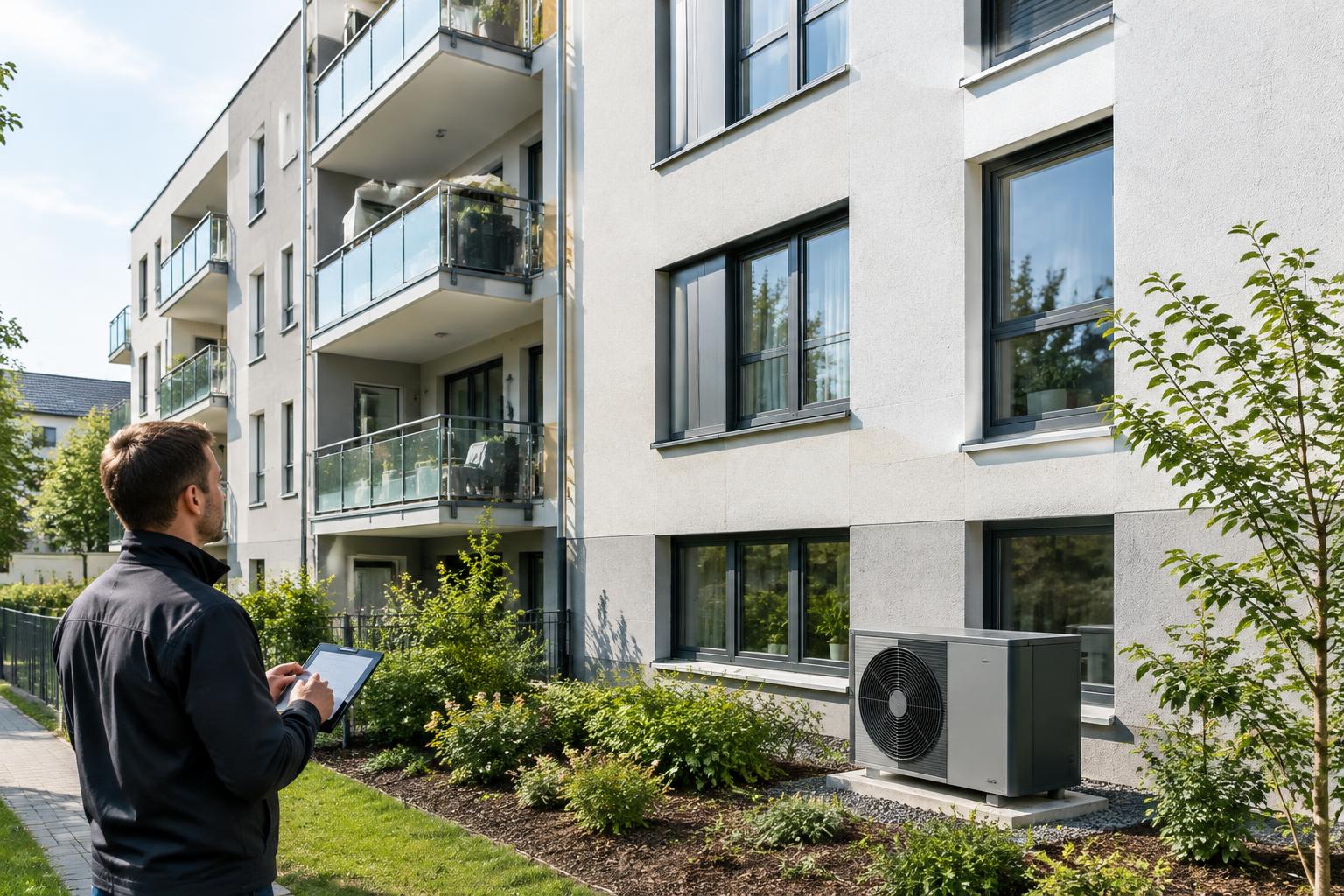
For apartment buildings, the applicant category and the distinction between common and individually owned property also matter. Further reading: Heat pumps in apartment buildings.
03Tax: an immediate deduction is not automatic
Why section 35c EStG does not apply to rented homes
The tax relief under section 35c of the German Income Tax Act requires occupation for the taxpayer’s own residential purposes. It is therefore not the appropriate relief for the rented part of a building.
Instead, landlords account for renovation costs when calculating rental income for tax purposes. The classification of the expenditure determines the treatment:
- Maintenance expenditure may generally be deductible against rental income.
- Acquisition or production costs are generally recognised through building depreciation.
- Substantial maintenance expenditure may be spread equally over two to five years under section 82b of the German Income Tax Implementing Regulation, provided its conditions are met. This concerns buildings that are not business assets and are predominantly used for residential purposes.
A blanket comparison of “42% tax savings instead of 20% funding” is misleading. The actual tax effect depends on income, the timing of the deduction and the classification of the costs, among other factors. A large deduction may also change the marginal tax rate.
Further explanation: Spreading maintenance expenditure.
Grants and payments to the owners’ association
Grants must be reflected in the tax treatment. For subsidised maintenance expenditure, this may involve reducing the deductible costs or recognising a reimbursement as income, depending on the payment sequence. Where costs must be capitalised, the depreciation basis may be reduced. You should not assume an unreduced tax benefit on top of the grant.
Important for flat owners: paying into the maintenance reserve does not yet create a tax deduction. Generally, the association must first spend the money for its intended purpose, after which the work must be classified for tax purposes. A special levy is therefore not immediately deductible merely because it has been paid.
The 15% threshold after purchase
If certain repair and modernisation expenditure incurred within three years of acquisition, excluding VAT, exceeds 15% of the building’s acquisition cost, it may qualify as acquisition-related production costs under section 6(1), no. 1a EStG. The land component is excluded from the calculation, while attributable incidental acquisition costs for the building are generally included.
Illustrative assumption: If the building’s acquisition cost is €200,000, the threshold is €30,000. Exceeding the threshold is what matters, rather than merely reaching it.
There are statutory exceptions, including maintenance work normally incurred annually. Extensions must be assessed separately as production costs. Production costs can also arise outside this three-year rule, for example where a building is substantially improved. Receiving a grant does not remove the need for this assessment.
04Example: external wall insulation for a rented flat
The following calculation is solely an illustrative model based on assumptions, not a statement of grant eligibility or your individual tax assessment.
We assume ten flats of 65 m² each, total façade costs of €250,000 and an equal allocation of costs. The flat considered here therefore bears €25,000. The following additional assumptions apply:
- A grant of 15% is awarded on the full assumed costs; eligible expenditure and funding caps are sufficient for this.
- For tenancy-law purposes, 30% of the construction costs relate to maintenance that would have been necessary anyway.
- For tax purposes, the entire expenditure qualifies as immediately deductible maintenance; no acquisition-related production costs arise.
- For simplicity, the full deduction produces income tax relief at a constant rate of 42%.
- Advisory, financing and other incidental costs are assumed to be zero. The solidarity surcharge and church tax are excluded.
The maintenance element under tenancy law and the tax classification are separate assessments. Work can qualify as maintenance for tax purposes while partly constituting modernisation under tenancy law.
Investment and assumed tax effect
| Calculation per flat | Amount |
|---|---|
| Share of façade costs | €25,000 |
| Assumed grant: €25,000 × 15% | −€3,750 |
| Costs to be financed before tax | €21,250 |
| Assumed tax relief: €21,250 × 42% | −€8,925 |
| Calculated cost after funding and tax | €12,325 |
The tax relief is not an additional grant and will not necessarily be available when payment is due. Liquidity planning must first account for invoices falling due and the timing of the grant payment.
Potential modernisation rent increase
Under section 559 of the German Civil Code, landlords can generally increase the annual rent by 8% of the qualifying modernisation costs. Maintenance costs and applicable funding must be deducted.
The model produces the following result:
(€25,000 − €7,500 maintenance element − €3,750 grant) × 8% = €1,100 a year.
Rounded, this is €91.67 a month, or €1.41 per m² per month. For legal eligibility, we assume there are no earlier modernisation rent increases that must be counted, all formal requirements are met and no successful hardship objection applies.
At the unchanged assumed income tax rate of 42%, the calculation leaves €638 of additional rent a year: €1,100 × 58%. Further expenditure and rental losses are not included.
This calculation does not guarantee financial viability. Financing, construction cost increases and future maintenance may change the result. Neither a higher property value nor a particular level of energy savings is assured.
05Tenancy law: limits on rent increases
For the standard modernisation rent increase, the general limit is €3 per m² per month within six years. Where the starting monthly rent is below €7 per m², the limit is €2 per m². Earlier relevant increases must be taken into account.
Additional special rules apply to heating installations. Subject to the conditions in section 559e BGB, a separate route allows an increase based on 10% of qualifying costs. Heating-related increases are generally subject to a special limit of €0.50 per m² per month within six years. The façade calculation therefore cannot be transferred unchanged to a heating replacement.
Modernisation must generally be announced in text form at least three months before work begins. After completion, the rent increase must be declared separately and supported by a clear calculation. Financial hardship and statutory exceptions require individual assessment.
Details: Modernisation rent increases.

06Process: plan funding and tenant notices before construction
- Clarify the technical scope and ownership responsibilities. Establish the building’s condition, the scope of work and whether common or individually owned property is involved.
- Choose energy advice and the funding route. Involve an energy-efficiency expert where needed and assess the value of an iSFP.
- Prepare resolutions and financing. Within the owners’ association, clarify cost allocation, representation, reserves and potential special levies.
- Inform tenants in good time. The required modernisation notice belongs before construction, not at the final accounting stage.
- Coordinate the contract and funding application. The definition of project commencement varies by programme. BEG individual measures may require a supply or works contract containing the prescribed funding condition and an implementation date at the application stage. An unconditional order can make the project ineligible.
- Complete the work, submit evidence and account for costs. Observe deadlines, document invoices and funding decisions, then assess the tax deduction and potential rent increase separately.
Many programmes allow planning and advisory services before the application for construction funding; separate rules apply to funding for the advice itself. Depending on the programme, starting construction after applying but before funding approval may be permitted, but the applicant then bears the funding risk.
For work on common property, the owners’ association generally applies for funding, represented by its managing agent or an authorised person. Allocation to individual owners depends on the programme and the applicable distribution of costs, not automatically on equal shares.
More on joint planning: Energy-efficiency renovation of an owned flat.
07Decision-making: start with the work, then the funding
Calculate particularly carefully if the purchase was less than three years ago, several major building components are being renewed together or the association has limited liquid reserves.
An already necessary renewal can make an energy-efficiency improvement more financially manageable, because certain work would be required regardless of insulation. Nevertheless, funding is no substitute for a technical condition assessment and a robust cost plan. Have the tax classification and tenancy-law implementation assessed before placing a binding order.
This guide provides general information and does not replace individual tax or legal advice.
08Free initial consultation
A free initial consultation lets you discuss how renovation costs, financing and letting fit into your property plans. It does not include a binding funding approval or an individual tax or legal assessment.
Request a free initial consultation
FAQFrequently asked questions
Can landlords receive funding for energy-efficiency renovations?
Yes. Depending on the work and the applicant, grants for individual measures, heating grants and subsidised loans for Efficiency House renovations may be available. The income bonus and climate-speed bonus generally require owner-occupation. Technology-related bonuses may also be relevant to rented homes.
Can a landlord use section 35c EStG?
Not for a rented home, because section 35c EStG requires occupation for the taxpayer’s own residential purposes. Landlords generally account for costs against their rental income. Whether an immediate deduction or only depreciation is available depends on the tax classification.
How do grants affect tax deductions and rent increases?
Grants must be reflected for tax purposes, for example by reducing expenditure, recognising a reimbursement as income or reducing the depreciation basis. For a modernisation rent increase, applicable grants reduce the recoverable costs. An unreduced benefit under both routes should not be assumed.
When is an individual renovation roadmap worthwhile?
An iSFP can coordinate measures technically and enable additional funding for certain individual measures. A higher funding cap only helps if actual eligible expenditure exceeds the lower limit. The additional grant should therefore be compared with the remaining advisory costs.
Can I appoint a contractor before applying for funding?
This depends on the programme and the contract terms. For BEG individual measures, a contract containing the prescribed funding condition may already be required when applying. An unconditional order or an early construction start can, however, make the project ineligible.
Who applies for funding within an owners’ association?
For work on common property, the association generally applies, represented by its managing agent or an authorised person. Resolutions, representation and cost allocation must support the application. Paying into the maintenance reserve does not yet create a tax deduction.
Does the 15% threshold also apply to subsidised renovations?
Funding does not remove the need to assess acquisition-related production costs. Certain repair and modernisation expenditure within three years of acquisition must be compared, excluding VAT, with 15% of the building’s acquisition cost. If the threshold is exceeded, depreciation rather than an immediate deduction may apply. Exceptions and grants require separate consideration.
Writes about Financing and Taxes.
Romolo brings almost 17 years of banking and financing experience, including leading around 145 sales staff, to his work. He writes about financing, taxes and property decisions that fit your life for the long term.
This guide does not replace tax or legal advice. All figures are example calculations with disclosed assumptions.