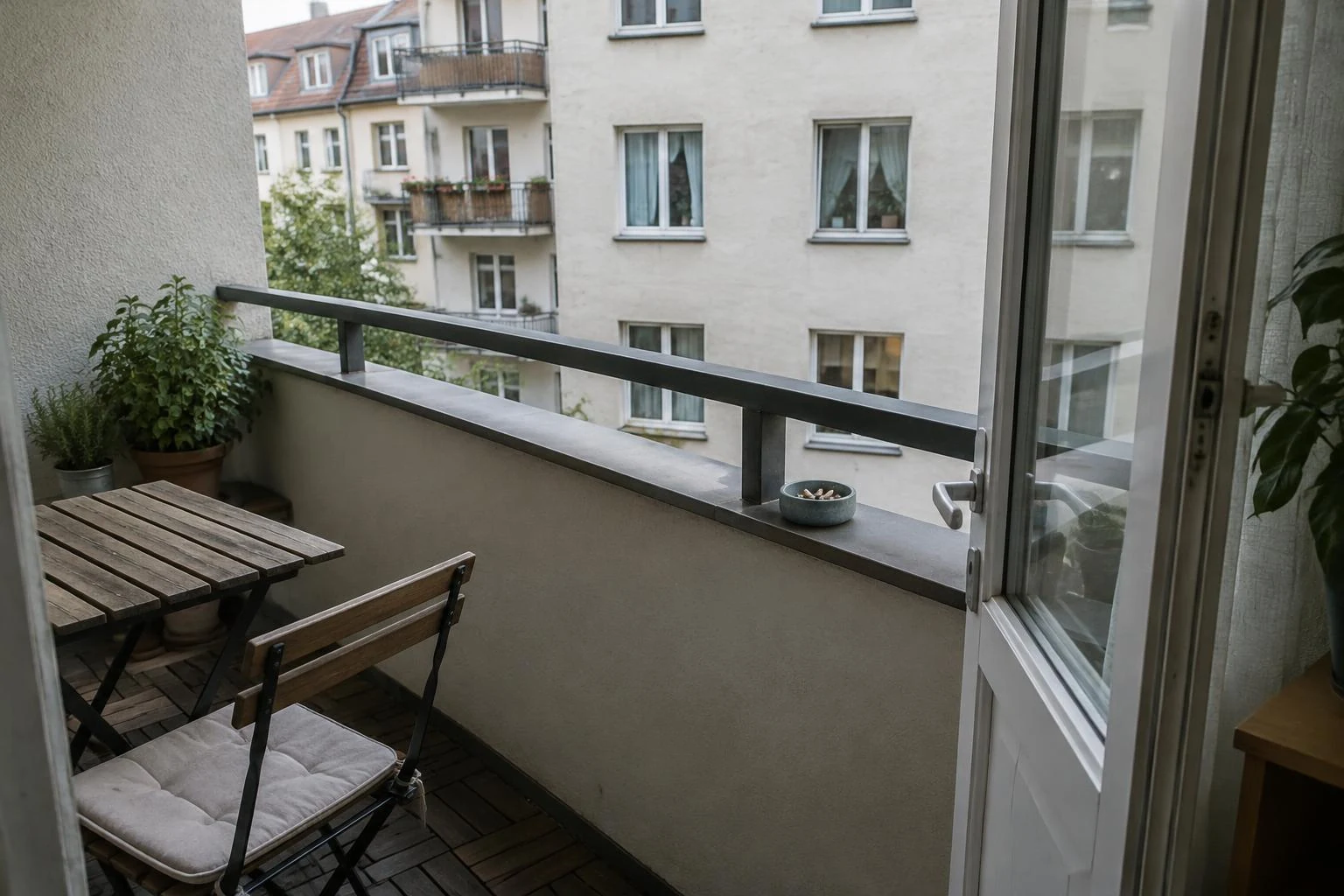
Water damage in a rented flat: who pays for what?
A hose bursts, and drying equipment appears in your tenant's living room. What to do immediately, which insurers may help and how lost rent can affect your reserves.
 Herbert Gotschy
Investment Advisor at InvestImmo
Saturday evening, and your phone rings. Your tenant is standing in water in the kitchen: the dishwasher's inlet hose has burst. Water is already dripping through the downstairs neighbour's ceiling. Your first question: who pays for this?
Depending on the cause and policy terms, different insurers may cover different parts of the damage. Alongside repairs, you should consider another potential cost: reduced rental income while the flat is affected.
01The first 48 hours
Prompt action can limit consequential damage such as mould. Do not wait: you must take reasonable steps to minimise damage and notify your insurer without delay. Breaching these duties may lead to a reduced payout, depending on the circumstances.
- 01Stop the water
Have the isolation valve closed, or the main stopcock where necessary if the building's pipework is affected. Act only if it is safe. Do not enter flooded areas where electricity may be present; isolate the electricity only from a safe, dry location. Otherwise, contact qualified professionals or the emergency services if there is immediate danger.
- 02Ask for photographs
Your tenant should document the damage, apparent cause and affected rooms before clearing up, where safe. Do not delay emergency measures to take photographs.
- 03Notify the insurer
Inform the buildings insurer without delay and, for an individually owned flat, also notify the property manager. Remind the tenant to contact their contents and liability insurers.
- 04Appoint a specialist contractor
Agree leak detection and drying arrangements with the insurer and, where relevant, the property manager. Do not delay urgent damage-limitation measures. Keep the invoices.
- 05Inform the neighbours
If another flat is affected, notify its occupants and owner.
- 06Keep a written record
Record the date, time, suspected cause, measures taken and contact people in a brief note.
Your tenant must report a defect without delay (section 536c of the German Civil Code). If late reporting makes the damage worse, they may be liable for that additional damage. Conversely, you must restore the flat to the condition required by the tenancy agreement (section 535 of the German Civil Code); an ongoing insurance assessment does not remove this duty.
02Which insurance pays for what?
Water damage can affect building components and belongings owned by different people. Which insurer responds depends on the cause, insured property, liability and policy terms.
| Damage | Insurance | Policyholder |
|---|---|---|
| Pipes, floors, screed, walls, drying work | Residential buildings insurance for an insured escape of water; check pipe damage and the defective component separately | Owner or community of apartment owners [Eigentümergemeinschaft] |
| Tenant's furniture, clothing and electronics | Household contents insurance for an insured cause | Tenant |
| Damage to a neighbouring flat for which the tenant is liable | Personal liability insurance [Privathaftpflicht], within the agreed cover | Tenant |
| Lost rent due to a legally justified rent reduction or the flat being uninhabitable | Residential buildings insurance, depending on the policy | Owner |
| Landlord's fitted kitchen | Buildings or contents insurance, depending on its classification and the policy | Owner |
Not every instance of water ingress is an insured escape-of-water event. Flooding, rainwater ingress and repairs to the component that caused the damage, for example, require separate checks of the cover.
Residential buildings insurance premiums can be recovered through operating charges where the tenancy agreement provides for this (section 2, item 13 of the German Operating Costs Ordinance). If the tenant caused an insured incident through minor negligence and contributes to the premium, you must claim on the buildings insurance rather than pursue the tenant directly for compensation where the relevant conditions are met. The insurer's right to recover its payment from the tenant is then also generally restricted (Federal Court of Justice, case VIII ZR 28/04).
The reasoning is that tenants who help pay for insurance through operating charges should benefit from it when damage occurs. This protection for minor negligence cannot simply be extended to gross negligence or intentional damage. Classification depends on the particular conduct; a forgotten running tap alone does not establish the degree of negligence.
03When the tenant is liable
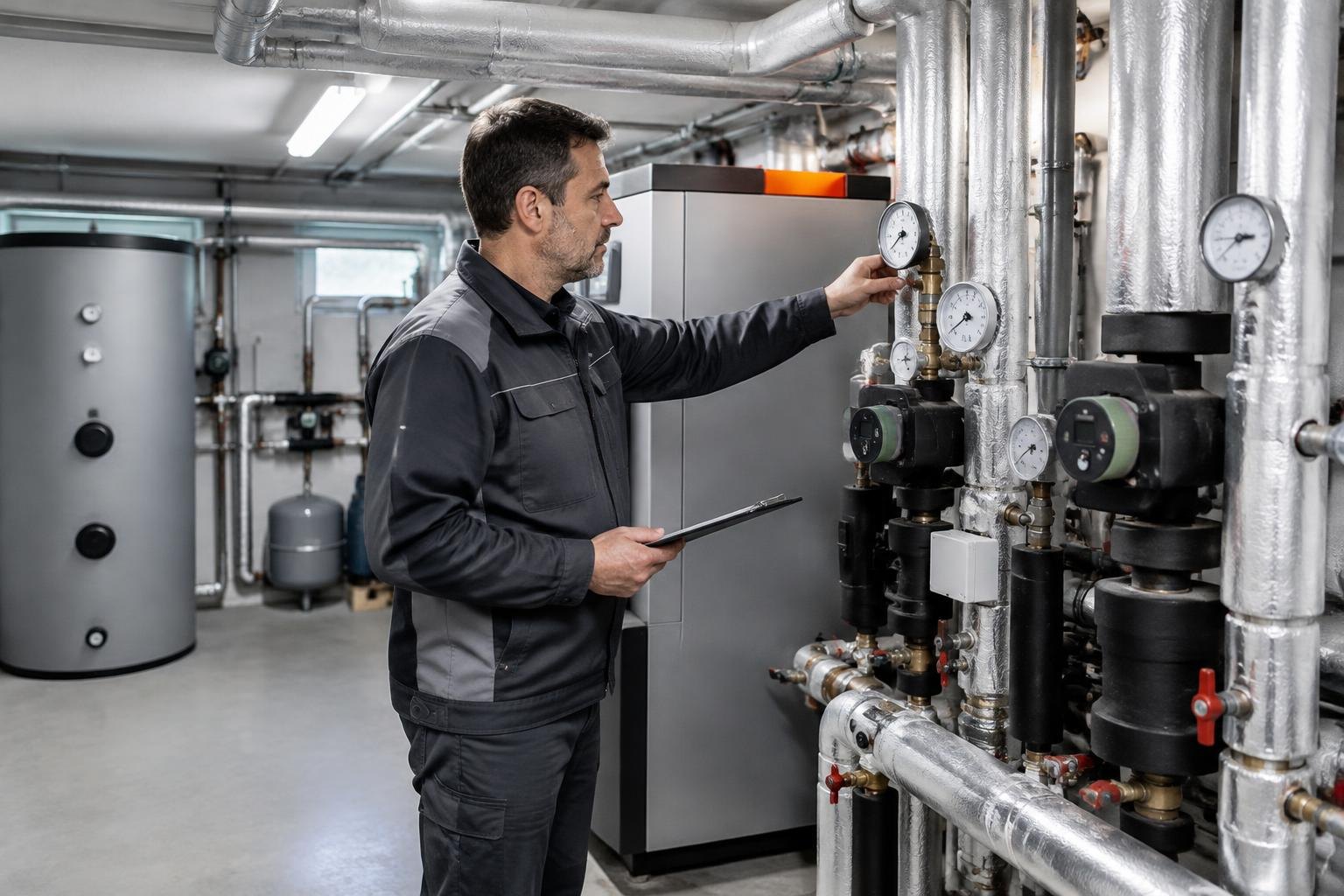
The tenant is not liable for normal wear and tear (section 538 of the German Civil Code). If an old pipe inside a wall bursts without any fault on their part, they are not liable merely because they rent the flat. Whether your buildings insurer pays depends on the policy. By contrast, damage caused through the tenant's fault may give rise to a compensation claim (section 280 of the German Civil Code).
For minor negligence, the priority of buildings insurance described above must be considered. Someone who fails to report a known leak for an extended period may be liable for the resulting additional damage; whether this amounts to gross negligence requires an assessment of the circumstances. Personal liability insurance may respond within its agreed cover. Intentionally caused damage is generally excluded from liability insurance. Consult a lawyer about disputed liability.
„What happens if there is major damage, such as roof damage or water damage — does every owner have to contribute extra money?“
For damage to common property [Gemeinschaftseigentum], such as rising mains, first check the community's insurance cover. Uninsured costs may be funded from the maintenance reserve [Erhaltungsrücklage] where permitted and appropriately authorised. If it is insufficient, a special levy [Sonderumlage] may be necessary. Each owner's contribution depends on the applicable cost-allocation rules and valid resolutions, not necessarily on ownership shares alone.
04Rent reductions and lost rent
If drying equipment, missing flooring or an unusable room significantly impair the use agreed under the tenancy, the rent may be reduced by operation of law (section 536 of the German Civil Code). A minor impairment is not sufficient.
Where the tenant caused the damage through their own fault, this may exclude a rent reduction. However, a blanket exclusion would be too broad: in particular, reduction rights must also be considered for insured damage caused through minor negligence where the landlord must claim on buildings insurance funded in part by the tenant. Consult a lawyer about disputed cases.
The calculation is based on gross rent [Bruttomiete]: basic rent excluding operating charges [Kaltmiete], plus advance operating-charge payments or the agreed fixed operating-charge amount. The percentage depends on the extent and duration of the actual impairment. Noisy drying equipment in the living room may have a greater impact than a damp patch in a storage room. Our guide Rent reductions: table and court rulings provides examples and decisions, not a binding schedule of percentages.
Your policy determines whether the buildings insurer reimburses lost rent. Policies may cover a legally justified full or partial rent reduction arising from insured damage. Conditions, limits and payment periods are contractual; check whether cover is restricted to an uninhabitable flat. Ideally, establish this before damage occurs.
05Individually owned flats: the community is involved
If you let an individually owned flat [Eigentumswohnung], another party is involved: the community of apartment owners. Where a community buildings policy exists, it generally covers the insured building, including those individually owned areas covered by its terms. The property manager will then usually handle notification and liaison with the insurer.
Whether particular components are common property or individually owned property [Sondereigentum] depends on statutory requirements and the declaration dividing the building into individual ownership units [Teilungserklärung]. A pipe's location inside a flat or beyond an isolation valve does not, by itself, establish its legal classification. Tiles and floor structures also require a distinction between their individual components.
An excess under the community's buildings policy is generally shared under the community's applicable cost-allocation rules; it does not automatically fall to the owner of the damaged flat. Check for valid alternative arrangements or resolutions. Responsibility for commissioning work must be established separately, taking account of the affected components, authority and urgency. Read more about the community of apartment owners. A lawyer specialising in German apartment ownership law can advise on disputes over responsibilities or cost allocation.
06Worked example: a policy with and without loss-of-rent cover
Ms Nowak lets an individually owned flat for €720 in basic rent plus €180 in advance operating-charge payments. A burst inlet pipe causes €9,000 in drying, flooring and decorating costs. The example assumes a legally justified rent reduction of 25% for three months: 25% of €900 is €225 a month, or €675 in total. The name is fictional; the figures are a worked example, not a forecast. The reduction percentage is not a legal recommendation.
There are two scenarios. In scenario A, the insurer reimburses the insured building damage less the excess and the full €675 of lost rent; Ms Nowak's assumed personal share of the excess is €500. In scenario B, it reimburses only the building damage less the excess; her assumed personal share is €1,000, and she bears the rent reduction. Under a community policy, these figures represent her allocated share, not automatically the community's entire excess.
She has borrowed €170,000 at 3.8%. For this simplified annual model, interest of 3.8% and principal repayments of 1.5% are each calculated on that amount. An actual repayment schedule may produce different annual interest because repayments reduce the outstanding balance. The interest rate is an illustrative assumption, not a current market offer.
The calculation also assumes that the €1,000 in costs not recoverable from tenants consists of expenditure actually paid and immediately deductible, with no maintenance-reserve contributions included. The example assumes an annual depreciation allowance [AfA] of €3,400. Repairs and insurance payments are assumed to fall in the same year, with the repairs immediately deductible. Regular operating-charge advances and the corresponding expenditure are netted off for simplicity. The full gross rent reduction is treated as a cash loss; subsequent effects of the annual operating-charge reconciliation are not modelled.
Simplified illustrative calculation: Tax relief is calculated by applying a uniform assumed tax effect of 40% to the rental loss. The model assumes that the loss can be offset in full against other positive income. Actual relief depends in particular on the individual's income tax rate. Church tax and the solidarity surcharge are excluded from the example. Cash flow after tax includes the tax effect attributed to that year; an actual tax refund may be received later.
| A: with loss-of-rent cover | B: without loss-of-rent cover | |
|---|---|---|
| Basic rent before reduction | €8,640 | €8,640 |
| Interest (3.8% on €170,000) | −€6,460 | −€6,460 |
| Principal repayments (1.5% on €170,000) | −€2,550 | −€2,550 |
| Immediately deductible costs not recoverable from tenants | −€1,000 | −€1,000 |
| Personal share of the excess | −€500 | −€1,000 |
| Rent reduction less loss-of-rent compensation (3 × €225) | €0 | −€675 |
| Cash flow before tax | −€1,870 | −€3,045 |
| Taxable rental result including assumed depreciation of €3,400 | −€2,720 | −€3,895 |
| Tax relief at an assumed tax effect of 40% | +€1,088 | +€1,558 |
| Cash flow after tax | −€782 | −€1,487 |
The calculated difference before tax is €1,175: €675 of uninsured lost rent plus a €500 higher personal share of the excess. It therefore does not measure the benefit of loss-of-rent cover alone. In the simplified tax model, this additional cost is offset by €470 in additional tax relief. The difference after tax is therefore €705. Lost rent is the larger of the two cost differences before tax.
Repair costs may be deductible expenses against rental income [Werbungskosten]. Immediate deduction is not always permitted, for example where costs must be capitalised. Insurance payments replacing deductible expenditure are generally treated as rental income in the year received, as is compensation for lost rent. Payments serving other purposes require a separate assessment of their tax treatment.
If expenditure and reimbursements fall in different years, changes in tax rates and the treatment of losses may produce different tax effects. A complete tax offset is therefore not guaranteed. Contributions to the maintenance reserve are not immediately deductible. Only actual use of the funds for qualifying expenditure may permit a deduction; neither the full payment of apartment-owner charges [Hausgeld] nor a reserve contribution can simply be deducted as a rental expense. Discuss the classification and timing of deductions with your tax adviser.
07Which cover suits whom?
- You own a single flat and do not have a large financial buffer.
- The building has older pipes, perhaps dating from the 1960s to the 1980s; their condition and maintenance should be assessed.
- The flat has wooden or parquet flooring that may require extensive drying or replacement if waterlogged.
- The community already has a policy with suitable loss-of-rent cover.
- You hold a liquid reserve covering several months' rent and can bear the remaining risk.
- The building and its pipes are new; installation defects and other causes of damage are still possible.
08Risks and common mistakes
Reporting damage too late. Waiting weeks to report damage or carrying out repairs without required agreement may lead to reduced insurance payments, depending on the breach of duty. Urgent damage-limitation measures remain necessary.
Pursuing the tenant too hastily. Where the conditions described above apply, buildings insurance takes priority for damage caused through minor negligence. Check the legal basis before making a claim against the tenant.
Not reading the policy. Excesses, lost rent and pipes outside the building: check the agreed scope. Our guide Insurance for landlords explains what landlords should consider.
Underestimating maintenance. Ageing and wear in pipework can cause damage. Replacing rising mains can be expensive; regular condition assessments help with planning. Our guide to property maintenance costs discusses reserve planning.
Failing to account for reimbursements in the tax return. Incomplete recording of deductible repairs and related insurance payments may misstate the rental result. Discuss their allocation to the rental-income tax return schedule [Anlage V] and the correct tax year with your tax adviser.
FAQFrequently asked questions
Who pays for water damage in a rented flat?
For an insured cause, buildings insurance may cover damage to the building. The tenant's contents insurance may cover their belongings. Liability and payments depend on the cause, fault and policy terms.
Does the tenant have to pay for water damage they caused?
Not automatically. For minor negligence, the landlord must claim on buildings insurance where the relevant conditions are met if the tenant contributes to the premium through operating charges (Federal Court of Justice, case VIII ZR 28/04). Gross negligence or intentional damage may result in personal liability. Intentionally caused damage is generally excluded from liability insurance. Consult a lawyer about disputed liability.
Can the tenant reduce the rent after water damage?
Significant impairment may entitle the tenant to a rent reduction. It is calculated on gross rent, with the percentage depending on the circumstances. The tenant's own fault may exclude a reduction, but not automatically in every insured case involving minor negligence. A lawyer can advise on disputes over the right to a rent reduction.
Does the insurance also cover lost rent?
Only within the agreed cover. Check whether a legally justified rent reduction arising from insured damage is covered, together with the conditions, limits and payment periods.
What must I do immediately as a landlord?
Have the water stopped only if safe, avoid flooded areas where electricity may be present, document the damage safely and notify the insurer and, where relevant, the property manager without delay. Do not postpone necessary damage limitation; agree leak detection and drying arrangements and keep records.
Who pays if an individually owned flat is let out?
The community of apartment owners' buildings insurance may respond where cover applies. An excess is generally shared under the community's applicable cost-allocation rules, rather than automatically falling to the owner of the damaged flat. Check for valid alternative arrangements and resolutions. A lawyer can advise on disputes over cost allocation.
Do I have to pay tax on an insurance reimbursement?
A payment replacing deductible repair costs is generally treated as rental income in the year received, as is compensation for lost rent. Payments serving other purposes and repairs that may need to be capitalised can change the tax treatment. Discuss the classification with your tax adviser.
09Further reading
- Insurance for landlords
- Loss-of-rent insurance
- Rent reductions: table and court rulings
- Rent reductions for mould
- Property maintenance costs
10Sources
- Section 535 of the German Civil Code, section 536, section 536c (maintenance, rent reductions, duty to report defects)
- Section 280 of the German Civil Code and section 538 (compensation, wear and tear)
- Section 2, item 13 of the German Operating Costs Ordinance (recovery of property insurance costs from tenants)
- Federal Court of Justice, judgment of 3 November 2004, VIII ZR 28/04 (priority of buildings insurance for damage caused through a tenant's minor negligence)
- Section 32a of the German Income Tax Act (income tax schedule; the worked example uses a simplified tax effect of 40% rather than an individual calculation under the tax schedule)
This guide explains the legal position in Germany and provides general information. It does not replace legal, tax, insurance or investment advice tailored to individual circumstances. Insurance payments depend on the policy. All figures in the worked example are illustrative assumptions, not a forecast or a promise of returns. Consult a lawyer or tax adviser about your particular circumstances.
Writes about Investment properties, Purchase decisions and Financial viability.
Herbert has invested in property himself since 2023 and has worked in the property industry since 2024. His advice combines an investor’s perspective with clear explanations and an open assessment of opportunities and risks.
This guide does not replace tax or legal advice. All figures are example calculations with disclosed assumptions.