Legionella testing: what German landlords need to know
Many rented blocks of flats require hot water testing for Legionella at least every three years. We explain the criteria, illustrative costs, possible recovery from tenants and duties when the technical action value is reached.
 Herbert Gotschy
Investment Advisor at InvestImmo
You own a rented flat in a block, and the service charge statement includes an item for drinking water testing. Or the managing agent writes to say that new sampling valves are being fitted in the basement. Both may relate to Legionella testing.
Germany’s Drinking Water Ordinance [Trinkwasserverordnung, TrinkwV] requires operators of certain systems in rented buildings to arrange regular Legionella testing of hot water. In addition to routine testing costs, further investigation and remedial costs may arise if the technical action value is reached.
01When landlords must arrange testing
Legionella bacteria can multiply in warm water at approximately 25–45°C. They pose a particular risk when contaminated water droplets are inhaled, for example while showering. This is why the ordinance focuses on facilities that produce such droplets.
In addition to the nature of the water supply, the following conditions are particularly relevant to the testing obligation under section 31(1).
- 01Is the hot water system large enough to meet the criteria?
A storage water heater or central instantaneous water heater with a capacity exceeding 400 litres, or more than 3 litres of water in at least one pipe between the heater and an outlet. The circulation return pipe is excluded.
- 02Can the water form aerosols?
This includes showers and other facilities that release water as fine droplets.
- 03Is the system outside a building containing one or two dwellings?
Systems in buildings containing one or two dwellings are exempt.
The water must also be supplied as part of a commercial or public activity. Letting counts as a commercial activity for the purposes of the ordinance, including letting by private landlords (section 2).
The 3-litre threshold can be assessed from the pipe dimensions. A pipe with an internal diameter of 22 mm holds approximately 0.38 litres per metre. At a constant internal diameter, eight metres therefore contains approximately 3.04 litres. What matters is the actual internal diameter and the pipe sections between the heater and outlet, not simply the size of the building.
02How often testing is required and how sampling works
For commercial water supplies that are not also public supplies, testing is generally required at least every three years (section 31(2) of the Drinking Water Ordinance). For public supplies, such as those in schools, an annual interval generally applies where the other conditions are met; variations authorised by the authorities and special cases may involve different deadlines. A newly commissioned system subject to testing must first be tested between three and twelve months after commissioning (section 31(4)). Whether replacing a heating system and fitting a new hot water cylinder constitutes commissioning a new system depends on the specific works. Clarify this with the specialist contractor and the relevant public health authority.
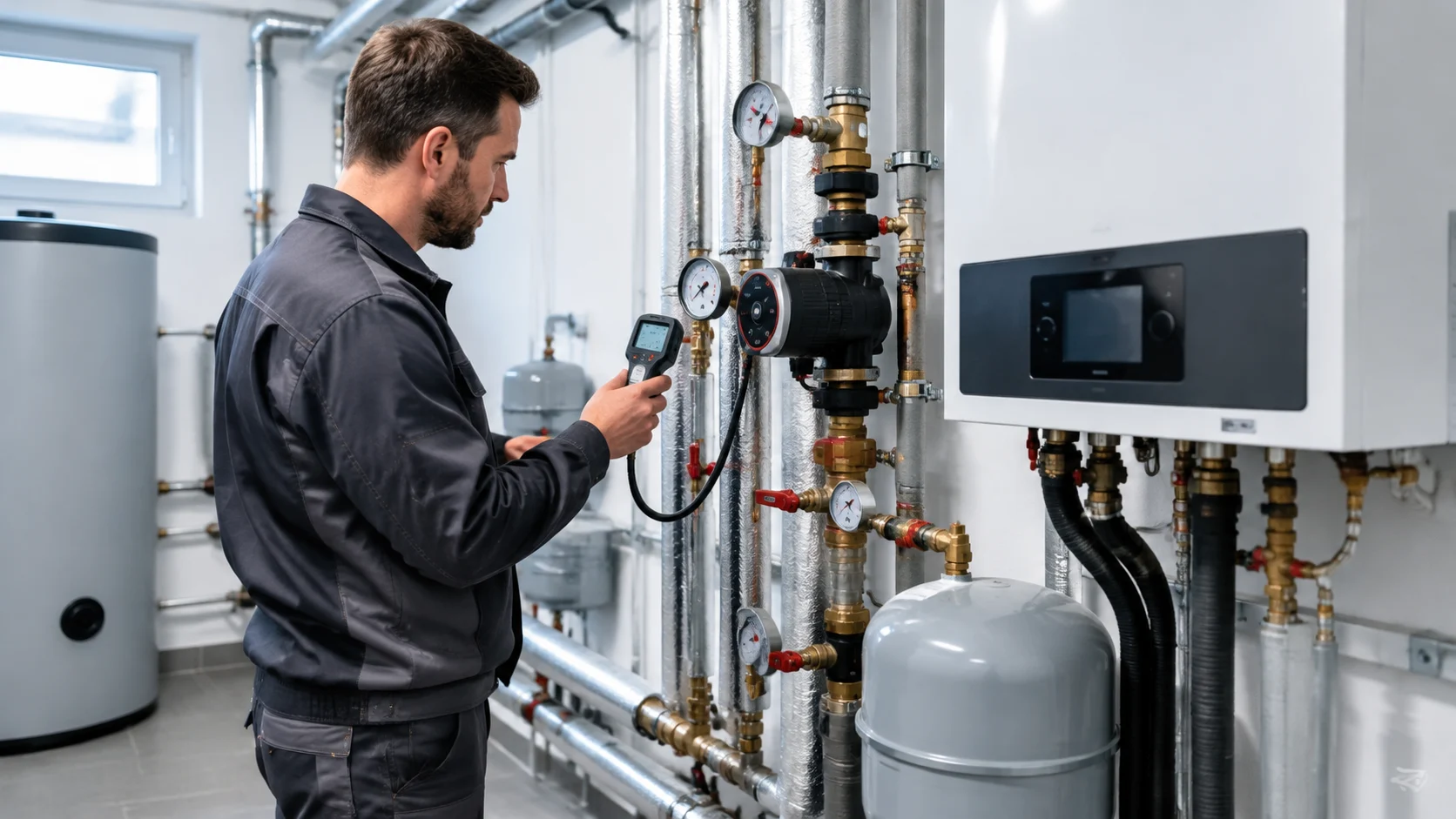
Testing, including sampling, must be carried out by an approved testing body. If a metering service provider is commissioned, sampling must fall under the approved testing body’s responsibility. Samples must be taken at several representative points (section 41 of the Drinking Water Ordinance). For example, a sampling plan may include the water heater outlet, the circulation return and a suitable distant outlet on each riser. The testing body determines the precise locations from the system layout and applicable technical requirements. Suitable sampling valves may need to be installed as a one-off measure.
The results are issued in a test report. If the Legionella count is below the technical action value of 100 colony-forming units per 100 ml (Annex 3, Part II of the Drinking Water Ordinance), this alone does not trigger measures associated with reaching that value. Ongoing operational, maintenance and testing duties nevertheless continue. Consumers must be able to inspect individual results on request (section 45 of the Drinking Water Ordinance). The managing agent should provide a suitable way to access this information.

03What happens when the action value is reached
If a sample reaches the technical action value, the testing body has notification duties towards the public health authority. The operator also faces duties requiring action without delay under section 51. This must be distinguished from detecting Legionella below the action value.
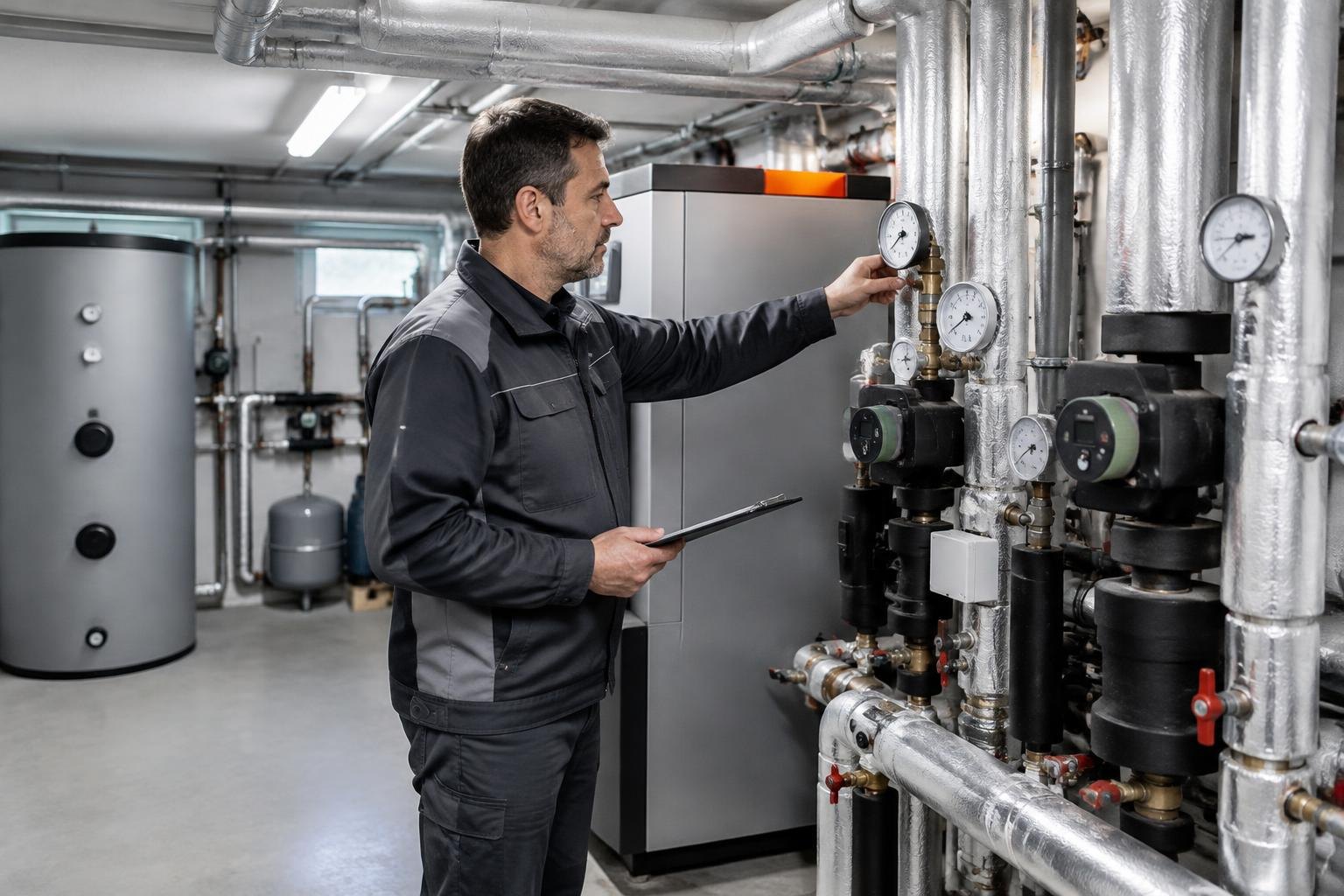
An appropriately competent person should prepare the risk assessment, still often called a hazard analysis. Possible causes include excessively low cylinder temperatures, inadequate circulation, dead legs left after alterations and flats that have not been used for some time. Depending on the cause, professionally planned measures may range from adjusting operating temperatures and thermal disinfection to replacing sections of pipework. Temperature changes and disinfection should be handled by competent specialists because of possible scalding and operational risks.
In more extensive cases, the risers may need replacing. Our guide to riser replacement explains what this involves and which costs may arise.
04Who pays the costs
It is useful to distinguish ongoing testing from work to remedy a defect. Not every expense incurred after a finding can be classified solely by when it arises. Its cause, purpose and contractual basis matter.
| Cost type | Recovery from the tenant | Basis |
|---|---|---|
| Routine testing: sampling, laboratory analysis and report | may be recoverable under a valid agreement | depending on the system and cost type, particularly section 2, points 2, 4(a) and 5 of the Operating Costs Ordinance |
| Installing sampling valves | not as operating costs | one-off acquisition, not an ongoing expense |
| Risk assessment following a finding | generally not as routine testing operating costs | connection with remedying a defect; section 1(2), point 2 of the Operating Costs Ordinance |
| Disinfection, pipe replacement and remedial works to address a defect | not as operating costs | repairs |
Recovery of regular testing costs depends on their legal classification and a valid operating costs agreement in the tenancy contract. Expressly naming drinking water testing may improve clarity, but it does not replace assessment of the appropriate cost category or, by itself, make the costs recoverable. Ask a lawyer to assess contractual arrangements and disputed bills. The relevant German legislation is the Operating Costs Ordinance [Betriebskostenverordnung, BetrKV].
For a rented flat with a communal central system, the community of flat owners [Gemeinschaft der Wohnungseigentümer] is normally the operator. It commissions testing through the managing agent and allocates the costs using the applicable apportionment method. Funding is handled through owners’ service charge payments [Hausgeld] and the community’s accounts. You may pass on only the share recoverable under the tenancy agreement and operating costs rules, using the applicable allocation method, not the entire owners’ service charge. Remedial works may be funded from the maintenance reserve [Erhaltungsrücklage] or a special levy [Sonderumlage].
05Worked example: routine testing and remedial action
A hypothetical owner has a rented flat in a building with eight flats, a central 500-litre hot water cylinder and four risers. We consider two cases: routine testing and a finding requiring partial remedial works. All unit costs are assumptions, not market prices or forecasts. The example allows for six samples: two at the central system and one on each of the four risers. The actual sampling plan may differ. For simplicity, all building costs are divided equally between eight flats; the applicable allocation methods must be used in practice.
| Building | Per flat | |
|---|---|---|
| 6 samples at €100 | €600 | €75.00 |
| Call-out and test report | €120 | €15.00 |
| Test every three years | €720 | €90.00 |
| Annual equivalent | €240 | €30.00 |
If the full testing cost can validly be recovered, the owner does not ultimately bear the routine testing expense in this example. The community pays the invoice first; the tenant is subsequently billed under the applicable rules. The €30 per year is an annualised average, not a testing fee payable every year. The assumed valves leave the owner with a one-off share of €30.
The position is different if testing reaches the technical action value and the following measures are required.
| Building | Per flat | |
|---|---|---|
| Risk assessment | €1,200 | €150 |
| Thermal disinfection and follow-up sample | €800 | €100 |
| Replacement of pipe sections | €15,000 | €1,875 |
| Costs before tax | €17,000 | €2,125 |
| Tax relief at a simplified assumed tax rate of 30% | €637.50 | |
| Calculated costs after assumed tax relief | €1,487.50 |
The community can fund the works from its maintenance reserve if funds are available and the necessary resolutions have been passed. If the reserve is insufficient, a special levy may be needed. In this example, €2,125 of the costs is allocated to the flat. If the full amount is paid from funds already saved, this does not automatically create an additional personal cash outflow of €2,125 in that year. If it is funded entirely through a new special levy, that amount would instead be payable in addition. The assumed tax relief of €637.50 in the example is a separate matter; discuss its actual amount and timing with your tax adviser.
For buyers, the practical lesson is to request the latest test reports. Several results below the action value document the position at those times, but do not guarantee satisfactory results in future. A finding recorded in the owners’ meeting minutes is a reason to ask about the cause, risk assessment, action plan and follow-up tests.
06Who needs to consider this?
- You let a flat in a block with a central hot water supply and need to assess the conditions.
- You own an entire block of flats and operate the system yourself.
- You are buying a rented flat and checking the community’s documents.
- The system exceeds neither the applicable storage or heater capacity threshold nor the pipe volume threshold; decentralised appliances alone do not establish an exemption.
- The system is in a building containing one or two dwellings.
- There are no showers or other facilities that produce drinking water aerosols.
07Risks if testing is missed
Fines. Failing to carry out a required test, or carrying it out late, may constitute an administrative offence punishable by a fine. The relevant provisions are those of the Drinking Water Ordinance and the Infection Protection Act [Infektionsschutzgesetz, IfSG]. The amount depends particularly on the nature and seriousness of the breach and the degree of fault.
Liability. If a tenant develops a Legionella infection, compensation claims may arise depending on breach of duty, fault and causation. Test reports and operational and remedial records are important evidence, but do not automatically rule out liability. A lawyer can advise you on specific questions concerning fines and liability.
Remedial costs. A finding can lead to substantial costs through the community that cannot be recovered as operating costs. A low maintenance reserve may increase the risk of a special levy.
Vacancy. Prolonged non-use can increase the Legionella risk because water stagnates. During vacant periods, appropriate measures agreed with competent specialists should maintain proper operation, for example a flushing plan implemented by the managing agent.
FAQFrequently asked questions
Is Legionella testing mandatory for landlords?
Yes, where the conditions in section 31 of Germany’s Drinking Water Ordinance are met. These include a storage water heater or central instantaneous water heater exceeding 400 litres, or more than 3 litres in at least one pipe between the heater and an outlet, excluding the circulation return pipe, plus showers or other facilities that produce water aerosols. Systems in buildings containing one or two dwellings are exempt. Letting counts as a commercial activity; decentralised appliances alone do not establish an exemption.
How often must Legionella testing take place?
For commercial water supplies that are not also public supplies, testing is generally required at least every three years under section 31(2) of the Drinking Water Ordinance. New systems subject to testing are first tested between three and twelve months after commissioning. Authority requirements and special cases may differ.
How much does Legionella testing cost?
This depends on factors including the sampling plan and quotation. Our simplified illustrative calculation with six samples and eight flats totals €720 per test, equivalent to €30 per flat per year over a three-year interval. These are assumed costs, not market prices. The example also includes separate one-off valve installation costs.
Can I pass the costs on to tenants?
Regular testing costs may be recoverable where their legal classification is appropriate and a valid operating costs agreement is in place. Installing sampling valves and remedying defects are not ongoing operating costs. A risk assessment following a finding should generally not be billed as routine testing. Ask a lawyer to assess disputed classifications.
What does the technical action value mean?
It is 100 colony-forming units per 100 ml of water under Annex 3, Part II of the Drinking Water Ordinance. If it is reached, the operator must, among other things, ensure notification of the public health authority, investigate causes, arrange a risk assessment, initiate necessary measures and inform affected consumers. The operator need not make a separate notification only insofar as the testing body has demonstrably already made the required notification.
Must I arrange testing myself if I own a flat?
For a communal central system, the community of flat owners is normally the operator and commissions testing through the managing agent. As landlord, you may pass on only validly recoverable costs using the applicable allocation method, not the entire owners’ service charge. Responsibility for systems within the flat requires separate clarification.
What happens if a required test is missed?
Missing a required test may result in a fine. If someone becomes ill, compensation claims may also arise depending on breach of duty, fault and causation. Ask a lawyer to assess specific questions concerning liability and fines.
08Further reading
- Riser replacement: costs and process
- Property maintenance costs
- Recoverable operating costs under German rules
- Owners’ service charges for a flat
- Reviewing owners’ meeting minutes
- Glossary: special levy
09Sources
- Drinking Water Ordinance of 20 June 2023, sections 2, 31, 41, 45, 51, 52 and 72, and Annex 3, Part II
- Infection Protection Act, section 73 (fine provisions)
- Operating Costs Ordinance, sections 1 and 2
- Income Tax Implementing Regulation, section 82b (spreading certain maintenance expenditure)
- Worked examples: illustrative calculations with disclosed cost and tax assumptions
Note: This guide provides general information and does not replace legal or tax advice on individual circumstances. The cost and tax examples are simplified model calculations, not quotations or promises of a particular tax saving. Discuss your personal circumstances with a lawyer or tax adviser.
Writes about Investment properties, Purchase decisions and Financial viability.
Herbert has invested in property himself since 2023 and has worked in the property industry since 2024. His advice combines an investor’s perspective with clear explanations and an open assessment of opportunities and risks.
This guide does not replace tax or legal advice. All figures are example calculations with disclosed assumptions.