Property Investment in Aschaffenburg: Figures, Locations and an Honest Calculation
A growing city on the River Main with many inbound commuters, a university and a qualified rent index, but with purchase prices that are outstripping rents. We reveal the official figures and run the numbers for an existing flat and a new-build property.
 Eduard Winter
Investment Advisor at InvestImmo
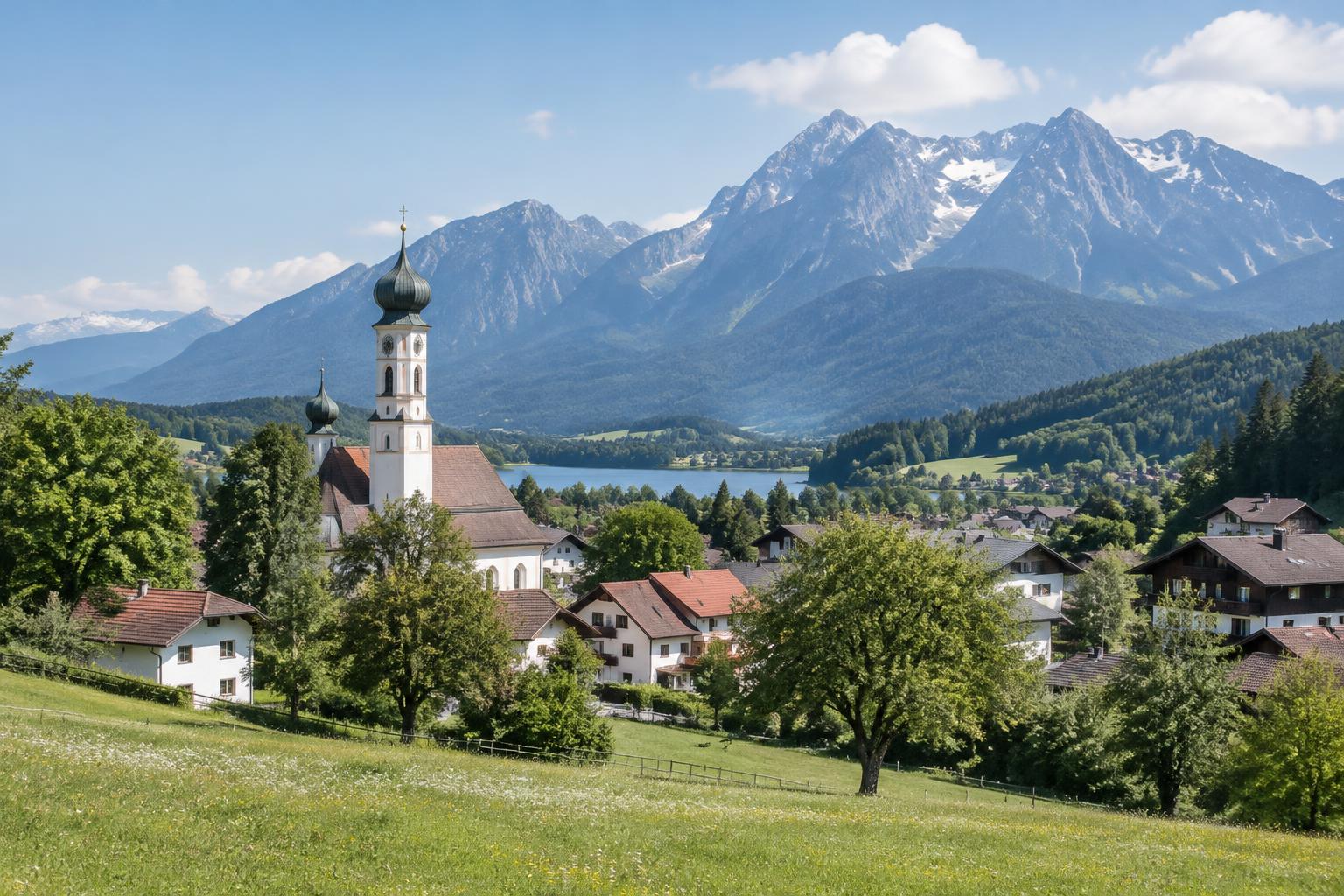
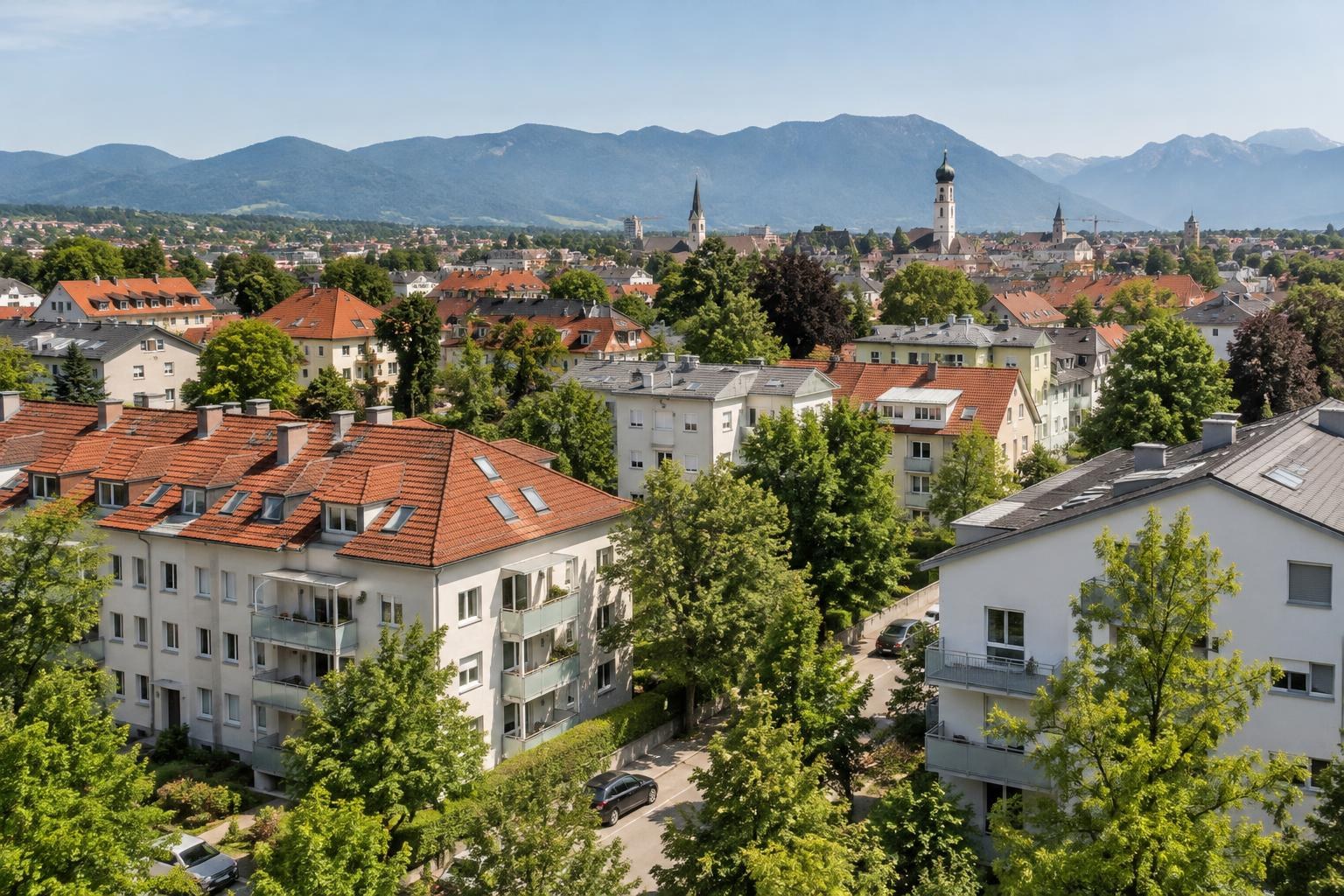
Aschaffenburg lies on the River Main, a good 40 kilometres east of Frankfurt, and is part of Bavaria. The city is an employment centre for the Bavarian Lower Main region: almost twice as many people commute into the city for work each day as residents of Aschaffenburg commute out. In addition, there is a University of Applied Sciences and a growing population.
For investors, this is a good starting position, but with a catch. Purchase prices for existing flats rose by 9% in 2025, while rents are tied by a rent index and a rent brake. We will disclose both and run the numbers for an existing flat and a new build.
01Aschaffenburg in numbers
All the figures we use for our assessment, with their source and date.
| Metric | Value | Source, as of |
|---|---|---|
| Population (official) | 73,326 | Federal Statistical Office, municipal directory, 31 December 2025 |
| Population 2015 (based on 2011 Census) | 68,986 | Federal Statistical Office, 31 December 2015 |
| Forecast 2024–2044 | +1.3% | Bavarian State Office for Statistics |
| Households | 36,661 | Census 2022 |
| Share of single-person households | 47.3% | Census 2022 |
| Housing stock | 39,380 | Census 2022 |
| Vacancy rate | 4.4% | Census 2022, reference date 15 May 2022 |
| Share of rented flats | 63.4% | Census 2022, own calculation |
| Employees subject to social security contributions at place of work | 46,925 | Federal Employment Agency, 30 June 2025 |
| In-commuters / Out-commuters | 33,016 / 17,082 | Federal Employment Agency, 30 June 2025 |
| Unemployment rate | 7.4% | Federal Employment Agency via Deutschlandatlas, annual average 2025 |
| Students at TH Aschaffenburg | 4,033 | State Office for Statistics, winter semester 2025/26 |
| Avg. rent for existing contracts | €7.75/m² | Census 2022 |
| Rent index, base rent 60 m² | €8.67/m² | Qualified Rent Index 2024/2026, from 14 May 2026 |
| Asking rent (re-letting) | €11.57/m² | BBSR via Deutschlandatlas, 2025 |
| Purchase price for an existing flat (over 45 m²) | €3,600/m² | Upper Valuation Committee for Bavaria, 2025 |
| Purchase price for a new-build flat (over 45 m²) | €5,200/m² | Upper Valuation Committee for Bavaria, 2025 |
| Rent brake | Yes | Bavarian Tenant Protection Ordinance, until 31 December 2029 |
| Rent cap | 15% | Bavarian Tenant Protection Ordinance, until 31 December 2029 |
| Grunderwerbsteuer (property transfer tax) in Bavaria | 3.5% | § 11 GrEStG |
02Population and demand
At the end of 2025, Aschaffenburg officially had 73,326 inhabitants. In 2015, the figure was 68,986, an increase of 6.3%, even though the 2022 Census revised population figures downwards nationwide. In the last year, around 240 more inhabitants were added. The city is growing mainly due to migration from other parts of Germany, with a net gain of 78 people per 10,000 inhabitants in 2024.
The State Office for Statistics expects around 73,700 inhabitants by 2034 and around 74,000 by 2044, 1.3% more than in 2024. The age structure is shifting significantly: the group aged 65 and over is growing by 21%, while the number of people under 40 is decreasing slightly. For landlords, this means more demand for accessible, smaller flats.
In the 2022 Census, 47.3% of households were single-person, and 63.4% of flats were rented. Aschaffenburg is therefore a city of tenants with many small households.
In recent years, more has been built here than in many other cities: according to the census, over 4,000 flats date from 2010 onwards. However, the majority of the housing stock was built between 1950 and 1999.
03Economy and labour market
Aschaffenburg is an employment centre. On 30 June 2025, 46,925 people subject to social security contributions worked in the city, but only 30,991 lived there. Every day, 33,016 people commute in and 17,082 commute out, a surplus of almost 16,000. The city is well connected via the A3 motorway and the Frankfurt–Würzburg railway line.
The Aschaffenburg University of Applied Sciences had exactly 4,033 students in the 2025/26 winter semester. They mostly look for small flats near the university or in the city centre.
The city's unemployment rate was an annual average of 7.4% in 2025. This is a high figure for Bavaria and significantly more than in the district of Aschaffenburg, which has a rate of 4.2%. The tenant base is correspondingly mixed.
04Rents, purchase prices and rental yield
Aschaffenburg has a qualified rent index. The 2024 rent index was indexed by 4.4% using the consumer price index and has been valid for a further two years since 14 May 2026. The base rent depends on the size: €11.06/m² for 30 m², €9.05/m² for 45 m², and €8.67/m² for 59 to 64 m². In addition, there are supplements and deductions, such as minus 11% for properties built between 1946 and 1977, plus 12% for those built between 2016 and 2023, plus 6% for a kitchen with three or four features, and a supplement or deduction for the residential area according to the address directory.
Listings are significantly higher. The BBSR quotes an average asking rent of €11.57/m² for 2025. Due to the rent brake, you are generally not allowed to charge this rent for an existing flat.
The purchase prices come from the property market report of the Upper Valuation Committee, i.e., from actual purchase contracts. In 2025, existing flats over 45 m² cost an average of €3,600/m², 9.1% more than in 2024. New-build flats were priced at €5,200/m². Small, existing studio flats under 45 m² were sold for around €4,200/m², for an average of €111,000.
The purchase price factor is derived from the purchase price and the rent; its reciprocal is the gross rental yield.
With rent index rents, the gross yield of an existing flat is around 2.7%. The top bar shows a calculation that would fail due to the rent brake when re-letting an existing property. You can check your own figures with the rental yield calculator.
05Districts at a glance
Official prices or rents per district are not freely available for Aschaffenburg. The rent index assigns each street to a residential area via an address directory, with supplements or deductions of a few percent. The table therefore only describes their character.
| District | Character | More suitable for |
|---|---|---|
| Innenstadt | Old town on the Main with a castle, main station and shopping areas, many multi-storey residential buildings | Single people, students, commuters |
| Damm | North of the city centre, densely built-up, mixed building ages | Professionals, couples |
| Schweinheim | Eastern district on a slope, rather quiet, with single and multi-family houses | Families |
| Nilkheim | South-west on the Main, residential areas of various ages | Families, couples |
| Leider | West of the Main, with its own village centre | Commuters, families |
| Obernau and Gailbach | Southern and eastern peripheral locations, more village-like | Families, longer tenancy periods |
In Aschaffenburg, size and year of construction are the most important factors when buying. A 30 m² flat has a base rent per m² in the rent index that is around 28% higher than a 60 m² flat, but existing apartments also cost more per square metre.
06Rules for landlords in Aschaffenburg
Aschaffenburg is covered by the Bavarian Tenant Protection Ordinance, which is valid from 1 January 2026 to 31 December 2029. This results in three rules:
Mietpreisbremse(rent brake): When a property is re-let, the rent may not be more than 10% above the local comparative rent according to the rent index. Exceptions include flats that were first used and let after 1 October 2014, the first letting after comprehensive modernisation, and a higher previous rent.Kappungsgrenze(rent cap): In an existing tenancy, the rent may not be increased by more than 15% within three years, and only up to the local comparative rent.- Moratorium on termination: If a rented flat is converted into a condominium, termination for personal use is excluded for ten years.
When buying in Bavaria, you pay 3.5% Grunderwerbsteuer (property transfer tax), the lowest rate in Germany. On top of that, there are notary and land registry fees of around 1.8% of the purchase price if you are financing, and, depending on the property, an estate agent. For a purchase price of €216,000, that's around 5.3% in incidental costs without an agent. Our incidental purchase costs calculator will work out your own costs, and our article on notary fees explains the notary's fee items.
07Example calculation: a rented flat in Aschaffenburg
Let's take Christian, 45, single, a sales engineer with a taxable income of €60,000. He buys a rented flat of 60 m², built in 1970, for €216,000. This corresponds to the average price of existing flats in 2025. The rent of €8.24/m² is in line with the rent index value for this size, year of construction and a basic fitted kitchen. The name is fictional; the figures are an example calculation and not a forecast.
| Purchase price (60 m² × €3,600/m²) | €216,000.00 |
|---|---|
| Grunderwerbsteuer Bavaria 3.5% | €7,560.00 |
| Notary and land registry (with land charge of €216,000) | €3,819.00 |
| Incidental purchase costs from equity | €11,379.00 |
| Loan (purchase price) | €216,000.00 |
| Interest 3.8% and repayment 1.5% (assumption) | €11,448.00 per year |
| per year | per month | |
|---|---|---|
| Net cold rent (€8.24/m², rent index 2024/2026) | €5,933 | €494 |
| Interest | −€8,208 | −€684 |
| Repayment | −€3,240 | −€270 |
| Non-apportionable costs (management, reserve fund, assumption) | −€1,200 | −€100 |
| Cash flow before tax | −€6,715 | −€560 |
| Depreciation 2% on the building's share (80%, assumption) | €3,619 | €302 |
| Loss from letting (rent − interest − costs − depreciation) | −€7,094 | −€591 |
| Tax savings (2026 tariff, without church tax) | +€2,650 | +€221 |
| Cash flow after tax | −€4,065 | −€339 |
After tax, Christian has an out-of-pocket payment of around €339 per month. Of this, €270 goes towards repayment, i.e., into his own assets. Even without the repayment, there is still a deficit of around €69 per month. In Aschaffenburg, the rent does not even cover the interest.
What helps are the low incidental purchase costs. With a 3.5% Grunderwerbsteuer, Christian pays around €6,480 less than a buyer in North Rhine-Westphalia for the same price. Our article How to tax rental income explains how rental income is taxed.
The interest rate affects the calculation more than three times as much as a potential rent increase. Anyone buying an existing property in Aschaffenburg should choose a long fixed-interest period and factor in the follow-on financing from the very beginning.
For comparison: a new-build flat in Aschaffenburg
What changes if Christian buys a newly built 45 m² flat instead? The Upper Valuation Committee determined an average of €5,200/m² for new-build flats in Aschaffenburg in 2025. That comes to €234,000. He pays the Grunderwerbsteuer (€8,190) and the notary and land registry fees (€4,200) from equity. We assume a rent of €11.04/m²: the base rent for 45 m² with the rent index supplements for year of construction 2016 to 2023, step-free access and high-quality windows. The rent index does not have a separate class for first-time lettings from 2024.
| per year | per month | |
|---|---|---|
| Net cold rent (45 m² × €11.04/m², rent index derivation) | €5,962 | €497 |
| Interest (3.8% on €234,000) | −€8,892 | −€741 |
| Repayment (1.5%) | −€3,510 | −€293 |
| Non-apportionable service charge (€1.20/m², assumption) | −€648 | −€54 |
| Cash flow before tax | −€7,088 | −€591 |
| Declining-balance depreciation 5% on the building's share (80%, assumption) | €9,802 | €817 |
| Loss from letting (rent − interest − service charge − depreciation) | −€13,381 | −€1,115 |
| Tax savings (2026 tariff, without church tax) | +€4,853 | +€404 |
| Cash flow after tax | −€2,235 | −€186 |
In the first year, the depreciation is almost three times as high as for the existing flat (€9,802 instead of €3,619), and there is usually hardly any maintenance in the first few years. At 2.5%, the gross rental yield is slightly lower than for the existing flat, because the price per square metre is almost half as much again. Before tax, Christian has an out-of-pocket payment of around €591 per month, and after tax, around €186, which is a good €150 less than for the existing property. Flats first let after 1 October 2014 are permanently exempt from the rent brake (§ 556f BGB). The tax savings will decrease in subsequent years because the declining-balance depreciation is calculated on the residual value.
08Opportunities and risks in Aschaffenburg
There are verifiable points in favour of Aschaffenburg. The city has grown since 2015, and the State Office expects slight growth to continue until 2044. It is an employment centre with almost 16,000 more in-commuters than out-commuters, has a university with over 4,000 students, and a qualified rent index that makes calculations verifiable. The Grunderwerbsteuer is low at 3.5%.
However, there are equally clear points against it:
- Purchase prices far ahead of rents: With a price of €3,600/m² and a rent of €8.24/m², the gross rental yield is around 2.7%.
- Rent brake: For new lettings of existing properties, the rent can be a maximum of 10% above the rent index.
- Rent cap of 15%: Existing rents are rising only slowly.
- Unemployment rate of 7.4%: high for Bavaria.
- Ageing population: Growth until 2044 comes almost exclusively from the 65+ age group.
- Interest rate risk: One percentage point more on the follow-on interest rate costs around €180 per month for a €216,000 loan.
- You can afford a monthly out-of-pocket payment of €200 to €350 for years.
- You are looking for a growing employment location with verifiable rents.
- You want to hold the flat long-term with an eye on tax and repayment.
- You check the rent in the property brochure against the rent index.
- You expect a positive cash flow from the very first month.
- You want to calculate using asking rents from property listings.
- You have no reserves for vacancies or a special levy.
- You are dependent on a specific increase in value.
The general advantages and disadvantages of a condominium as a buy-to-let investment are outlined in our article Condominium as a buy-to-let investment.
09Other locations
Other cities in Bavaria: Overview Bavaria · Augsburg · Bamberg · Bayreuth · Erlangen · Fürth · Ingolstadt · Kempten (Allgäu) · Kitzingen · Landshut · Munich · Nuremberg · Passau · Regensburg · Rosenheim · Schweinfurt · Würzburg
All locations compared: Where is a buy-to-let property worthwhile? Cities compared 2026 · Which federal state is suitable? All 16 compared
FAQFrequently asked questions
Is a flat in Aschaffenburg a worthwhile investment?
With financing, you will usually have a monthly shortfall in Aschaffenburg, even after tax. For an existing 60 m² flat at the average price and a rent in line with the rent index, our example shows a shortfall of around €339 per month. Points in the city's favour are its growth, jobs and a verifiable rent index; against it is the purchase price-to-rent ratio.
What is the rental yield in Aschaffenburg?
The gross yield is around 2.6% to 2.7% for existing flats if you calculate using the rent index or rents from current contracts. Small apartments achieve around 3%, while new-build flats come in at around 2.5%.
How much does a freehold flat cost in Aschaffenburg?
According to the Oberer Gutachterausschuss (Central Valuation Committee), existing flats over 45 m² cost an average of €3,600/m² in 2025, and new-build flats €5,200/m². Small existing apartments under 45 m² were sold for around €4,200/m², with an average price of €111,000.
Is there a rent cap in Aschaffenburg?
Yes. Aschaffenburg is covered by the Bavarian Tenant Protection Ordinance (Bayerische Mieterschutzverordnung), which is valid until 31 December 2029. When a property is re-let, the rent may not be more than 10% above the local comparative rent. New builds first let after 1 October 2014 are exempt.
Is there a rent index in Aschaffenburg?
Yes, a qualified rent index (qualifizierter Mietspiegel). The 2024 rent index was updated by 4.4% and has been valid for a further two years since 14 May 2026. It calculates the comparative rent based on size, year of construction, fixtures and fittings, and residential area, with the range spanning from minus to plus 15%.
Which districts in Aschaffenburg are of interest to property investors?
That depends on the target group. Students and commuters tend to look in the city centre (Innenstadt) and in Damm, while families prefer Schweinheim, Nilkheim, Obernau or Gailbach. There are no official prices available per district. The residential quality of each street is listed in the rent index's address directory.
How high are the property purchase costs in Aschaffenburg?
In Bavaria, the Grunderwerbsteuer (property transfer tax) is 3.5%. Notary and land registry fees, including financing, amount to around 1.8% of the purchase price. For a purchase price of €216,000, this comes to around €11,380 without an estate agent, or 5.3%.
10Further reading
- Condominium as a buy-to-let investment: Pros and cons
- How to tax rental income
- Notary fees when buying property
- Special depreciation and declining-balance depreciation
- Rental yield calculator
- Incidental purchase costs calculator
- Property transfer tax in Bavaria
11Sources
All sources accessed on 16 October 2026.
- Bavarian State Office for Statistics, Demographic Profile Aschaffenburg, Forecast to 2044; Students in the 2025/26 winter semester, 16 July 2026
- Federal Statistical Office, municipal directory, municipalities on 31 December 2015 and 31 December 2025
- Statistical Offices of the Federation and the Länder, Census 2022 (reference date 15 May 2022): Regional table buildings and housing and Regional table households
- Upper Valuation Committee for Property Values in the Free State of Bavaria, Property Market Report 2026 (purchase cases 2025), Chapter 9
- City of Aschaffenburg, Rent index of the city of Aschaffenburg, Rent index brochure 2024/2026 (index update, valid from 14 May 2026, ALP Institute)
- Federal Employment Agency, Municipal data of employees subject to social security contributions by place of residence and work, reference date 30 June 2025
- BBSR and Federal Employment Agency via Deutschlandatlas, data tables (asking rents 2025, unemployment rate 2025, migration balances 2024; as of 25 September 2026)
- Bavarian Tenant Protection Ordinance, GVBl. 2025 p. 718, amended GVBl. 2026 p. 334, valid 1 January 2026 to 31 December 2029
- Property transfer tax Bavaria 3.5%: § 11 GrEStG
- § 556d BGB, § 556f BGB, § 558 BGB, § 577a BGB, § 32a EStG (Tariff 2026), § 7 EStG (paras. 4 and 5a), § 7b EStG, § 34 GNotKG (Table B)
- All example calculations, purchase price factors and yields: own calculation, as of 16 October 2026
Disclaimer: This page is for general information purposes only and does not constitute investment, tax or legal advice. All figures are example calculations with disclosed assumptions or official values with a stated date, as of 16 October 2026.
Writes about Taxes, AfA (depreciation), Existing properties and Portfolio building.
Since 2020, Eduard has bought seven properties of his own and supported more than 150 clients. He writes about tax levers, property documents and portfolio building – with honest numbers instead of rosy projections.
This guide does not replace tax or legal advice. All figures are example calculations with disclosed assumptions.