Investment Property in Ravensburg: Figures, Locations and an Honest Calculation
District unemployment of 3.2%, almost twice as many jobs as resident employees and no rent controls on new lettings — but asking prices around €4,300/m² mean the rent does not cover the financing in our example. We set out the figures and calculate the costs for a flat.
 Romolo Marini
Investment Advisor at InvestImmo
Ravensburg is the main regional centre of Upper Swabia: just over 50,000 residents, but more than 40,000 jobs. Almost 30,000 employees commute into the city every day, and in 2025 the district had one of Germany’s lowest unemployment rates at 3.2%. There is also a newly compiled qualified rent index, effective from 01/10/2026.
Ravensburg has two distinctive features for property investors. First, rent controls on new lettings [Mietpreisbremse] do not apply here, unlike in directly adjoining Weingarten. Second, there are no current official transaction prices: the property valuation committee [Gutachterausschuss] has not published a market report for 2025. We therefore explicitly use asking prices in our calculations and show what purchase price would be compatible with the rent.
01Ravensburg in figures
All the figures used in our assessment, with their sources and reference dates.
| Indicator | Value | Source, reference date |
|---|---|---|
| Residents (official) | 50,549 | Federal Statistical Office, register of municipalities, 31/12/2025 |
| Residents in 2015 (based on Census 2011) | 49,830 | Federal Statistical Office, 31/12/2015 |
| Households | 23,549 | Census 2022 |
| Share of single-person households | 44.3% | Census 2022 |
| Housing stock | 25,177 | Census 2022 |
| Vacancy rate | 3.2% | Census 2022, reference date 15/05/2022 |
| Share of rented homes | 55.7% | Census 2022, own calculation |
| Employees subject to social security contributions, by workplace | 40,601 | Federal Employment Agency, 30/06/2025 |
| Inward / outward commuters | 29,471 / 11,378 | Federal Employment Agency, 30/06/2025 |
| Unemployment rate, Ravensburg district | 3.2% | Federal Employment Agency via Deutschlandatlas, annual average 2025 (district figure) |
| Average rent under existing tenancies | €8.64/m² | Census 2022 |
| Rent index, average across all rents | €10.48/m² | Qualified rent index 2026 |
| Asking rent, Ravensburg district | €11.65/m² | BBSR via Deutschlandatlas, 2025 (district figure) |
| Asking price for an individually owned flat, 50–79 m² | €4,287/m² | miet-check.de, listings 2025 (not transaction prices) |
| Official transaction prices | not published | Ravensburg property valuation committee, no market report for 2025 |
| Rent controls on new lettings | no | Baden-Württemberg rent control ordinance, list of municipalities |
| Cap on rent increases [Kappungsgrenze] | 20% | § 558 BGB, Ravensburg not included in Baden-Württemberg’s rent increase cap ordinance |
| Property transfer tax [Grunderwerbsteuer], Baden-Württemberg | 5.0% | Baden-Württemberg state law |
02Population and demand
At the end of 2025, Ravensburg had 50,549 residents, around 700 more than at the end of 2015. The census means the comparison is not entirely exact, but the city is growing slightly. Ravensburg district benefits significantly from moves within Germany: in 2024, net domestic migration added almost 49 people per 10,000 residents.
The State Statistical Office does not make a separate forecast for Ravensburg freely available. For Baden-Württemberg, it expects all 44 urban and rural districts to grow by 2045, by between 3.1% and 5.5% depending on the district.
The household structure is favourable for landlords: 44.3% of households consist of one person, and 55.7% of homes were rented at the time of Census 2022. Small flats in the central urban area therefore appeal to a broad range of tenants, from students at the Baden-Württemberg Cooperative State University to older people.
03Economy and labour market
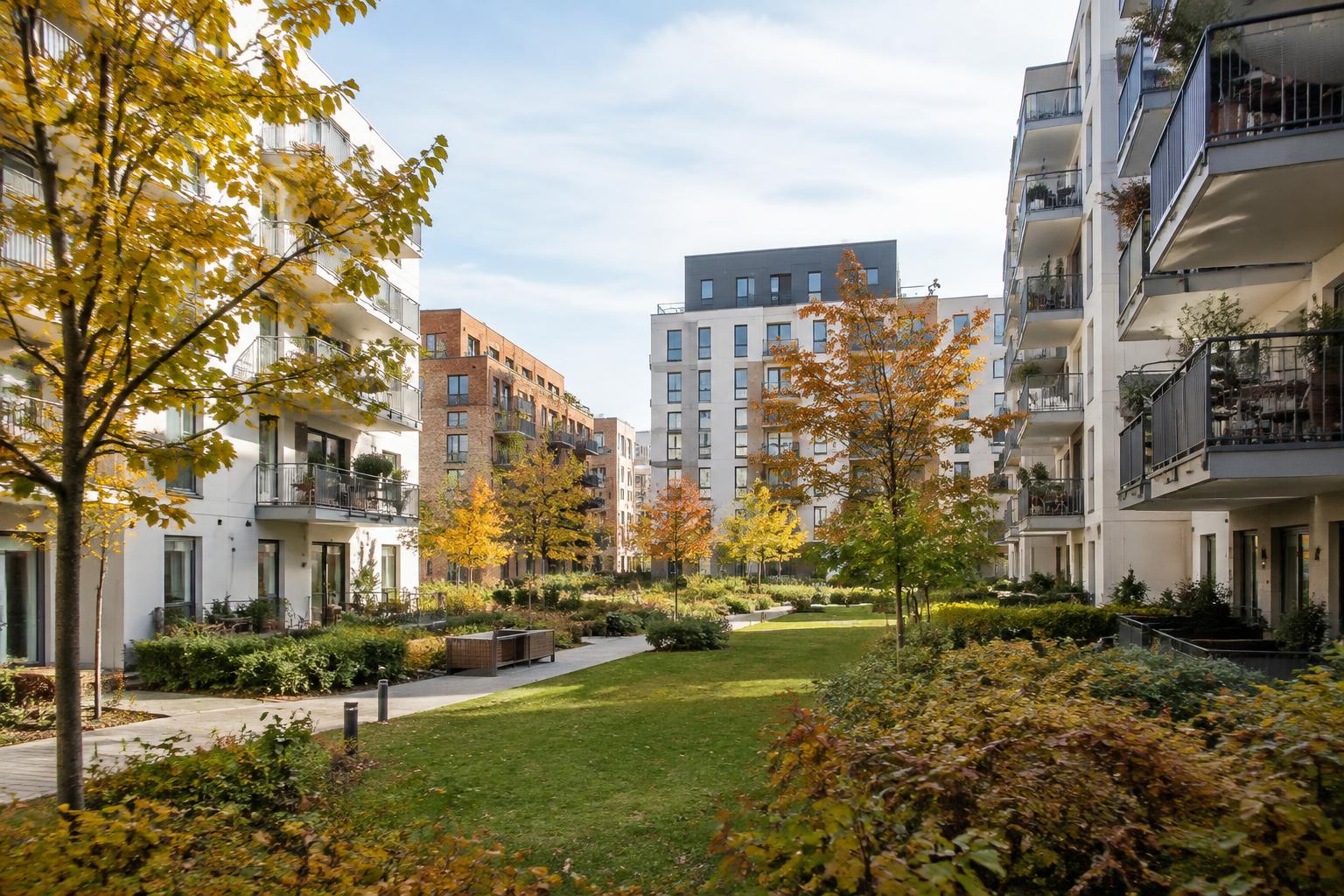
Ravensburg is an employment centre for the whole of Upper Swabia. On 30/06/2025, 40,601 employees subject to social security contributions worked in the city, while 22,494 lived there. Almost 29,500 people commute in and around 11,400 commute out. The economy is diversified, with mechanical engineering, publishing and toy manufacturing, retail, hospitals and public administration. The Baden-Württemberg Cooperative State University has a campus in Ravensburg, while Ravensburg-Weingarten University of Applied Sciences is in the neighbouring town.
The number of people in employment in the district grew by an average of 1.1% a year from 2013 to 2023. A labour market like this can help limit the risk of rental defaults for landlords. At the same time, many commuters have roots in the surrounding area, and purchase prices in the city are correspondingly high.
04Rents, purchase prices and rental yields
Ravensburg has had a newly compiled qualified rent index since 01/10/2026. It is based on a survey conducted from January to May 2026. The average across all net rents is €10.48/m². The base table distinguishes between floor areas and nine construction periods:
According to BBSR, asking rents in the district averaged €11.65/m² in 2025. Under existing tenancies, Ravensburg tenants paid an average of €8.64/m² at the time of Census 2022.
There is a gap in the purchase price data. The Ravensburg property valuation committee has been responsible for the western part of the district since July 2023 and has not published a market report for 2025. The only current figures are asking prices from listings. The portal miet-check.de reports an average of €4,433/m² for individually owned flats in Ravensburg and the surrounding area in 2025, and €4,287/m² for flats measuring 50 to 79 m², across all construction years. Asking prices are not transaction prices: prices actually paid are generally lower, and substantially so for older flats.
The purchase price and rent determine the price-to-rent ratio [Kaufpreisfaktor]; its reciprocal is the gross rental yield [Bruttomietrendite].
With the financing assumed here, a gross yield below 3% means that the rent does not even cover the interest. Anyone buying in Ravensburg should therefore assess the price against the rent. With a rent-index rent of €9.73/m², a purchase price of around €2,900/m² would produce a gross yield of 4%. Check your own figures with the rental yield calculator.
05Overview of Ravensburg’s neighbourhoods
The rent index provides unusually precise neighbourhood adjustments for Ravensburg. Additional points apply for the immediate residential setting, such as proximity to a primary school, bus stop and supermarket, an unobstructed view of the towers or a garden-facing flat.
| Neighbourhood | Rent-index adjustment | Character | More suitable for |
|---|---|---|---|
| Altstadt | +7% | historic centre with towers and market square | individuals, couples |
| Nordstadt, Südstadt | +2% | residential areas close to the city centre | working people, students |
| Sennerbad, Andermannsberg, Schornreute | +2% | hillside residential areas and locations on the edge of the central urban area | families, working people |
| Weststadt (near Altstadt), Weissenau, Weingartshof | −2% | mixed residential areas | budget-conscious tenants, commuters |
| Weststadt (further out), Oberzell, Obereschach | −5% | residential areas and outlying neighbourhoods | families |
| Taldorf, Schmalegg, Dürnast, Alberskirch | −14% | rural villages | families; small rental market |
The rent-index adjustments for the old town and the rural villages differ by 21 percentage points. For a 63 m² flat, that represents around €125 in monthly rent.
06Rules for landlords in Ravensburg
Ravensburg is included in neither Baden-Württemberg’s rent control ordinance nor its rent increase cap ordinance. This distinguishes the city from directly adjoining Weingarten, where both ordinances apply. As a result:
- No rent controls on new lettings: When granting a new tenancy, you are not bound by the limit of 10% above the local reference rent.
- Cap on rent increases of 20%: Under an existing tenancy, rent may rise by no more than 20% over three years, and only up to the local reference rent [ortsübliche Vergleichsmiete].
- Qualified rent index: You must state its figures whenever you increase the rent.
When buying in Baden-Württemberg, you pay 5.0% property transfer tax. Notary and land registry fees are additional, as is an estate agent’s fee where applicable. At a purchase price of €270,081, ancillary purchase costs excluding an estate agent are around 6.7%. Calculate your own costs with the purchase costs calculator; our article on notary fees explains the individual notarial charges.
07Worked example: a tenanted flat in Ravensburg
Take Sarah, 39, single, a product manager with taxable income of €60,000. She is interested in a tenanted 63 m² flat built in 1972 in Südstadt. The asking price matches the average listing price for this size: €4,287/m², or €270,081. The rent of €9.73/m² is the rent-index figure for this flat with a fitted kitchen and floor coverings, including the neighbourhood adjustment. The name is fictional, and the figures are a worked example, not a forecast.
| Purchase price (63 m² × €4,287/m²) | €270,081 |
|---|---|
| Property transfer tax, Baden-Württemberg, 5.0% | €13,504 |
| Notary and land registry (including a land charge [Grundschuld] of €270,081) | €4,581 |
| Ancillary purchase costs [Kaufnebenkosten] funded from equity | €18,085 |
| Loan (purchase price) | €270,081 |
| Interest 3.8% and principal repayment [Tilgung] 1.5% (assumed) | €14,314 per year |
| per year | per month | |
|---|---|---|
| Net rent excluding utilities and service charges [Nettokaltmiete] (€9.73/m², rent index 2026) | €7,356 | €613 |
| Interest | −€10,263 | −€855 |
| Principal repayment | −€4,051 | −€338 |
| Non-recoverable costs (management, reserve fund, assumed) | −€1,320 | −€110 |
| Cash flow before tax | −€8,278 | −€690 |
| Depreciation allowance [Abschreibung] of 2% on the building share (80%, assumed) | €4,587 | €382 |
| Rental loss (rent − interest − costs − depreciation allowance) | −€8,815 | −€735 |
| Tax saving (2026 income tax schedule, excluding church tax) | +€3,267 | +€272 |
| Cash flow after tax | −€5,011 | −€418 |
At the asking price, Sarah contributes around €418 a month after tax. Even without principal repayments, there would still be a shortfall of around €80. The rent does not even cover the interest.
If Sarah buys at 15% below the asking price (€3,644/m²), her contribution after tax falls to around €313 a month. This shows how strongly the purchase price determines the figures in Ravensburg. Ask the property valuation committee for comparable transaction prices before making an offer. Our article on taxing rental income explains how rental income is taxed.
What about a new-build flat in Ravensburg?
There is no official transaction price available for a new-build comparison in Ravensburg. However, the 2026 rent index shows the rent level for recently built flats: €14.56/m² for a 45 m² flat built between 2021 and 2025, before adjustments.
For a new-build offer, it is best to work backwards: at a rent of €14.56/m², a purchase price of €5,000/m² produces a gross yield of around 3.5%, while a purchase price of €6,000/m² produces around 2.9%.
08Opportunities and risks in Ravensburg
Ravensburg has verifiable strengths: a very strong labour market, a large net inward commuter balance, inward migration, low vacancy, many small households and an up-to-date qualified rent index. Rent controls on new lettings do not currently apply.
The counterarguments are equally clear:
- High prices relative to rents: At the asking price, the gross yield is below 3%.
- No official transaction prices for 2025: You need to obtain comparable figures yourself.
- Regulation remains open: It has not been decided whether Ravensburg will be included in new state ordinances from 2027.
- Significant differences between locations: Rent-index adjustments differ by up to 21 percentage points between the old town and the outlying villages.
- You are looking for a very stable labour market and low rental default risks.
- You negotiate the purchase price based on rent-index rents.
- You can afford a monthly contribution over a period of years.
- You obtain comparable transaction prices from the property valuation committee before buying.
- You accept asking prices without checking them.
- You want a flat that pays for itself.
- You have no reserve for special assessments [Sonderumlagen].
- You depend on a particular level of capital growth.
Our article on buying a flat as an investment covers the general advantages and disadvantages of investing in an individually owned flat.
09More locations
More cities in Baden-Württemberg: Overview of Baden-Württemberg · Albstadt · Esslingen am Neckar · Freiburg im Breisgau · Friedrichshafen · Göppingen · Heidelberg · Heilbronn · Karlsruhe · Konstanz · Ludwigsburg · Mannheim · Offenburg · Pforzheim · Reutlingen · Stuttgart · Tübingen · Ulm
Compare all locations: Where is investment property worthwhile? Cities compared for 2026 · Which German state is suitable? All 16 compared
FAQFrequently asked questions
Is a flat in Ravensburg worthwhile as an investment?
At asking prices, it is difficult to make the figures work: in our example, you contribute around €418 a month after tax, and the rent does not even cover the interest. A purchase price well below the asking price improves the calculation considerably. In return, you are buying in a very stable market.
What rental yield can you expect in Ravensburg?
Using asking prices and rent-index rents, the gross yield is around 2.7%, rising to around 3.2% with a 15% price discount. The property valuation committee has not published official transaction prices for 2025 that would allow a more precise calculation.
How much does a flat cost in Ravensburg?
Listings averaged around €4,400/m² in 2025, and around €4,300/m² for flats measuring 50 to 79 m². These are asking prices, not prices actually paid.
Do rent controls on new lettings apply in Ravensburg?
No. Unlike neighbouring Weingarten, Ravensburg is not included in Baden-Württemberg’s rent control ordinance. The general cap on rent increases of 20% over three years applies.
Does Ravensburg have a rent index?
Yes. A newly compiled qualified rent index took effect on 01/10/2026, based on a survey conducted in early 2026. The average across all rents is €10.48/m².
Which Ravensburg neighbourhoods are of interest to property investors?
For small flats, Altstadt (+7% in the rent index), Nordstadt and Südstadt (+2%) are worth considering. Rural villages such as Taldorf and Schmalegg have a downward adjustment of 14%.
How high are ancillary purchase costs in Ravensburg?
Baden-Württemberg charges property transfer tax of 5.0%, plus just under 2% for notary and land registry fees. At a purchase price of €270,081, costs excluding an estate agent are around €18,090, or 6.7%.
10Further reading
- Buying a flat as an investment: advantages and disadvantages
- Taxing rental income
- Notary fees when buying property
- Special and declining-balance depreciation allowances
- Rental yield calculator
- Purchase costs calculator
- Property transfer tax in Baden-Württemberg
11Sources
All sources accessed on 19/10/2026.
- City of Ravensburg, Qualified rent index 2026, effective from 01/10/2026, Tables 1 and 2
- City of Ravensburg, Property valuation committee: transaction price database and property market report (no property market report for 2025)
- miet-check.de, Property prices in Ravensburg, asking prices for individually owned flats from 2024 to 2026 (not transaction prices, not an official source)
- Baden-Württemberg State Statistical Office, Regional population projection to 2045, 06/05/2025
- Federal Statistical Office, register of municipalities, municipalities as at 31/12/2015 and 31/12/2025
- Federal and State Statistical Offices, Census 2022 (reference date 15/05/2022): Regional table of buildings and homes and Regional table of households
- Federal Employment Agency, Municipal data on employees subject to social security contributions by place of residence and workplace, reference date 30/06/2025
- BBSR and Federal Employment Agency via Deutschlandatlas data tables (Ravensburg district: asking rents 2025, unemployment rate 2025, net migration 2024, employment trends; as at 25/09/2026)
- State of Baden-Württemberg, Rent control ordinance (Law Gazette 2025 No. 144) and Rent increase cap ordinance (Law Gazette 2025 No. 145), lists of municipalities (Ravensburg not included, Weingarten included)
- Property transfer tax in Baden-Württemberg, 5.0%, Act of 26/10/2011 (Law Gazette p. 493)
- § 556d BGB, § 556f BGB, § 558 BGB, § 558d BGB, § 32a EStG (2026 income tax schedule), § 7 EStG (subsections 4 and 5a), § 7b EStG, § 34 GNotKG (Table B)
- All worked examples, price-to-rent ratios and yields: own calculations, as at 19/10/2026
Note: This page provides general information and does not constitute investment, tax or legal advice. All figures are either worked examples with disclosed assumptions or data with a stated reference date. Information as at 19/10/2026.
Writes about Financing and Taxes.
Romolo brings almost 17 years of banking and financing experience, including leading around 145 sales staff, to his work. He writes about financing, taxes and property decisions that fit your life for the long term.
This guide does not replace tax or legal advice. All figures are example calculations with disclosed assumptions.